Aerospace and defense PLM: Why leaders need a product-centric digital foundation

Aerospace and defense leaders are operating in one of the most demanding environments in modern history. Programs are becoming more software-defined, supply chains are more distributed, certification requirements are more rigorous, and mission needs are evolving faster than traditional development models were built to support.

Aerospace and defense PLM provides the digital backbone that connects requirements, engineering, manufacturing, certification, and sustainment data across the product lifecycle. As programs become increasingly software-defined and regulated, aerospace and defense organizations rely on PLM systems such as Teamcenter to maintain product traceability, configuration control, compliance, and digital continuity.
Many organizations have been accelerating digital transformation. They have invested in data platforms, collaboration environments, enterprise systems, analytics, and automation. Those investments matter. But they are not sufficient on their own.
The defining question for the next generation of aerospace and defense programs is not simply whether an organization is digital. It is whether the organization can maintain an authoritative, continuously evolving understanding of the product across the full lifecycle.
Leading aerospace and defense organizations are creating that foundation through Product Lifecycle Management (PLM) platforms such as Teamcenter, which connect requirements, engineering, manufacturing, certification, and sustainment data across the lifecycle.
The Product Has to Become the Anchor
Every aerospace and defense program ultimately succeeds or fails around the product: what it must do, how it is configured, how it changes, how it is built, how it is certified, and how it performs in operation. Yet too often, the digital environment surrounding that product is fragmented across disciplines, tools, partners, and phases of the lifecycle. This challenge is why aerospace and defense PLM platforms have become strategic investments for organizations seeking end-to-end traceability across engineering, manufacturing, suppliers, and sustainment operations.
Mechanical, electrical, software, systems engineering, manufacturing, quality, supply chain, and sustainment teams all make decisions that affect the same product. If those decisions are not connected through a common product context, the organization accumulates hidden risk. Changes move slowly. Validation happens too late. Traceability becomes difficult. Leaders lose confidence that the program truth they are seeing is complete, current, and actionable.
That is why the next phase of digital transformation must be product centric. Aerospace and defense PLM with Teamcenter provides an authoritative digital backbone where product configurations, requirements, bills of materials (BOMs), engineering changes, and lifecycle processes are managed in a common context. This helps aerospace and defense organizations establish a single source of truth across mechanical, electrical, software, systems engineering, manufacturing, and sustainment disciplines.

From Digital Activity to Digital Continuity
The industry has learned this lesson the hard way. Some of the most visible program challenges in aerospace and defense have not resulted from a lack of talented people or advanced tools. They have emerged when assumptions, models, requirements, configurations, software logic, manufacturing constraints, or operational feedback failed to remain connected across the lifecycle.
In complex programs, disconnected information does not remain a local problem. It becomes program risk. A small inconsistency in one domain can become a late-stage integration issue. A missing trace can slow certification. A disconnected sustainment system can undermine readiness. A decision made without product context can create cost, schedule, and performance consequences months or years later. For aerospace and defense programs, these disruptions can affect airworthiness certification, mission readiness, supplier accountability, and compliance with defense program requirements.
The opportunity now is to move beyond digital activity toward digital continuity: a connected lifecycle in which each decision is linked to the product definition, each change is understood in context, and each phase of the program strengthens the next.
Teamcenter enables a digital thread that connects requirements, configurations, product structures, manufacturing information, and lifecycle processes so organizations can understand the impact of changes before they become costly program risks.
Teamcenter enables a digital thread that connects requirements, configurations, product structures, manufacturing information, and lifecycle processes so organizations can understand the impact of changes before they become costly program risks.
What a Product-Centric Aerospace and Defense PLM Platform Makes Possible
The product-centric digital platform in Teamcenter changes the operating model for complex programs. It establishes a comprehensive digital twin that brings together the mechanical, electrical, electronic, software, systems, manufacturing, and service dimensions of the product. It connects those domains through a digital thread so that information flows across requirements, design, simulation, production, certification, and sustainment. It gives teams lifecycle intelligence, so data becomes decision-quality insight in the context of the product. And it does this in an open, adaptable environment that can operate across existing tools, suppliers, and deployment models.
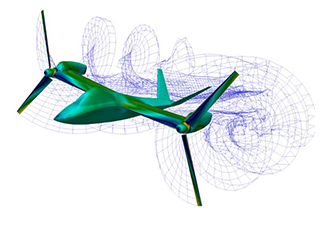
Unlike disconnected engineering and enterprise systems, aerospace and defense PLM provides a unified environment for product configuration management, digital thread connectivity, digital twin development, and lifecycle governance.
For executives, the value is not merely technical. It is strategic. A product-centric platform helps organizations improve predictability, reduce late-cycle risk, accelerate change, support compliance, and scale innovation with greater confidence.
It also creates the foundation for the next wave of industrial AI. AI is only as useful as the context it can access and the workflows it can influence. In aerospace and defense, that context must be governed, traceable, secure, and connected to the product lifecycle. Without that foundation, intelligence remains isolated. Teamcenter includes AI built for PLM and is recognized as an industry leader for PLM AI. With it, intelligence can become embedded in the way programs are planned, engineered, validated, produced, and sustained.
Why Teamcenter is a leading aerospace and defense PLM platform
Siemens Xcelerator is built around this product-centric view of digital transformation. The digital thread backbone of Siemens Xcelerator is Teamcenter, which brings together the comprehensive digital twin, the digital thread, lifecycle intelligence, and an open ecosystem in a way that reflects how aerospace and defense programs operate: across disciplines, across organizations, across decades-long lifecycles, and across both physical and digital domains.

This matters because A&D leaders do not have the luxury of transforming in a vacuum. They must modernize while protecting intellectual property, meeting regulatory obligations, supporting legacy environments, integrating suppliers, and delivering mission-critical products without interruption.
A platform must therefore be comprehensive enough to connect the lifecycle, open enough to fit the enterprise, and scalable enough to support the most demanding programs.
That is the role Teamcenter is designed to play: helping organizations move from fragmented digital initiatives to a connected product lifecycle foundation that supports better decisions, faster execution, and more resilient program outcomes.
You don’t have to take my word for it. In our opinion, Teamcenter’s role in advancing aerospace and defense PLM is reinforced from independent analysts, government organizations, and leading manufacturers. We believe Teamcenter plays a major role in Siemens’ recognitions:
- a Leader in the 2026 Gartner® Magic Quadrant™ for PLM
- identified as the Current Company to Beat in the Gartner AI Vendor Race
- a Leader in the 2025 Forrester Wave™ for PLM Platforms for Discrete Manufacturers
- powered Siemens Federal Cloud to FedRAMP High certification
- the U.S. Airforce uses Teamcenter as it’s Standard PLM platform
- and more!
A Leadership Imperative
The future of aerospace and defense will belong to organizations that can master complexity without slowing down. They will need to innovate faster, validate earlier, build with greater precision, and sustain products more intelligently. They will need digital capabilities that do more than connect systems; they must connect decisions to the product and its lifecycle.
For executives, this is not simply an IT or engineering modernization agenda. It is a requirement for business resilience. It is necessary for program performance and risk reduction. It is a matter of competitive advantage.
As aerospace and defense PLM becomes the foundation for digital engineering, AI adoption, and lifecycle collaboration, organizations that establish a product-centric approach today will be better positioned to manage future complexity and accelerate mission success.
The organizations that lead will be those that treat their product as the center of digital transformation, and build the digital foundation required to manage that product with confidence from concept through sustainment.
That is why the future of aerospace and defense will be built on product-centric aerospace and defense PLM platforms that connect the complete product lifecycle.

Frequently Asked Questions
What is aerospace and defense PLM?
Aerospace and defense PLM is the process and technology used to manage product data, requirements, configurations, engineering information, manufacturing information, and sustainment activities across the complete product lifecycle.
Why is PLM important for aerospace and defense organizations?
PLM helps aerospace and defense organizations improve traceability, manage complex product configurations, support certification efforts, reduce program risk, and maintain a connected digital thread across the lifecycle.
How does Teamcenter support aerospace and defense programs?
Teamcenter provides a digital backbone that connects requirements, engineering, manufacturing, certification, suppliers, and sustainment activities to support lifecycle collaboration and decision making.
What is the relationship between aerospace and defense PLM and the digital thread?
The digital thread connects information across lifecycle stages, while aerospace and defense PLM provides the governance and product context needed to manage and use that information effectively.
How does AI benefit aerospace and defense PLM?
AI can help organizations analyze lifecycle information, identify risk, accelerate engineering tasks, support decision making, and improve productivity when connected to trusted PLM data.
🧠 Make smarter decisions with AI-powered PLM
🚀 Start fast and grow with Teamcenter X
🚗 Take the Teamcenter X 30-day test drive
🌟 Learn more about Teamcenter solutions
Gartner Disclaimer: Gartner does not endorse any company, vendor, product or service depicted in its publications, and does not advise technology users to select only those vendors with the highest ratings or other designation. Gartner publications consist of the opinions of Gartner’s business and technology insights organization and should not be construed as statements of fact. Gartner disclaims all warranties, expressed or implied, with respect to this publication, including any warranties of merchantability or fitness for a particular purpose.
Gartner, Magic Quadrant for PLM Software in Discrete Manufacturing Industries, Sudip Pattanayak, Marc Halpern, Brady Barnes, Rajan Saini, 9 June 2026.
Gartner, AI Vendor Race: Siemens Is the Company to Beat in Manufacturing AI, Scot Kim, Sudip Pattanayak, April 20, 2026.Gartner and Magic Quadrant are trademarks of Gartner, Inc. and/or its affiliates.
Gartner and Magic Quadrant are trademarks of Gartner, Inc. and/or its affiliates.
Forrester does not endorse any company, product, brand, or service included in its research publications and does not advise any person to select the products or services of any company or brand based on the ratings included in such publications. Information is based on the best available resources. Opinions reflect judgment at the time and are subject to change. For more information, read about Forrester’s objectivity here .
Table of Contents