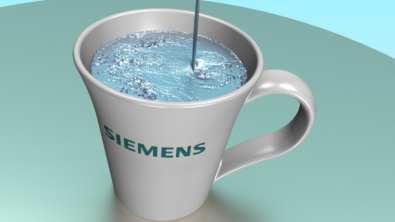
Brewing better products: How simulation helps engineers optimize coffee machines faster

Product innovation is rarely simple anymore, even in everyday appliances. Behind a premium coffee experience sits a surprisingly complex mechatronic system, where fluid flow, heat transfer, component behavior and control logic all need to work together with precision.
That is why the BSH Simcenter Amesim case study is interesting to read. It shows how system simulation can help engineering teams understand product behavior earlier, reduce costly trial-and-error and speed up development. For manufacturers facing rising complexity and tighter performance targets, it is a practical example of how simulation turns engineering insight into business value.
For engineering teams, that creates a familiar challenge: how do you deliver consistent performance, control costs and meet sustainability targets without getting trapped in long cycles of physical testing? This is where system simulation becomes a practical advantage. With solutions such as Simcenter Amesim, engineers can explore design choices earlier, understand system behavior faster and make better decisions before hardware is finalized.
Why coffee machines are more complex than they look
A coffee machine may seem straightforward from the outside, but its performance depends on the interaction of many variables. Heating power, pressure levels, temperature profiles, timing and control settings all influence the final result. If one parameter shifts, it can affect taste, energy use, consistency and overall customer satisfaction.
That complexity becomes even harder to manage when physical testing is the main path to insight. Testing can show whether a design works, but it is far less efficient at revealing why it works, or why it does not. When engineers need to explore many parameter combinations, relying only on prototypes can quickly become time consuming and costly.
There is also the challenge of late-stage changes. A hose length, a material update or another production-driven modification may seem minor, but it can alter heat transfer and system behavior in ways that are not obvious upfront. Without simulation, these changes can trigger repeated test cycles and slow down development.
From trial-and-error to engineering insight
System simulation helps teams move beyond trial-and-error by giving them a virtual way to study dynamic product behavior. With Simcenter Amesim, engineers can model how thermal, fluid and control effects interact over time and evaluate different strategies before committing to physical changes.
This is especially valuable for transient behavior. In products like coffee machines, performance is not only about steady-state conditions. It is about what happens during startup, heating, pumping and the full preparation cycle. Simulation helps teams understand these time-dependent effects earlier, which leads to more confident design decisions.
The business value is immediate. Faster virtual exploration means fewer unnecessary physical tests, shorter iteration cycles and a lower risk of discovering performance issues late in development. Instead of testing every option in hardware, engineers can focus physical validation on the most promising solutions.
A real example: BSH Simcenter Amesim case study and the physics behind a better cup of coffee
A strong example comes from BSH Home Appliances, where simulation was used to better understand and optimize the behavior of coffee machines. According to the case study, the engineering team used simulation to evaluate parameters such as heating power, pressure levels, temperature profiles and control strategy settings to improve flavor consistency while also considering energy and cost.
The value went beyond product tuning. In the BSH Simcenter Amesim case study, simulation helped the team assess design changes more quickly, including production-related modifications such as hose length or material choices that could influence thermal losses and overall machine behavior. That meant better decisions could be made before approving changes for physical implementation.
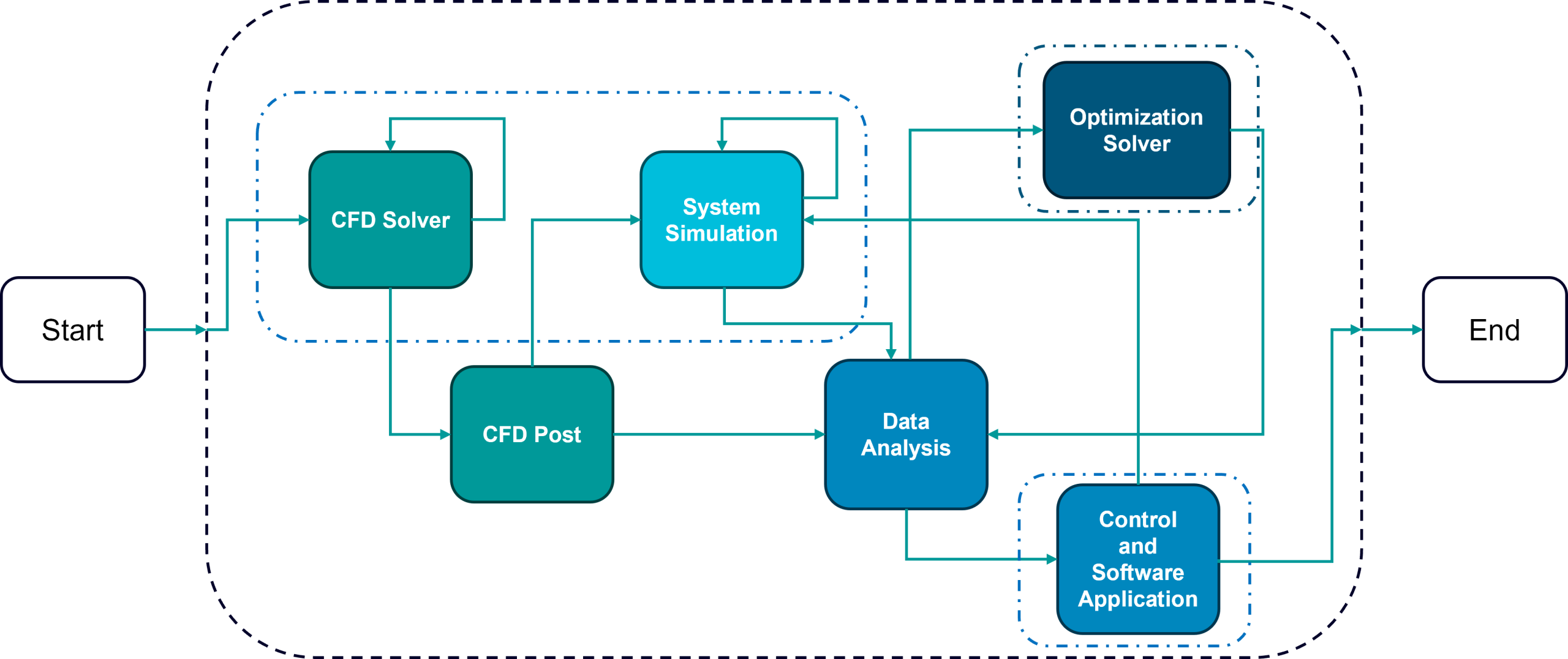
One especially compelling outcome was the optimization of pump and heater parameters. Using Simcenter Amesim and Simcenter STAR-CCM+, BSH calculated an ideal configuration that worked on the first iteration of physical testing, allowing work that would normally take weeks to be completed in just a few days. The BSH Simcenter Amesim case study also points to broader benefits such as reducing physical testing, accelerating change proposals and even improving sustainability by lowering coffee consumption per cup without compromising taste.
What this means for consumer product development
The BSH Simcenter Amesim case study illustrates a broader shift in how consumer products can be engineered. Products that combine thermal behavior, fluid systems and controls are difficult to optimize through testing alone. Simulation gives teams a way to understand interactions earlier and make smarter tradeoffs between performance, cost and efficiency.
That matters not only for coffee machines, but for many other consumer products and appliances where customer expectations are high and engineering margins are tight. Whether the goal is consistency, energy efficiency, faster design changes or reduced prototyping, system simulation helps manufacturers move with more confidence.
Key business benefits of simulation-driven development
Using simulation early in development can help manufacturers:
- Reduce physical prototyping and testing effort
- Shorten design and change cycles
- Improve product consistency and reliability
- Identify performance issues earlier
- Support sustainability and efficiency targets
- Make better engineering decisions with less risk
In practical terms, that means teams spend less time reacting to problems and more time improving the product experience. It also helps organizations scale innovation more efficiently across future programs.
Read the full BSH Simcenter Amesim case study
The BSH Simcenter Amesim case study is a great example of how simulation can connect engineering detail with customer value, from consistent taste to faster development and better sustainability outcomes.
Want to try Simcenter Amesim yourself?