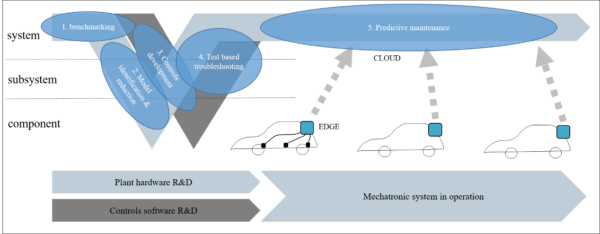
Selected application cases, projected on the automotive development cycle

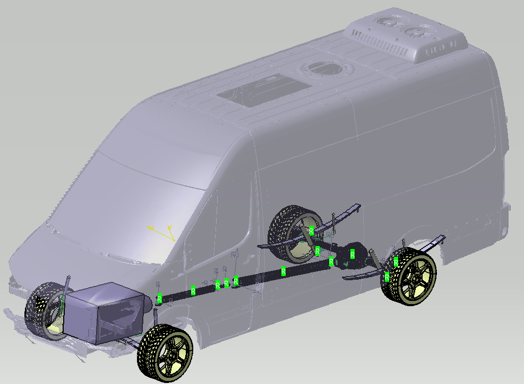
How artificial neural networks aid in mechatronic system development

In this blog post, we discuss how artificial neural networks aid in mechatronic systems development. We will use examples from different phases of the vehicle systems development cycle. We will also explore the applicability of various types of neural networks for a variety of engineering tasks.
Meet Siemens at NAFEMS CAASE20

Throughout the year, engineers at Siemens work with our customers and partners to deliver improved, more robust simulation software that will help users deliver innovations faster and with greater confidence. We are looking forward to sharing these new technologies with you at CAASE20.

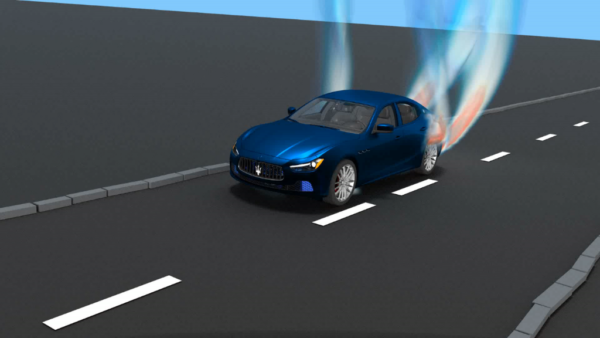
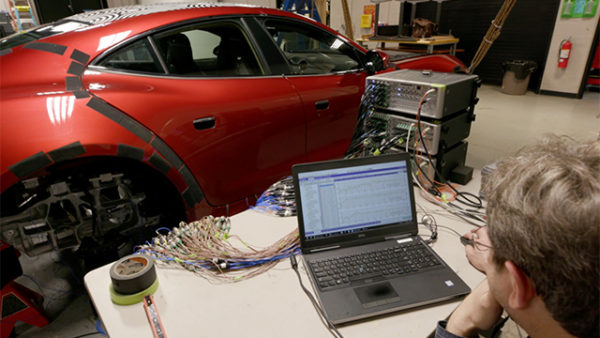
Excellence in electric vehicle NVH at Karma Automotive

What should an electric sports car engine sound like? There is currently no clear answer to this question, as there is very little history of electric vehicles to draw from. Engine noise is also brand-specific, so even existing electric vehicles will sound different depending on which company produced them.

How Rule of Mixtures is Killing Your Composite Design

Rule of Mixtures is probably the most known and widespread method of estimating composite properties. Its notoriety in composite design circles is also its main problem: Rule of Mixtures has been overused and applied to cases that do not even come close to respecting its original, simplifying assumptions.

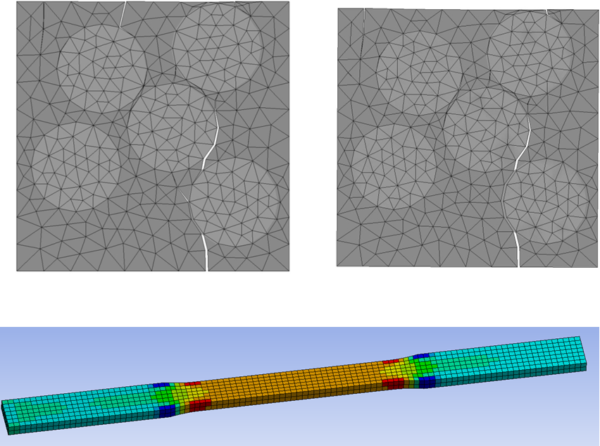
Multiscale Analysis: A General Overview and Its Applications in Material Design

Modeling advanced materials accurately is extremely complex. Multiscale simulations achieve balance between simulation accuracy and computational efficiency by capturing their behavior and important features at multiple scales.

High Velocity Impact on Composites – Past, Present, and Future

In 1969, Grumman Aerospace was the first company to successfully introduce advanced composites into a commercial airplane. The boron-epoxy laminated horizontal stabilizer used in the F-14A was 15% lighter and 18% less costly than its metal counterpart.