Why the best antimicrobial surfactants win before they reach the membrane
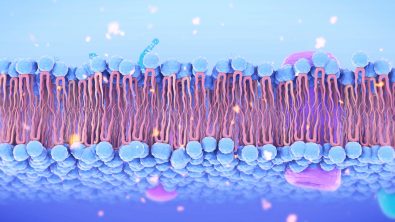
In current detergent innovation, teams are under growing pressure to improve antimicrobial performance while reducing development time, cost, and uncertainty. Surfactants and fatty acids are central to that challenge because they influence cleaning power, formulation stability, microbial control, and ultimately the commercial viability of new product concepts. Above all, fatty acids and biosurfactants are attracting attention as antimicrobial ingredients because they combine membrane activity with more favorable sustainability and toxicity profiles. For product developers, that makes them relevant in applications where efficacy, regulatory pressure, and sustainability all matter.
However, while these candidates on paper offer great potential, their effectiveness against Gram-negative bacteria such as E. coli is critically impacted by the final step in antimicrobial action. In scientific terms, it comes down to the core question:
Can surfactants reach and adsorb onto the bacterial inner membranes instead of self-aggregating first?
Only if they do, will the fight against harmful bacteria be won with sustainable detergents.
To answer this fundamental question, research must therefore understand why some candidates perform better than others and leverage this understanding to optimize performance.
Every formulation decision carries cost, timing, and market-positioning consequences
And, make no mistake, this presumably academic challenge is none that only matters behind closed lab doors: every formulation decision carries cost, timing, and market-positioning consequences. Hence, identifying which surfactant candidates are most likely to deliver antimicrobial performance early on, is fundamentally important to reduce late-stage surprises, focus experimental budgets on higher-value options, and bring more differentiated cleaning products to market with greater confidence, faster. In such an endeavor, lab testing remains essential, but it is too slow and costly to explore every combination of chain length, headgroup chemistry, concentration, and membrane composition.
And so the key business question is:
How do you find better antimicrobial surfactants fast enough, in times of increased market pressures, tight product development budgets reduced development cycle times?
The unbearable cost of atomistic simulations
The key is simulation, or more specifically Computational Chemistry. Simulating these systems and their chemistry offers the potential to virtually test any configuration without any real lab test involved. But when you have to deal with complex chemical systems, such as the detergent scenario at hand, you will quickly realize that fully atomistic simulation is too computationally expensive, especially if you intend to screen 100 or 1000s of candidates, and even more so when adsorption and uptake unfold over long timescales.
Multiscale chemistry to the rescue
To overcome this challenge the key ingredient is a workflow that maps detailed atomistic membrane lipids and candidate surfactants into coarse-grained building blocks. These simplified building blocks must however preserve the chemistry needed to accurately model adsorption and aggregation. This multiscale approach makes it possible to simulate membrane interaction at a scale that is practical for extensive screening.
But it does not stop there. If you want to leverage such a reliable mapping approach at scale, screening hundreds of candidates, you can no longer afford any manual steps involved in the mapping process. You need robust and reliable automation.
Simcenter Culgi – a powerful multiscale simulation tool
With that idea in mind, Simcenter Culgi was built as a powerful multiscale simulation tool that combines fully automated molecular mapping with mesoscale simulation. The multiscale capabilities of Simcenter Culgi offer a practical balance between molecular detail and screening speed.
In this context, Simcenter Culgi is perfectly suited, among many other applications, to understand how fatty acid surfactants adsorb onto bacterial inner membranes, giving R&D teams a faster way to gain deep insights into how surfactant structure and self-assembly influence membrane access. Simcenter Culgi translates detailed molecular structures into coarse-grained models and simulates their behavior using dissipative particle dynamics, allowing teams to compare candidates based on both their chemistry and collective properties, such as micelle formation.
Combining these reliable, high-fidelity predictions with an efficient approach to rapid simulation enables teams to compare candidates before committing to extensive laboratory testing. This allows organizations to turn molecular simulation into an earlier decision gate for formulation strategy and move more quickly from molecular insight to product decisions.
Why membrane access is the real performance test
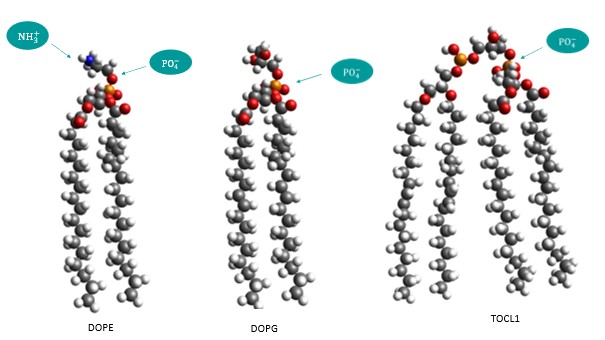
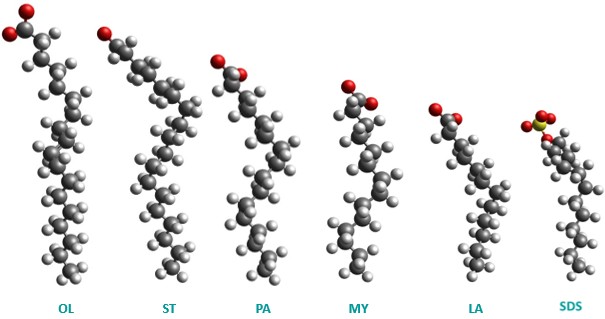
Leveraging this powerful simulation technique, let’s take a deeper look at how to practically run such a study and explore what happens when candidate surfactants hit the membrane lipids of E. coli. The sample study at hand compares dodecyl sulfate (SDS) with laurate, myristate, palmitate, stearate and oleate fatty acids, focusing on how size, concentration, and micelle formation influence membrane access.
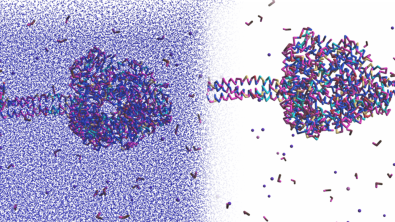
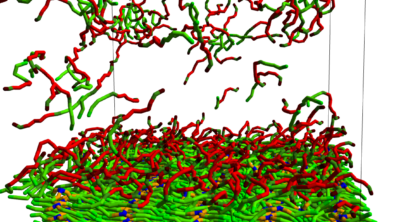
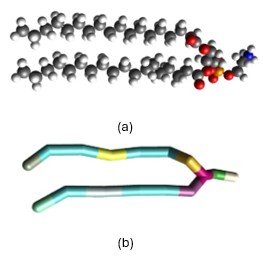
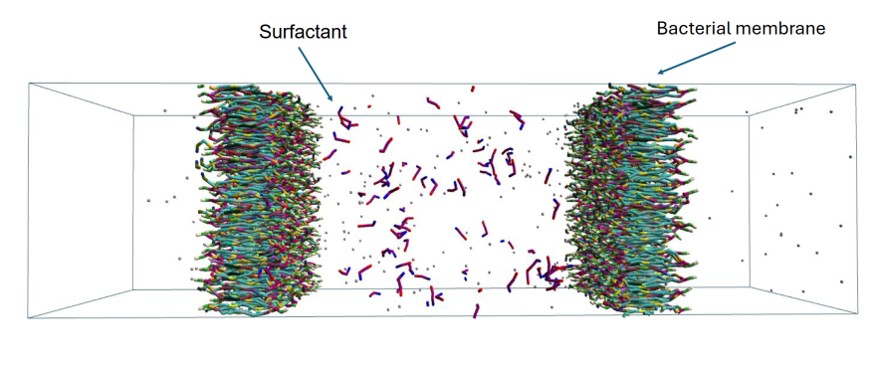
In each of these simulations, the first step is that Simcenter Culgi automatically maps the atomistic structure of membrane lipids and candidate surfactants into coarse-grained building blocks, also termed beads, that preserve the chemistry needed to model adsorption and aggregation. It allows to simulate membrane interaction at a scale that is practical for screening. Once this mapping is done, a comparable lightweight model is ready to run – revealing remarkable systems insights:
Inside the simulation approach behind the findings
What the data says about which surfactants perform best
Across the systems modeled in Simcenter Culgi, one trend was consistent: adsorption was strongest when surfactants remained available as individual molecules rather than clustering into larger aggregates. As chain length increased, aggregation became more favorable and membrane adsorption declined.
When aggregation increases, membrane performance drops
The Simcenter Culgi ranking of candidates was clear: SDS, laurate, myristate, palmitate, stearate, and oleate. Shorter-chain surfactants showed the highest membrane affinity, while longer-chain molecules spent more time in aggregates away from the membrane.
SDS and laurate performed best because their shorter chains reduced trapping in large micelles, while SDS also benefited from favorable headgroup interactions with the membrane. The result highlights that performance depends on both chain length and chemistry.
What this means for teams developing the next generation of cleaning products
For formulation teams, the practical message is clear: adsorption and micelle formation must be evaluated together because they directly affect which ingredients are worth advancing. A candidate that looks strong on paper may underperform if clustering removes too many free molecules from the system, leading to unnecessary lab work, slower iteration, and higher development cost.
The simulations also suggest that increasing concentration above the critical micelle threshold does not fundamentally change the ranking of candidates. Larger surfactants still cluster more strongly, while shorter surfactants retain better membrane access.
More broadly, the results show how Simcenter Culgi can support earlier and smarter formulation decisions by screening out weak candidates before expensive validation begins. This allows teams to concentrate resources on ingredients with stronger evidence, align experimental work with business priorities, and accelerate the path toward differentiated antimicrobial cleaning products.
The one finding R&D teams should pay attention to
The Simcenter Culgi simulations reveal a clear trend: membrane adsorption weakens as surfactant chain length and aggregation tendency increase. Shorter-chain surfactants remain more available for membrane interaction, whereas longer-chain molecules are more likely to form micelles before they can adsorb. Consequently, SDS and laurate emerged as the strongest performers, while palmitate, stearate, and oleate showed lower membrane affinity.
For R&D teams, these findings translate into three practical advantages:
• Faster pre-screening in Simcenter Culgi, reducing costly experimental cycles
• Clearer insight into how molecular structure influences antimicrobial performance and product differentiation
• More confident go/no-go decisions based on the balance between adsorption and aggregation

The business case for simulation-driven formulation
Simcenter Culgi shows how multiscale simulation can do more than explain surfactant behavior after the fact. It can help teams identify promising antimicrobial ingredients earlier by capturing the link between structure, aggregation, and membrane adsorption—and by converting that insight into more efficient portfolio prioritization.
Why this matters for product leaders: every formulation decision carries cost, timing, and market-positioning consequences. By using simulation to identify which surfactant candidates are most likely to deliver antimicrobial performance before extensive lab work begins, teams can reduce late-stage surprises, focus experimental budgets on higher-value options, and bring more differentiated cleaning products to market with greater confidence.
For organizations developing next-generation cleaning products, Simcenter Culgi enables shorter development cycles, more focused experimentation, reduced formulation risk, and greater confidence in candidate selection.
In business terms, Simcenter Culgi helps shift R&D from broad trial-and-error toward evidence-based investment decisions.
How Simcenter Culgi supports detergent and antimicrobial formulation development: by connecting molecular structure, surfactant aggregation, and membrane adsorption, Simcenter Culgi helps formulation teams screen candidates earlier, reduce experimental burden, and make more confident decisions for next-generation cleaning and antimicrobial products.
Want to learn more?
Discover how multiscale simulation helps predict the antimicrobial activity of surfactants in cleaning products.