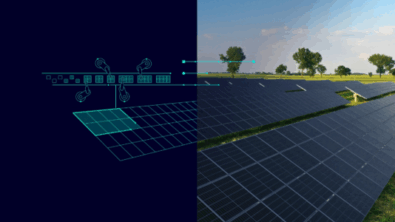
Can renewable-powered electrolyzers remain safe, efficient and profitable when the sun doesn’t cooperate?
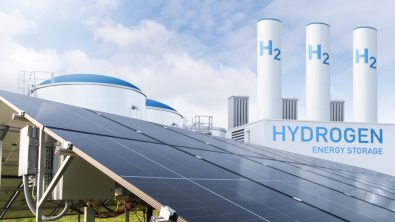
Renewable hydrogen looks simple on paper. Reality is far more dynamic.
On a sunny summer afternoon, a photovoltaic plant produces more electricity than an electrolyzer can consume. A few hours later, clouds move in. Solar production drops. The electrolyzer slows down. By sunset, battery storage may take over. During the night, electricity could come from the grid.
At first glance, the objective seems straightforward: use renewable electricity to produce green hydrogen. But for engineers designing hydrogen production systems, a more challenging question quickly emerges:
Can renewable-powered electrolyzers remain safe, efficient and profitable when the sun doesn’t cooperate?
The answer is surprisingly important. The power continuously rising and falling can affect hydrogen purity, operational safety, production yield, carbon footprint and ultimately the economics of the entire project. This is where dynamic system simulation becomes essential.
The hidden challenge of renewable-powered electrolysis
Alkaline water electrolysis has earned its reputation as one of the most mature and cost-effective technologies for large-scale hydrogen production. Its robustness and long operational lifetime make it a natural candidate for the growing hydrogen economy.
Yet most electrolyzers were originally developed for relatively stable operating conditions. Renewable energy changes the game.
Unlike conventional power sources, solar energy continuously fluctuates throughout the day and across seasons. Electrolyzers must increasingly operate at partial load, experience frequent power ramps and sometimes face repeated start-stop cycles.
These operating conditions introduce phenomena that are often overlooked during the early stages of design. One of the most critical concerns is gas cross-contamination.
A safety issue that cannot be ignored
Inside an alkaline electrolyzer, hydrogen and oxygen are produced in separate compartments. In theory, the separator prevents them from mixing. In reality, the situation is more complex.
Small quantities of hydrogen and oxygen dissolve into the electrolyte. These dissolved gases can migrate through the separator, circulate within the electrolyte loops and eventually appear in the opposite gas stream. Under certain operating conditions, contamination levels can increase significantly.
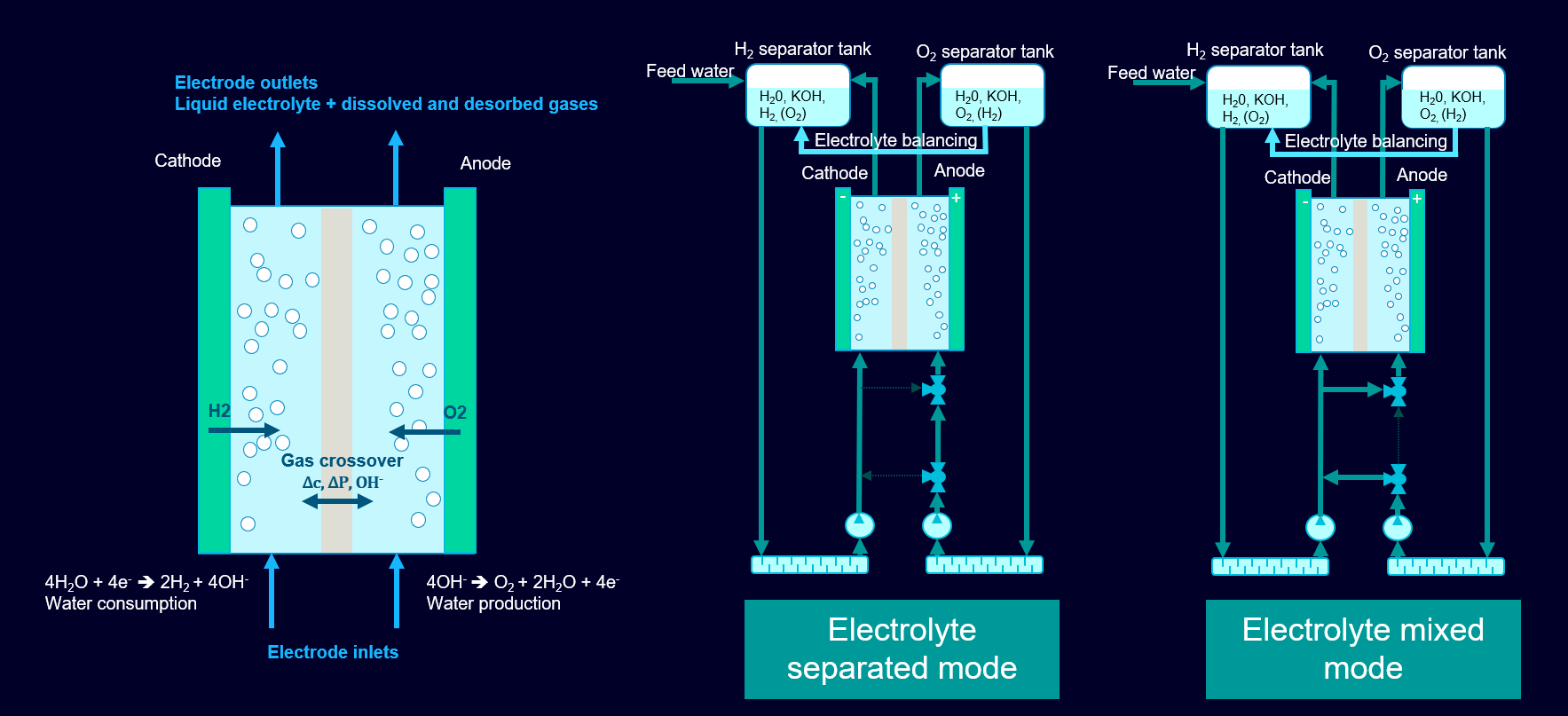
The paradox is that this phenomenon becomes more pronounced when the electrolyzer operates at low load. As gas production decreases, dissolved gas transport mechanisms become comparatively more important. What appears to be a harmless reduction in power can therefore create unexpected challenges for gas purity and safety. For system designers, a crucial question emerges:
How low can the electrolyzer operate while maintaining safe operating conditions?
Traditional steady-state calculations provide only part of the answer. The rest requires capturing the dynamic behavior of the complete system.
Building a digital twin of the hydrogen ecosystem
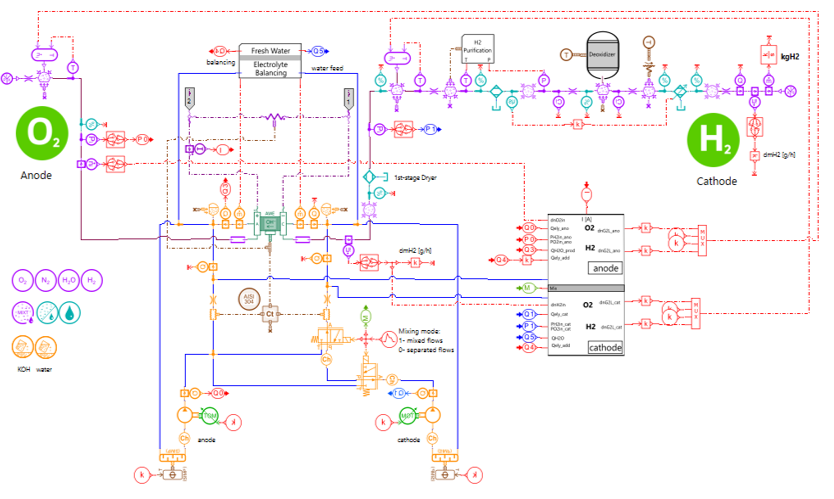
To investigate these interactions, we developed a dynamic system model of a renewable hydrogen production plant using Simcenter Amesim. The model went beyond the electrolyzer stack itself.
It incorporated the electrochemical system, electrolyte recirculation loops, hydrogen purification units, photovoltaic generation, grid connection and optional battery storage within a single simulation environment.
Rather than analyzing isolated operating points, we wanted to understand how the entire energy ecosystem behaves over time. Using real solar irradiation data from Lyon, France, we simulated a full year of operation, capturing seasonal variations, daily fluctuations and transient operating conditions that would be impossible to evaluate through testing alone. The results revealed insights that directly impact system design.
What happens when an electrolyzer is pushed too far… in the wrong direction?
One of the most revealing findings came from investigating low-load operation. At first glance, allowing the electrolyzer to run at 10% of its nominal capacity seems like an effective way to maximize operating time when solar power is scarce.
However, the simulations told a different story.
Under these conditions, hydrogen concentration in the oxygen stream occasionally approached 2.5%. The cause was not a malfunction or a design flaw. It resulted from normal physical phenomena such as gas dissolution and crossover becoming more significant when gas production rates are low.
Increasing the minimum operating load from 10% to 20% fundamentally changed the picture. Throughout the simulated year, hydrogen concentration remained below 2%, maintaining a more comfortable safety margin.
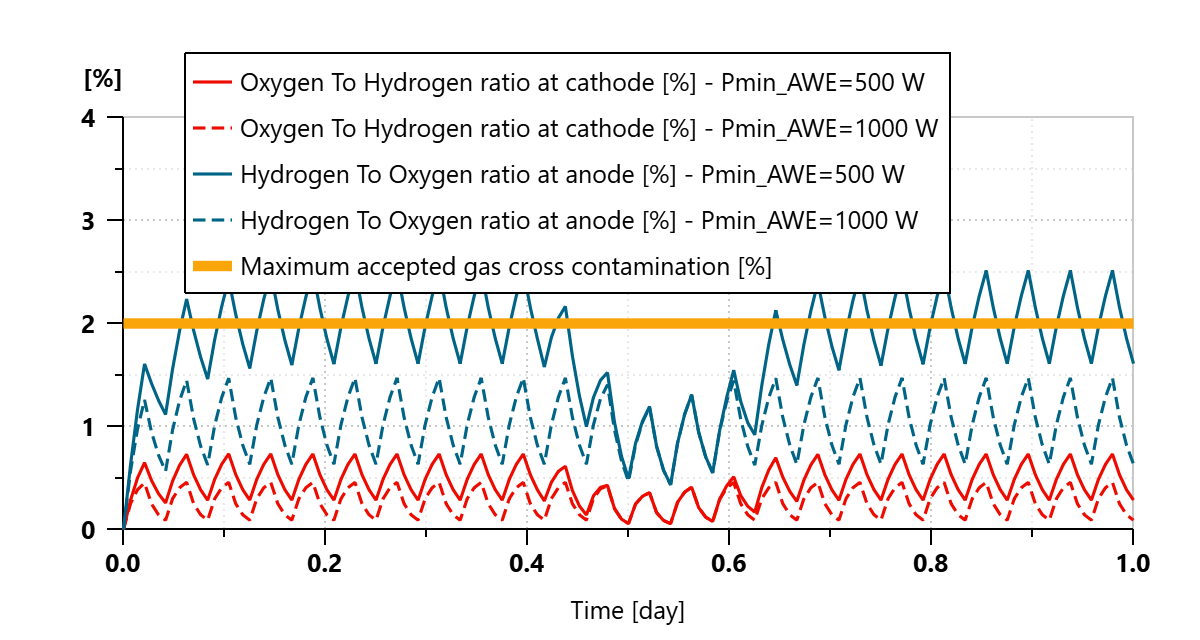
This is exactly the type of insight that engineers need before commissioning a plant. The solution was not a redesign of the electrolyzer. It was a better understanding of system dynamics and a simple operational decision.
The battery debate: investment or necessity?
Once safety concerns are addressed, another debate inevitably arises. Should battery storage be added to the system?
The conventional wisdom is simple: batteries smooth renewable fluctuations and improve electrolyzer operation. That is true. But are they always worth the cost?
To answer this question, we evaluated multiple system architectures with and without battery storage. The simulations showed that batteries significantly reduce power fluctuations experienced by the electrolyzer. They decrease the frequency of low-load operation and start-stop events while improving renewable energy utilization.
The impact on hydrogen production was remarkable. Annual hydrogen output increased by approximately 30% compared with the baseline configuration without batteries. At the same time, dependence on grid electricity dropped substantially as locally generated renewable energy was used more effectively. From an operational perspective, the case for batteries appeared compelling. The economic story, however, was more nuanced.
There is no universal optimum
One of the most valuable outcomes of the study was the realization that the “best” architecture depends heavily on the local context.
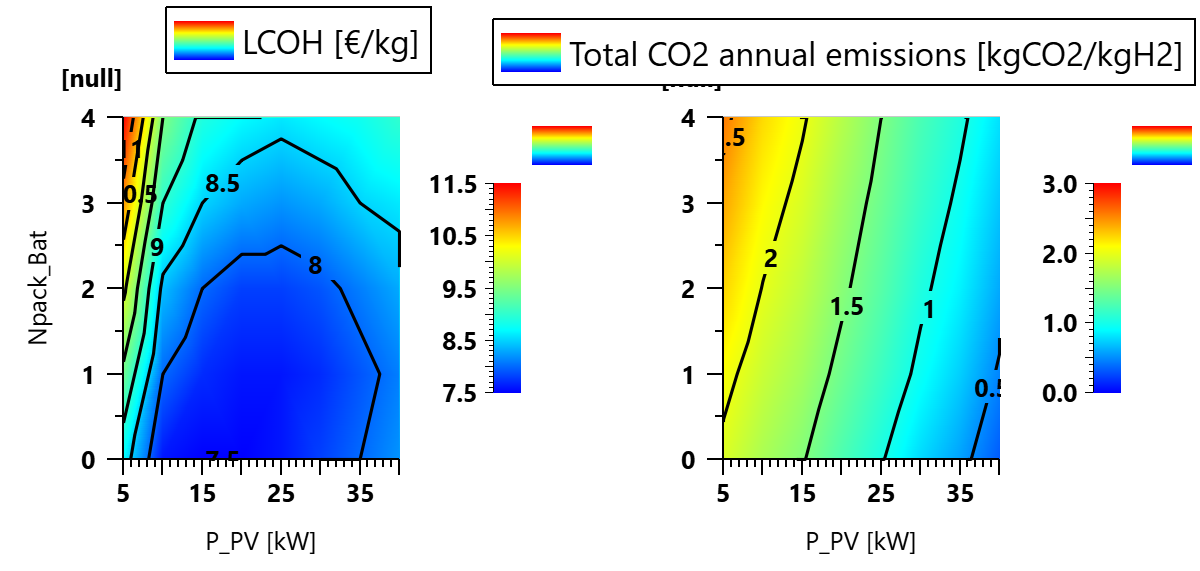
In the French scenario analyzed, grid electricity benefits from relatively low carbon intensity and competitive electricity prices. Under these conditions, adding battery storage does not always produce the lowest levelized cost of hydrogen.
In fact, certain battery configurations slightly increased both system cost and lifecycle emissions because of additional investment requirements and efficiency losses. Yet those same batteries improved operational robustness, hydrogen production and energy independence. The result is a classic engineering trade-off. And that trade-off cannot be understood by looking at individual components in isolation.
From component design to system intelligence
As hydrogen projects become larger and more integrated with renewable energy, engineering challenges are shifting. The key questions are no longer limited to stack efficiency or equipment sizing. They increasingly concern interactions.
How does solar variability affect gas purity? How does storage influence operational safety? What is the optimal balance between cost, emissions and production output? Answering these questions requires more than component models. It requires a system-level perspective.
This study demonstrates how dynamic simulation can provide that perspective, allowing engineers to safely explore operating strategies, evaluate design alternatives and quantify trade-offs long before physical assets are deployed.
Because in the future hydrogen economy, success will not only depend on producing hydrogen efficiently. It will depend on understanding the dynamics of the entire ecosystem that produces it.
Conclusion
Renewable hydrogen systems will not succeed through efficient components alone. They will succeed when engineers can understand how every part of the ecosystem behaves together: from solar variability and battery storage to gas purity, safety margins and hydrogen output. Dynamic simulation makes it possible to explore these interactions early, compare design choices with confidence and build hydrogen systems that are not only greener, but also safer, smarter and more resilient.
If you are designing renewable hydrogen production systems, dynamic simulation can help you look beyond nominal performance and uncover the system interactions that matter most. Explore how Simcenter Amesim supports multi-domain modeling of hydrogen ecosystems, helping engineering teams evaluate safety, production, emissions and cost before committing to physical designs.
Want to try Simcenter Amesim yourself?