What’s new in Simcenter Flux 2026.1

Electromagnetic simulation plays a critical role in the development of electric machines, power electronics and other low-frequency electromagnetic devices. As electromagnetic models become larger and more complex and development cycles continue to shorten, engineers are expected to balance simulation accuracy, workflow efficiency and engineering productivity while supporting an increasingly connected simulation process.
Simcenter Flux 2026.1 introduces new capabilities that help engineers accelerate electromagnetic simulations, simplify model creation and extend electromagnetic workflows across optimization, multiphysics and system-level engineering activities
Getting started with Support Center
Accelerate electromagnetic simulations
As electromagnetic models continue to grow in size and complexity, engineers are constantly looking for ways to reduce simulation effort while maintaining accuracy. Simcenter Flux 2026.1 introduces several enhancements that accelerate low-frequency electromagnetic simulations through numerical innovations, while also providing greater flexibility during model preparation and modification.
A major addition in this release is the extension of the Integral Method to transient magnetic simulations. By eliminating the need to mesh large surrounding air regions, engineers can significantly reduce model complexity and simulation effort while maintaining accurate representation of eddy-current and capacitive effects.
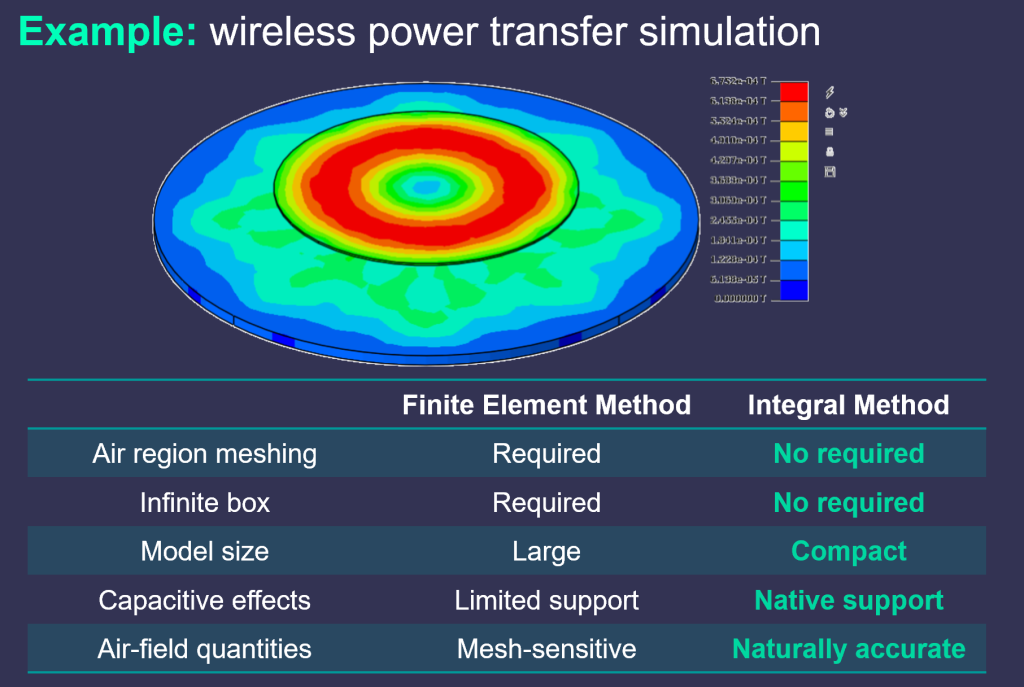
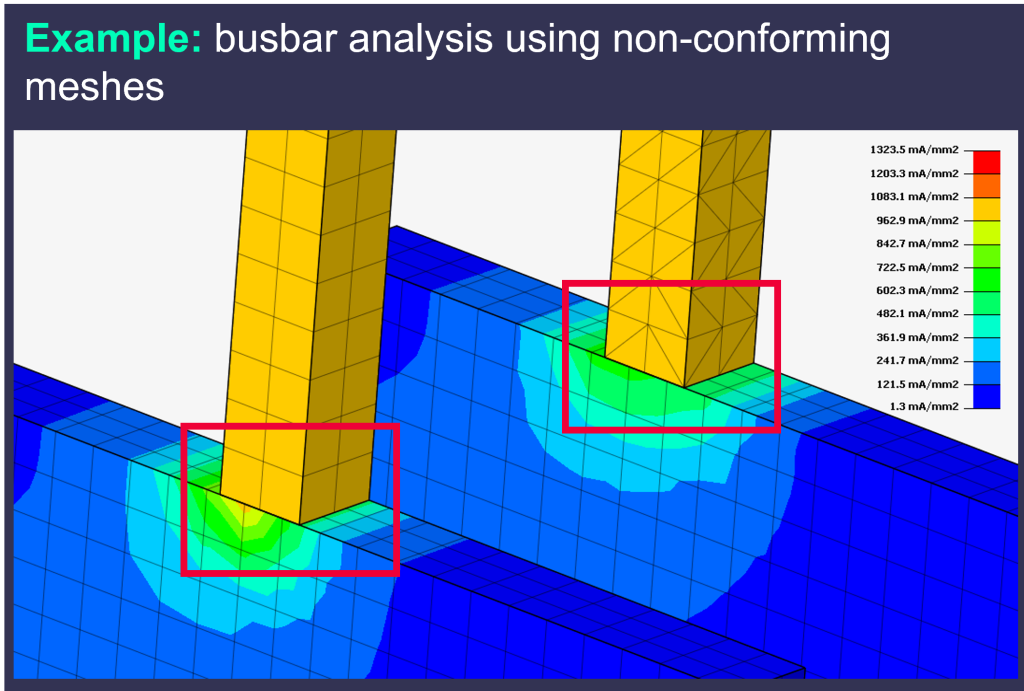
The Integral Method workflow is also enhanced through support for non-conforming meshes in conductor and parasitic extraction analyses. Individual components can now be meshed independently, simplifying geometry preparation and providing greater flexibility during model modifications.
Simcenter Flux 2026.1 also introduces access to selected magnetic material databases originating from Simcenter MAGNET. By bringing valuable material knowledge into Simcenter Flux, this enhancement promotes greater consistency across low-frequency electromagnetic simulations and simplifies the reuse of validated material data across the Simcenter electromagnetic portfolio.
Enhance modeling productivity and user experience
Simcenter Flux 2026.1 introduces more than 30 enhancements across low-frequency electromagnetic modeling workflows. Leveraging Simcenter Simlab, a multiphysics simulation platform, these improvements simplify geometry preparation, machine definition and model setup, helping engineers create electromagnetic models more efficiently.
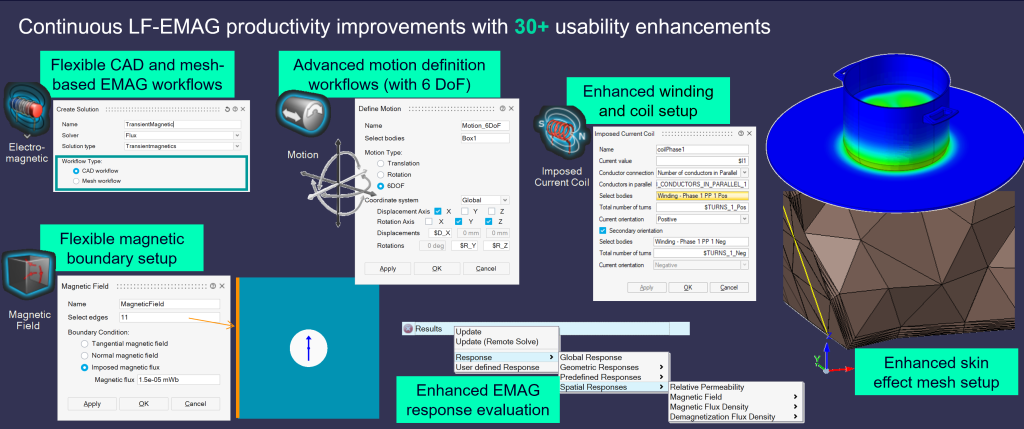
A major enhancement in this release is the expanded support for axial flux machine development. Engineers can rapidly create and evaluate parameterized axial flux machine models while performing electromagnetic, NVH, thermal and system-level analyses within a unified simulation environment.
Another major addition is a new component-based workflow for radial machine assembly. Engineers can rapidly construct machine models using predefined and customizable components, reducing repetitive geometry preparation and promoting reuse of validated machine building blocks across projects.
For permanent magnet machines, model preparation is further simplified through automated magnet orientation propagation. Engineers can define a reference orientation and automatically apply it to the remaining magnets, reducing repetitive setup tasks and minimizing the risk of modeling errors.
Together, these enhancements help engineers create low-frequency electromagnetic models more efficiently while improving support for advanced electric machine development workflows.
Extend electromagnetic models across engineering workflows
Electromagnetic simulation is increasingly part of a broader engineering process. Beyond field analysis, electromagnetic models are often reused for design exploration, optimization and system-level studies. Simcenter Flux 2026.1 further strengthens connectivity across the Simcenter portfolio, enabling electromagnetic models and simulation data to support a wider range of engineering workflows.
Engineers can now leverage NX parametric geometry directly within electromagnetic simulation workflows, enabling associative geometry updates while preserving design intent and accelerating iteration cycles between CAD and simulation environments.
Connectivity with Simcenter HEEDS enables automated design exploration and optimization studies, allowing engineers to investigate larger design spaces and identify high-performing designs more efficiently.
Enhanced reduced motor model workflows further extend the value of electromagnetic simulations. Support is now expanded to additional machine architectures, including axial flux, wound field and multiphase machines, while export capabilities enable efficient integration with PSIM or Simcenter Amesim for system-level investigations.
By extending the use of electromagnetic models across the Simcenter portfolio, engineers can reuse simulation data more effectively throughout optimization, multiphysics and system-level engineering workflows.
Exploring new approaches to low-frequency electromagnetic simulation
In addition to enhancements across simulation performance, modeling and engineering workflows, Simcenter Flux 2026.1 also highlights emerging approaches that combine simulation, optimization and AI technologies for low-frequency electromagnetic applications.
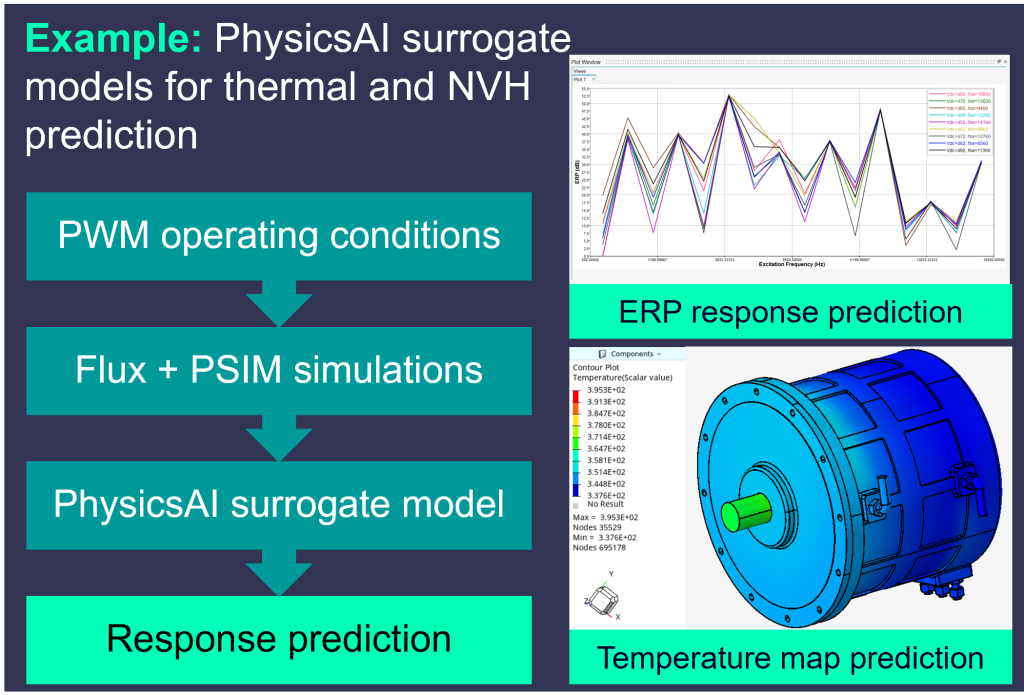
One example is the combination of Simcenter Flux, PSIM and Simcenter PhysicsAI to create surrogate-model-based multiphysics workflows. By generating simulation data and training surrogate models, engineers can rapidly evaluate thermal and NVH responses while significantly reducing the computational cost associated with design exploration and optimization studies.
Another area being explored is magneto-mechanical topology optimization. By combining electromagnetic and structural simulations within a unified optimization process, engineers can simultaneously consider electromagnetic performance and mechanical feasibility at high speed, enabling the exploration of innovative designs that would be difficult to identify using traditional approaches.
Looking ahead
From numerical innovations and advanced machine modeling to optimization, system simulation and emerging AI-assisted technologies, Simcenter Flux 2026.1 continues to expand the role of low-frequency electromagnetic simulation across the product development process.
By improving simulation performance, modeling productivity and engineering connectivity, Simcenter Flux helps engineers move more efficiently from concept exploration to engineering decision-making.