Putting green hydrogen on the map

Siemens Energy leads the way with new green hydrogen electrolyzer business
Following an inspired shoot at Extreme H, the world’s first hydrogen-powered motorsport, I had an inspired idea: why not put an eco-twist on our upcoming family vacation? Heck, we were going to remote areas of Denmark and Sweden – two of the greenest countries on the planet. Why not try to make some eco-minded travel choices and rent a hydrogen-fueled car…
What could be so hard?
The perfect car seemed to be the next-generation Hyundai Nexo FCEV (fuel cell electric vehicle) which was being advertised all over. And thanks to a pre-production brainstorm, I knew we had a hydrogen fuel pump just down the street in Leuven, Belgium. Plus, a quick check online told me that you could readily find stations in The Netherlands, Germany and…well, The Netherlands and Germany. Obviously early adapters.
Maybe next year?
But read further to hear firsthand from a green hydrogen pioneer about how this fledging new business is taking wings…
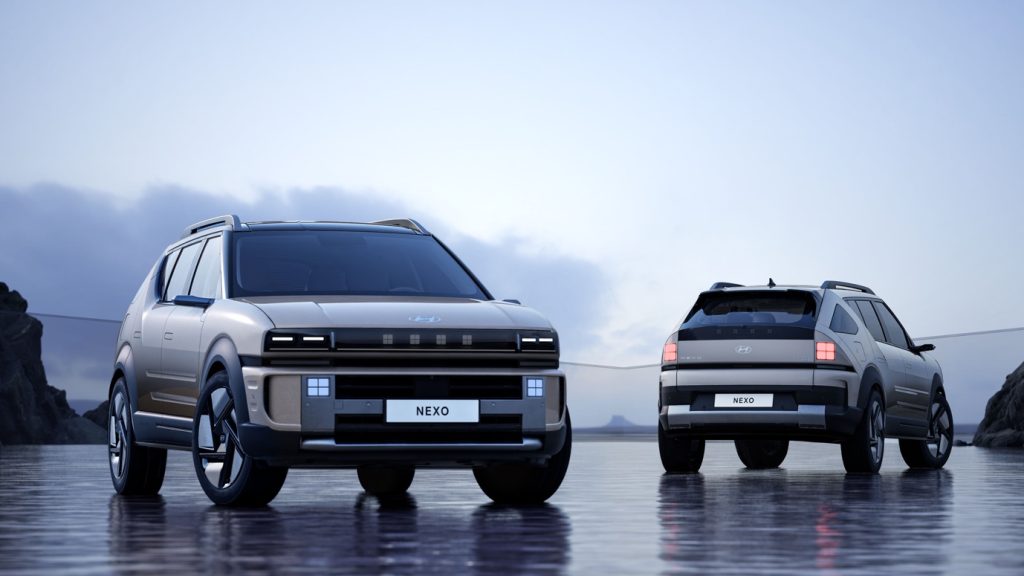
Besides Hyundai’s all-new NEXO’ FCEV (shown above), Toyota, Honda and more recently BMW have joined the mainstream FCEV community. (And if your budget is more daring than mine: well, there is always the NamX collab with Pininfarina.
Putting green hydrogen on the map
Even with hydrogen mobility options starting to take shape globally, the green hydrogen economy is undeniably still in its infancy. Luckily, there are pioneers and green hydrogen gurus out there who know what it takes to get green hydrogen from the R&D department to the cutting edge of high-tech industry. And, we just happened to have a Siemens Energy expert visit us last year in the Realize Live Studio in Amsterdam.
Dr. Sebastian Neubert is the Head of Projects and the Process Owner PLM & Engineering in Siemens Energy’s Sustainable Energy Systems. In other words, this gentleman knows a lot about green hydrogen production and the growing hydrogen economy.
What started as a Siemens Energy research group several years ago has now developed into a very promising new industrial business, based on green hydrogen electrolyzers. Dr. Neubert and his team, today, created an end-to-end digital landscape that links customer needs, engineering, and operations together so that these complex electrolyzer systems can be developed and maintained effectively in the future.
What exactly is an electrolyzer?
OK. Let’s backtrack first. What exactly are we talking about? Simply stated, a green hydrogen electrolyzer is an electrochemical plant that uses renewable electricity from solar or wind sources to split water into hydrogen and oxygen – via a process known as electrolysis.
The resulting hydrogen is primarily used as a climate-neutral feedstock in industrial processes such as refining, chemicals, steel, and fertilizers, where no direct electrification alternative exists. It can also be transported or stored for balancing renewable power systems and serve as a basis for producing synthetic fuels for sectors that are otherwise hard to decarbonize.

The electrolyzer factory of the future
Although still a rather costly and energy intensive application, Siemens Energy sees significant potential for green hydrogen as a key pillar of industrial decarbonization. This is why the company, along with its joint venture partner Air Liquide, built one of the first gigawatt-scale electrolyzer factories in Berlin, Germany. High-tech-redefined, the factory features advanced automation, modern robotics and end-to-end digitalization – enabling a scalable, reliable and cost-efficient manufacturing process that supports the ramp‑up of the green hydrogen economy.
In the short-term, the company is focusing on replacing fossil-based hydrogen in sectors such as refining or chemicals. These “grey” hydrogen applications are currently responsible for roughly 2% of global CO₂ emissions. Further down the roadmap, Siemens Energy sees numerous opportunities in mobility, such as hydrogen-fueled buses, trucks and ships as well as hydrogen-powered energy plants and other industrial applications.

The electrolyzer orders are coming in
Siemens Energy’s smart factory in Berlin, which already has secured an order volume of more than 1 GW, has set new digitalization and automation standards for mass-manufacturing electrolyzers for onsite installation of new green hydrogen electrolyzer systems.
“We started with the first lab electrolyzer with a 0.1-megawatt size in 2011. And we saw this increase by a factor of 10 every four to five years,” explains Dr. Neubert “Today we are selling electrolyzer units of the 100-megawatt variety. So, in 15 years, we’ve gone from 0.1 megawatt to 100 megawatts. With this rate of scalability, there is certainly future potential for growth in the hydrogen economy.”
A digitalization frontrunner
As pioneers in this new industry, Siemens Energy realized they needed the right balance of digital tools to support sustainable and scalable growth. They also realized they had the perfect opportunity to tailor their digital transformation to the new business’ exact requirements. Rather than starting from scratch, the team opted for the Siemens Xcelerator portfolio and other specialized Siemens tools that were already in use in other parts of the company.
“We chose the Teamcenter environment, including Designcenter NX as the CAD tool and Simcenter and Simcenter STAR-CCM+ as the simulation landscape. This was supported by COMOS, the Siemens plant engineering software for the process design,” explains Neubert. “We down-selected processes to reduce complexity for our new business since we didn’t want to replicate the complexity you find in more mature industries like the gas turbine business. This was the starting point for our transformation towards end-to-end digitalization. We are now a front runner for Siemens Energy.”
“In the hydrogen business, we are still in the ramp up mode. So, we are not talking about return of investment yet, we are talking about avoiding setting up structures which are in ‘old’ businesses, which we don’t need to establish in the new business. And that’s what our choice for a digitalization based on Siemens software is all about.”
Dr. Sebastian Neubert, Head of Projects and the Process Owner PLM & Engineering, Siemens Energy
Ready for the predictive maintenance business model
The Siemens Xcelerator digital backbone is absolutely key because hydrogen electrolyzers are a complex product that require significant amounts of service during the product lifecycle. This requires good data management starting from the primary product development, running through specific customer and engineering requirements, and finally driving the right type of service levels and predictive maintenance during operational cycles.
“Of course, at Siemens Energy, we want an effective service business, but also this digital backbone is key for our customers who want to operate their electrolyzer system effectively and minimize standstill and unnecessary downtime times,” adds Neubert.
Spotlight on Simcenter
Another area where Siemens Xcelerator software plays an important role is advanced simulation when developing new electrolyzer products – simply because the technology is new and the business model is even newer.
“A key challenge when engineering an electrolyzer is the limited number of validated reference cases, which makes it harder to confidently model and scale new designs,” states Neubert.
To answer this challenge, the teams from Siemens Energy and Siemens Digital Industries Software worked closely together to strengthen aspects of the CFD software, Simcenter STAR-CCM+, to include specific electrochemistry applications and workflows and improve the accuracy of the electrolyzer digital twin.
The future is green…and clearly, hydrogen as a green energy source is on the map – thanks to experts like Dr. Neubert and his team at Siemens Energy.