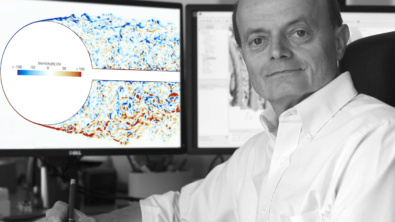
The Tears in Rain Project: Rescuing CFD & Multiphysics simulations for the Simcenter community
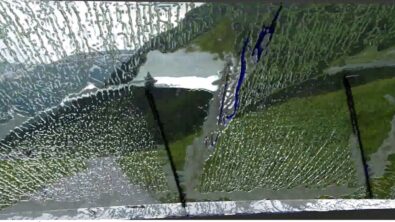
Advanced eVTOL simulation rescued from digital archives; sophisticated engineering knowledge now available to the global community.
The Simcenter community plays a crucial role in preserving CFD and Multiphysics simulation knowledge.
“All those moments will be lost in time, like tears in rain.” This iconic line from Blade Runner perfectly captures the challenge we face in the digital age: valuable knowledge disappearing into the vast archives of our computers and file systems. After 25 years in simulation support, I’ve witnessed countless high-quality simulations vanish into digital oblivion. Not due to confidentiality requirements, but simply because they were forgotten in folders, lost during system migrations, or never documented adequately for sharing.
The Tears in Rain Project was born from this realization. Named with inspiration from science fiction, this project recognizes that, like moments in time, valuable simulations can be lost if not properly documented and shared.
It’s our dedicated mission to rescue and illuminate valuable simulations that have been hidden away: everything from CFD and thermal analysis to FSI, combustion modeling, and multiphysics applications.
Through our Simcenter STAR-CCM+ Spotlight platform, we transform these forgotten files into downloadable, peer-reviewed learning resources available to engineers worldwide.
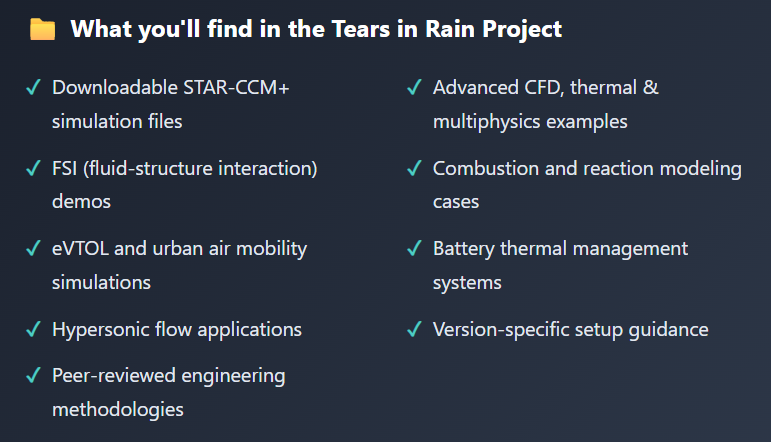
What you’ll find in the Tears in Rain Project
This initiative addresses a fundamental challenge in engineering organizations: the systematic loss of intellectual capital.
While we rightfully protect confidential customer data, we’ve inadvertently created a culture where valuable non-confidential simulations disappear into the digital equivalent of archaeological layers.
Each system migration, each reorganization, each personnel change buries another stratum of engineering insight.
From digital archives to living knowledge: CFD best practices repository
Working in customer support, I’ve witnessed the inevitable cycle: brilliant simulation work is created, solves complex problems, demonstrates innovative techniques, and then oftendisappears. The loss is often gradual and unintentional. A support engineer develops an elegant solution to a challenging physics problem, saves it in a personal folder, and moves on to the next case. Months later, during a system upgrade, the file becomes inaccessible. Years pass, and the engineer moves to a different role. The simulation (representing hours of specialized knowledge and creative problem-solving) ceases to exist in any practical sense.
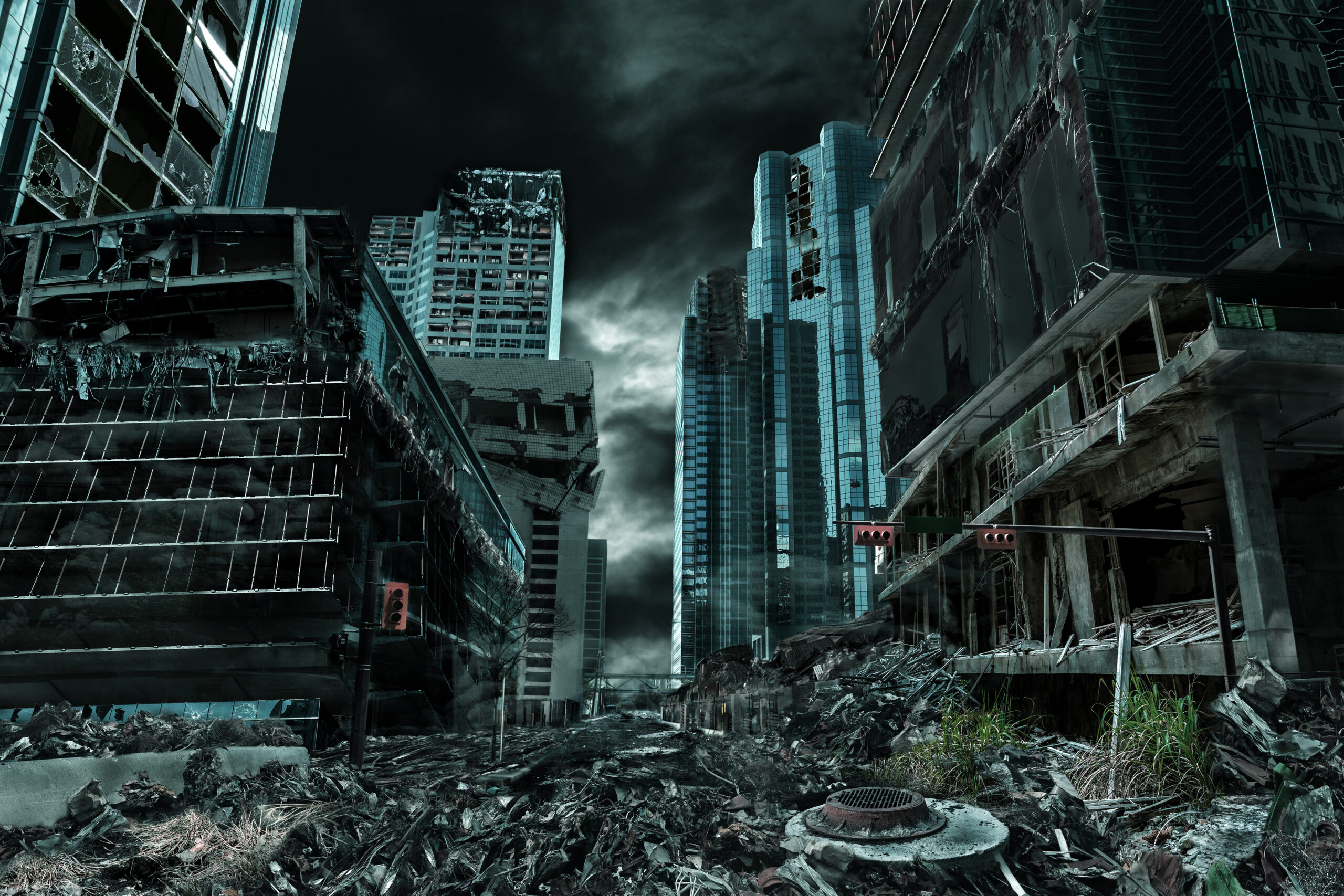
While some deletion is necessary due to confidentiality constraints, we were losing an alarming amount of non-confidential material simply due to poor knowledge management.
It reminded me of the coastal collapse scene in Inception: layer after layer of valuable information being relentlessly erased, with each level representing another generation of lost engineering insight.
This realization sparked a new approach. Instead of letting valuable simulations fade away in private archives, why not create a public repository where they could live, breathe, and educate? The key insight was recognizing that many of our most innovative simulation techniques had no confidentiality restrictions. They were simply trapped in organizational silos.
Community as a technical platform for Simcenter users
The solution emerged through reimagining our Simcenter STAR-CCM+ Community platform. Rather than treating it as merely a support forum, we transformed it into a technical publication through the Simcenter STAR-CCM+ Spotlight section: “A place where Simcenter STAR-CCM+ experts and community members share advanced simulations, modeling techniques, best practices, and application examples.”
You might wonder how to access these rescued simulations: it’s surprisingly simple. Visit the Simcenter STAR-CCM+ Spotlight section in our community forum, where all simulation files are freely downloadable, even without being a customer. No registration fees, no paywalls, just open access to engineering knowledge.
This approach builds on our community’s proven versatility as a learning platform. Just as we are successfully hosting an advanced CFD training through the Perić Lectures, the Spotlight section demonstrates how support forums can evolve into dynamic educational resources. Traditional boundaries between support, education, and knowledge sharing are dissolving, replaced by platforms that serve multiple roles.
Each Spotlight post becomes a rescue mission, extracting valuable simulation knowledge from the digital archives and presenting it in an accessible, educational format. In doing so, the project goes beyond simple preservation. It actively transforms isolated simulation files into educational resources that can accelerate learning and innovation across the global engineering community.
Battery thermal runaway simulation in Simcenter STAR-CCM+: From hidden archive to community learning resource.
The rescue methodology: Free Simcenter STAR-CCM+ files available
Every Tears in Rain rescue follows a structured approach designed for maximum transparency and educational value, guided by core principles that set this initiative apart from traditional knowledge repositories.
Complete transparency and attribution: Each post credits the original author, ensuring academic integrity and traceability of authorship. This isn’t merely about courtesy. It’s about establishing a culture where sharing expertise is recognized and valued.
Intelligent user philosophy: We assume intelligent users, focusing on the engineering insights rather than basic software tutorials. This principle eliminates the temptation to create oversimplified content that fails to capture the true complexity and nuance of advanced simulation work. The attached simulation files serve as a detailed tutorial, allowing users to explore, dissect, and understand the methodology hands-on through direct engagement with working examples, thereby learning through practical experience.
Version transparency: Every simulation clearly states the Simcenter STAR-CCM+ version used, ensuring users understand potential compatibility considerations. This transparency has proven more effective than trying to constantly update every file. Initially, some colleagues worried about providing “outdated” material, but experience has shown that informed users can successfully adapt simulations across versions when they understand the original context.
Peer review by design: Perhaps most importantly, every simulation file is downloadable, even without being a customer. This creates an unprecedented level of accountability in technical publishing. Readers can verify claims, test methodologies, and validate results personally. It’s engineering transparency at its finest: putting your money where your mouth is. This downloadable verification system functions as a continuous peer review process, where the community itself validates the quality and accuracy of shared knowledge.
Accelerated learning through working examples: For engineers familiar with multiphase flows, overset meshes, or advanced physics modeling, the most challenging aspect often isn’t understanding the theory. It’s getting the settings right. Which interfaces to define? What boundary conditions to apply? How to structure the solver? The Tears in Rain simulations provide the most efficient training mechanism available: working examples ready for copy-and-paste adaptation. Engineers can start with a proven setup and modify it for their specific needs, dramatically accelerating the learning curve and reducing trial-and-error time.
Fluid-structure interaction simulation in Simcenter STAR-CCM+ showing bottle deformation and water flow: practical engineering knowledge transformed into accessible learning material.
Key goals of our simulations knowledge management initiative
The Tears in Rain Project operates with clearly defined objectives that guide our rescue operations and shape our impact on the engineering community.
Knowledge preservation: Systematically identify, document, and share non-confidential simulations that demonstrate innovative techniques, unique modeling approaches, or solutions to complex engineering challenges. Each rescued simulation represents a preserved piece of institutional knowledge that would otherwise be lost to digital entropy.
Educational: Transform isolated simulation files into accessible learning resources that speed up skill development. By providing working examples across diverse applications, we enable hands-on learning over theoretical study alone
Community building: Foster a culture of open knowledge sharing where technical experts contribute their innovations for the collective benefit. Support engineers and simulation experts who are wondering how to contribute their own work; they can contact us through the community forum. We actively encourage sharing non-confidential simulations that could benefit others.
Quality assurance: Maintain high technical standards through our peer review by design approach, where downloadable files enable community validation of methodologies and results. This system ensures that rescued simulations meet professional engineering standards while remaining accessible to learners.
Global accessibility: Remove barriers to advanced simulation knowledge by providing free access to working examples, regardless of commercial relationships or geographic location. This democratization of technical knowledge accelerates innovation across the global engineering community.
Featured Simulations: From eVTOL to Thermal Management
The scope of rescued simulations spans the full spectrum of CFD applications, addressing real-world engineering challenges across multiple industries:
Thermal and Energy Systems
Advanced thermal management and battery thermal runaway analysis help engineers working on electric vehicle development and energy storage systems.
Aerospace Applications
Hypersonic flow simulations support aerospace applications and research into advanced propulsion systems. Urban air mobility and drone aerodynamics simulations address the rapidly growing field of autonomous flight systems.
Multiphysics and FSI
Fluid-structure interaction examples, like our cycling bottle design showcase, demonstrate how simulation drives consumer product development, optimizing both performance and user experience.
Combustion and Power Generation
Combustion modeling using staged approaches offers valuable insights for power generation and propulsion applications.
Manufacturing Processes
Manufacturing process simulations help optimize production systems and quality control procedures.
Each rescue operation adds to a growing library of practical engineering knowledge, creating an invaluable resource for the global simulation community. The diversity of applications ensures that engineers from various disciplines can find relevant examples and adapt techniques to their specific challenges.
Advanced combustion model staging simulation: from RANS to LES transitions, demonstrating complex thermoacoustic workflows rescued and shared.
The project’s impact extends beyond individual learning to influence engineering practice more broadly. When engineers have access to proven methodologies and working examples, they can focus their creativity on innovation rather than recreating established techniques. This acceleration of the learning curve translates into faster project completion, more reliable designs, and greater confidence in simulation-driven decision-making.
Join the mission
The Tears in Rain Project continues its rescue operations, systematically uncovering and sharing non-confidential simulations that demonstrate innovative techniques and solve complex engineering challenges. Support engineers and simulation experts are invited to contribute their own non-confidential work to this growing repository.
Every simulation saved from oblivion represents countless hours of engineering insight preserved for future generations. In a field where knowledge compounds exponentially, these rescued simulations become the foundation for tomorrow’s engineering breakthroughs. Because in the end, the moments of engineering brilliance captured in these simulations don’t have to be lost in time, they can live on, educate, and inspire.
Join the Simcenter STAR-CCM+ Spotlight to explore our growing collection of rescued simulations and share your own CFD, thermal, FSI, or Multiphysics simulation insights.
Related Simcenter Resources:
- Free CFD Training – The Perić Lectures
- Simcenter STAR-CCM+ Community Forum
- Simcenter Blog – Latest Simulation Insights