Could your story be part of Realize LIVE 2027?
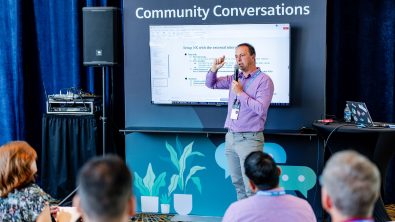
Some of the most valuable conversations at Realize LIVE start with a customer sharing something they have learned: a challenge they faced, an approach that worked, a lesson they learned along the way, or a new way they are using technology to get better results.
For Realize LIVE 2027, we’re looking for outstanding customer stories that can help others learn from real-world experience.
We’re looking for the very best.
We expect strong interest in speaking at Realize LIVE last year across the events we received more than 2,000 submissions, and submitting a proposal does not guarantee a place on the agenda. Every submission will need to demonstrate why the story matters to the Realize LIVE audience and, importantly, what attendees will gain from spending their time in the session.
Before you press submit, take the time to make your proposal stand out.
First, decide what kind of story you are telling.
When completing your submission, you’ll be asked to select one of two primary content categories: Business Transformation or Technical Knowledge. That distinction is part of the current submission-form design and is one of the first questions you will need to answer.
Here’s how to think about the choice.
Business transformation: tell us what changed and why it matters.
How has your organization responded to a significant industry challenge, transformed an engineering / manufacturing process, introduced a new way of working, connected previously separate parts of the business, or approached digital transformation in a way others could learn from.
Start with the challenge rather than technology.
Help us understand:
- What problem were you trying to solve?
- Why did it matter to your organization?
- What did you change?
- What role did technology play?
- What results have you seen?
- What did you learn that could help another organization?
We’re particularly interested in stories that connect the bigger picture to real experience. The Business Transformation category is intended for higher-level content including thought leadership, industry discussions and stories that can span multiple technologies rather than being confined to an individual product. This is content to help attendees lead innovation in their organisation, decide on future directions and deliver solutions at scale.
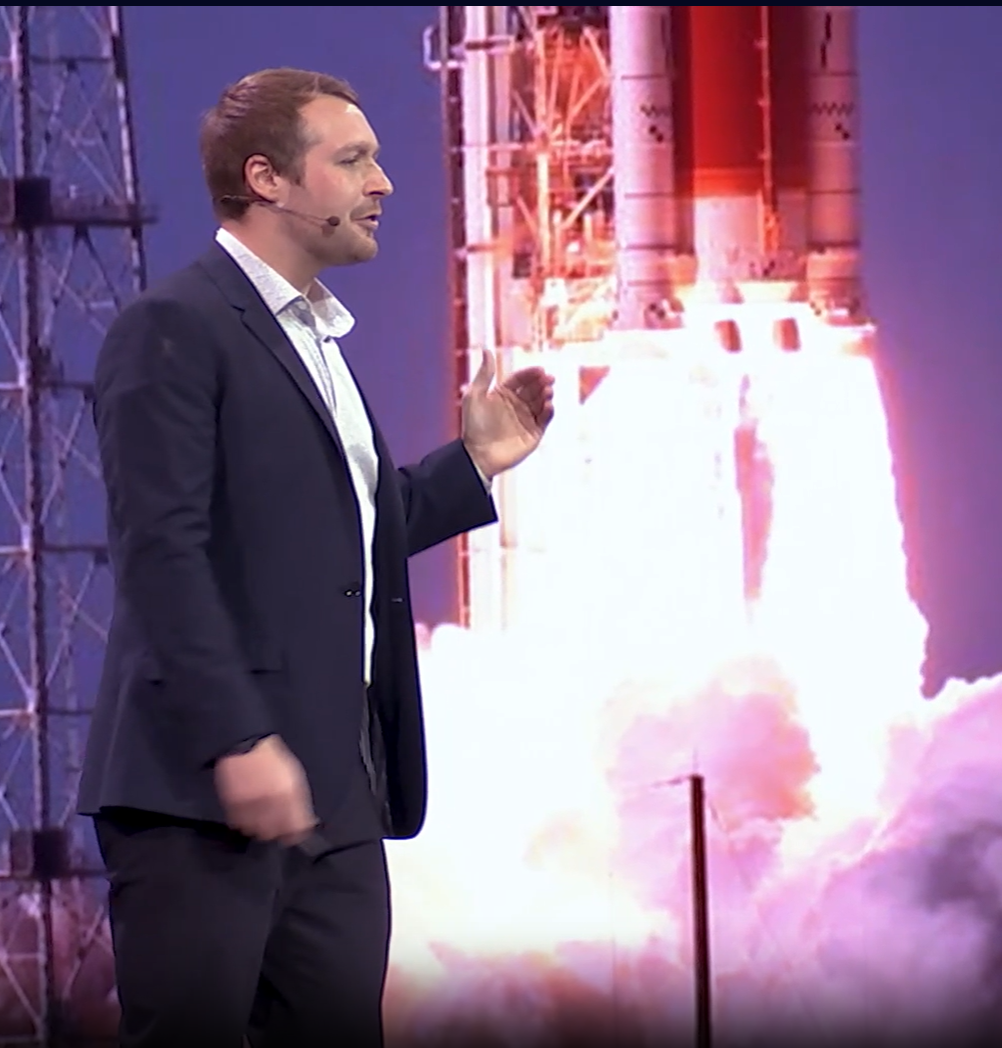
Watch Balin Moher, of Reaction Dynamics tell his story. He takes the audience with him on a journey through the whole process, so by the end we are invested in his success.
Technical knowledge: show us how you did it.
Maybe your story is deeply technical. You might have solved a particularly difficult engineering problem, created an innovative workflow, overcome an implementation challenge, or found a better way to use Siemens technology. Then Technical Knowledge is the place to share that expertise.
Help us understand:
- What is the technical challenge?
- What environment or use case were you working in?
- How did you approach it?
- What did you do?
- What worked and what didn’t? (the didn’t is just as important)
- What results did you achieve?
- What could someone attending your session take back and apply themselves?
The distinction is depth. Technical Knowledge is the deeper technical side of Realize LIVE, including product and hands-on learning for customers who want to implement, use and optimize from their technology.
JetZero takes a deep-dive into technology in this presentation from Realize LIVE 2026, but the standouts are clear learnings, clear processes and Blake Studer knows his content well so can present with confidence.
Then, make your submission earn its place.
Don’t use the submission form simply to tell us what you’d like to present. Use it to show us why an attendee should choose your session.
Somebody reviewing your proposal needs to be able to quickly understand the problem, the story, the evidence, and the value for the audience.
1. Be specific.
Compare:
How we used the Digital Twin to transform engineering.
With:
How we connected engineering and manufacturing data to reduce late-stage design changes in [specific environment], and the three lessons we learned implementing the new workflow.
The second gives the reviewer something tangible. It suggests a real problem, a real experience, and learning that can be shared.
Some of the popular sessions on the 2026 agenda:
From hype to impact: applying Industrial AI where it matters in manufacturing.
Why aerospace safety programs break – and how to fix them inside Polarion.
How engineering automation drives the shift towards efficient product development and future skills.
Breaking silos for the Industrial Metaverse: Lifesycle model reuse and operation Digital Twin.
Stop designing for obseolescence: real-time supply chain intelligence in engineering.
All of these titles are explicit, the audience knows what to expect but they also offer a little intrigue. They are suggesting a start and an end-point from the title alone, and the audience is teased with learning and a real story.
2. Give us evidence.
If your project delivers results, tell us. That might include time saved, quality improvements, fewer iterations, greater productivity, reduced costs, faster development, or another outcome relevant to your story. The more specific evidence you provide, the more robust your submission will be and ultimately the bigger audience you will attract. Be precise and only include results you are comfortable sharing publicly.
From the agenda in 2026, the sessions that stood out included tangible statements in their abstracts, this is just a short example:
- Honda Development and Manufacturing of America share their impressive use of PhysicsAI for optimizing brake disc and crash simulations, achieving a notable mass reduction for brake discs from 6.081 kg to 5.613 kg. Talk about designing for performance!
- Hussmann Corp share their journey from manual tasks to automated brilliance with intelligent Solid Edge CAD, leading to an incredible 80% engineering effort reduction and a whopping 80% drawing rework reduction. That’s a massive win for efficiency and design quality!
- Cummins Inc highlight how they’re mastering machining with NX CAM, cutting 20–40% off NC programming time on repeat parts and reducing on-machine prove-out time by 30–50% through virtual validation. That’s smart manufacturing in action!
- GE Aerospace show us how their Model-Based Instruction is a game-changer, contributing to a 50% reduction in work instruction creation labor. Less time on instructions means more time creating!
- And for those in CNC, Lambda Function, Inc. demonstrate how AI-assisted CNC programming is leading to an astounding up to 70% or higher reduction in programming time, helping them capture knowledge and standardize processes.
For more examples check out these blogs with agenda highlights from Realize LIVE Americas 2026 and Realize LIVE Europe 2026.
And if your project is still underway, that’s OK too. A story about implementation, decisions, and lessons learned can be extremely valuable. Just be clear about what has and hasn’t yet been achieved.
3. Tell us what you learned, not just what you did.
The perfect project is not necessarily the most interesting session. Real projects have trade-offs. They encounter obstacles and teams discover things they would approach differently next time. Those lessons can be enormously valuable to someone facing the same challenge and are often the most highly-rated sessions.
If you can tell us “here are three things we wish we’d known before we started,” you will have a very compelling session.
4. Make the attendee benefit obvious.
Complete this sentence:
After attending our session, someone will be able to…
If the answer is vague, keep working on your proposal.
“Understand our digital transformation” is weak.
“Identify the three steps we used to connect engineering and manufacturing data and avoid the implementation problem that delayed our first deployment” is much stronger.
Your submission should leave the reviewer in no doubt about what an attendee will learn.
What to avoid.
Be wary of proposals that are:
- Mostly about your company or its history;
- primarily a product or capability overview;
- filled with broad language but short on specifics;
- unclear about the problem being solved;
- missing evidence or practical learning;
- unable to explain what the attendee will take away.
Your expertise and experience are what make the submission distinctive. Make those visible.
The opportunity to speak at Realize LIVE was very appealing, because I had had recent experience using some of the new products that my employer is moving forward with, and I wanted to share that experience and I wanted to use this as an opportunity to benchmark with other people in other industries are doing, what their successes have been, what their challenges have been. Sean Burkhard, Boeing.
Before you press submit, check.
Give your proposal one final challenge. Ask someone who wasn’t involved in your project to read it and answer five questions:
- Who is this session for?
- What problem does it address?
- What actually happened?
- What evidence makes the story credible?
- What will I know or be able to do after attending?
If those answers leap off the page, you’re in good shape. If they don’t, another round of editing could make all the difference.
Ready to share your story?
There will be more great stories than we can accommodate on the Realize LIVE agenda and that’s why the quality of your submission matters.
Don’t just submit a topic. Submit a story. Show us the problem, the experience, the evidence and the learning. Above all, show us why the Realize LIVE community needs to hear it.
The speaker program opens on the 3rd November and the deadline for submissions is 22nd January. All submissions will be notified of acceptance / decline by 19th February. All accepted main speaker will receive a complimentary pass to the event. Keep checking back to this blog for more tips and tricks to get the most from your submission and secure the best possible audience.


