7 steps to seamless SAS language migration with Rapidminer SLC

This article demystifies the SAS language migration process, offering a clear, step-by-step guide to transitioning your analytics infrastructure with Rapidminer SLC. Discover how to modernize your operations, empower your team and achieve a seamless, successful migration.
Navigating your migration with confidence
Migrating your software environment can feel like a daunting task, filled with technical complexities and the fear of disruption. At Siemens, we understand these concerns, which is why we’ve meticulously designed a migration process that is not only thorough but also tailored specifically to your needs. Our goal is to transform what might seem like a challenge into a clear, manageable and ultimately successful journey with Rapidminer SLC.
Rapidminer SLC is designed to modernize your analytics infrastructure, unlocking efficiency and driving innovation. It empowers your organization to upgrade existing SAS language assets, leverage robust language supports and build a flexible, multi-platform analytics ecosystem. With Rapidminer SLC, you can use the SAS language alongside open-source tools without being tied to a particular platform or architecture.
This article will walk you through the key elements of our migration process, explaining why each step is crucial for a smooth and efficient transition.

1. The foundation: your unique migration plan
No two environments are exactly alike, and neither should their migration plans be. This is why the very first and most crucial step is to create a unique, individually written migration plan for your transition to Rapidminer SLC.
Why it’s important: Imagine trying to navigate a new city without a map – you might get there eventually, but it will be inefficient and stressful. Our migration plans act as your precise roadmap, customized based on:
- Architecture and SAS language usage: Understanding your current setup and how you use SAS is fundamental to ensuring compatibility and performance within the environment.
- Use cases and functional requirements: What do you need your software to do? We align the migration with your business objectives to ensure continuity and enhanced functionality.
- Black-out/code freezes: We work around your critical business periods to minimize disruption and ensure smooth transitions.
- Siemens software development requirements: Adhering to best practices ensures a robust and future-proof solution.
- Renewal date and availability of customer resources: We plan the timelines to fit your operational realities and resource availability, making the process as convenient as possible.
This personalized approach ensures that every aspect of your specific environment is considered, mitigating risks and optimizing the transition.
2. Getting started: Discovery and compatibility
Before making any significant changes, we need to understand your current landscape. This involves two crucial initial steps:
- Lite discovery: This is our initial dive into your environment. It’s about gaining a high-level understanding of your existing systems and infrastructure.
- Code compatibility analysis: This is a vital technical assessment. We analyze your existing code to identify any potential compatibility issues with Rapidminer SLC, which maintains full functionality for your SAS language applications.
Why it’s important: Think of this as a pre-flight check. The lite discovery helps us understand the scope, while the code compatibility analysis proactively identifies potential roadblocks. By understanding these upfront, we can address them before they become costly delays, reducing migration risks and accelerating transition timelines.

3. The outcome: Clarity and value
Following the discovery and compatibility analysis, you’ll receive clear, actionable insights:
- Presentation: ‘value proposition’: We’ll present a clear picture of the benefits and value you can expect from migrating to Rapidminer SLC, highlighting how it allows you to evolve the full analytics lifecycle and move existing analytics forward while continuing to build new capabilities.
- Compatibility results: A detailed report outlining how your existing code will perform and any necessary adjustments.
- Estimated software costs: Transparent and accurate cost projections to help you budget effectively.
Why it’s important: This stage provides you with the complete picture – not just what needs to be done, but why Rapidminer SLC is beneficial and what the investment will look like. It empowers you to make informed decisions with confidence, ensuring business continuity.
4. Empowering you: Installation, configuration and training
Once the plan is set, it’s time to execute and enable.
- Installation and configuration: Our team guides you through the technical setup, ensuring your new software is correctly installed and configured to your specifications, creating a unified, adaptable analytics environment.
- Training and support: We believe in empowering our clients to migrate users, not just workflows. This includes:
- Self-paced eLearning: Flexible learning modules you can complete at your own convenience.
- Product orientation sessions: Live sessions to introduce you to Rapidminer SLC’s feature and functionalities, including how to run existing SAS language programs, Python and R.
- Office hours: Dedicated times for you to ask questions and get direct support from our experts.
Why it’s important: While Siemens provides the expertise and guidance, we empower you to take the reins. Our approach ensures your team gains the knowledge and skills needed to independently manage and optimize the new environment. This includes a crucial point: Client applies changes and run programs. Siemens does not offer hands-on services. This isn’t a limitation; it’s a commitment to our team’s self-sufficiency and long-term success, ensuring you have full control and understanding of your systems and reducing training costs.
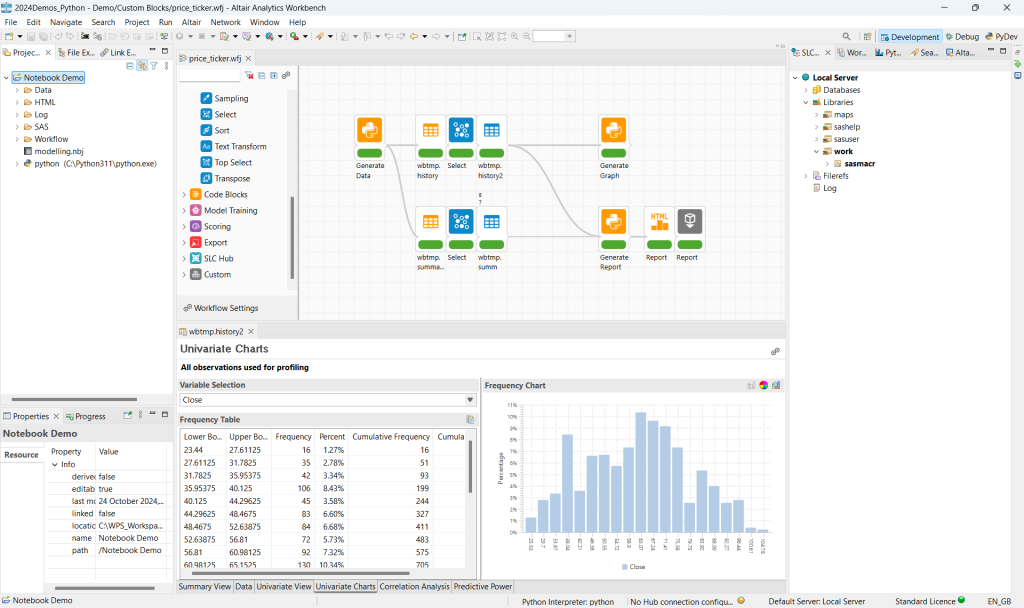
5. Optimizing your operations: Program migration and rollout
With Rapidminer SLC installed and your team trained, we move to migrating your programs and operationalizing your use cases.
- Classify programs and jobs: We help you categorize your existing programs and jobs, often starting with critical elements.
- Operationalize use cases: This involves ensuring your batch processes, as well as tools like EG, EM and DI, are seamlessly integrated and functioning within the new environment.
- Program migration: We guide you through the process of moving your applications and data.
- Stand-up meetings, office hours, support assistance: Continuous support is provided throughout this phase to addess any questions or challenges as you transition your infrastructure with confidence across on-premises, cloud and hybrid environments.
Why it’s important: This phase ensures your business operations continue without interruption. By classifying programs and focusing on critical elements first, we minimize risk and ensure that your most important functions are up and running efficiently. Our support structure ensures you’re never alone in this process, allowing you to centralize governance and access control for reliability and scalability.
6. The finish line: Rollout period
The final stage is the rollout, which typically extends to your next renewal date or sooner, ensuring ample time for full adoption and optimization.
Why it’s important: This period allows your team to fully integrate the new software into their daily workflows, solidify their understanding and truly operationalize all aspects of the migration. It’s about ensuring sustained success and maximizing your investment.
7. Go-Live and continuous success: Modernizing your infrastructure
After meticulous planning, thorough analysis and dedicated migration, the ultimate goal is achieved: a successful Go-Live. This pivotal moment marks the seamless integration of your analytics operations into the modern, powerful Rapidminer SLC environment. It’s not just about switching systems; it’s about elevating your entire analytics infrastructure to a new standard of efficiency and capability.
With your critical applications and users fully transitioned, you’re now poised for continuous success. Rapidminer SLC empowers your organization with a flexible, scalable environment that is ready to tackle future data challenges and opportunities. Our approach ensures that your modernized infrastructure continues to deliver value, fostering innovation and delivering impactful insights long after the initial migration is complete.
Ready for a seamless transition?
Migrating your software doesn’t have to be a source of stress. With Siemens, you gain a partner committed to providing a clear, structured and supportive process. From personalized planning and comprehensive compatibility analysis to empowering training and continuous assistance, we guide you every step of the way.
Ready to explore how a seamless transition can benefit your organization? Learn more here.