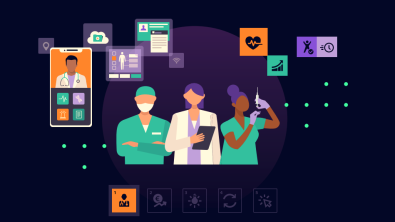
A concept image of medical practitioners surrounded by secure Life Sciences technologies.

How to secure Life Sciences without hindering user experiences

Secure Life Sciences technologies must be balanced. If they are too hard to use, patients and doctors will reject them.

What it takes to power a humanoid robot

To read to this episode, click here. Batteries will play a critical role in the future of energy. Already, battery…

Finding speed in Digital Transformation with Joe Gibbs Racing

To read the transcript, click here. Every moment matters in the racing world, both on the track and behind the…

How AI-Native EDA Helps Overcome Complexity

Semiconductors are rapidly growing in complexity. This growth in complexity is outstripping the ability of current tools and engineering methods,…

A doctor holding a digital twin of a patient's heart.

Why the digitalization of the life sciences is so unique

Digitalization of the life sciences contextualizes data so digital twins, simulations and artificial intelligence (AI) adapt for medical use.

Born on a digital thread: how AI and the Digital Twin redefine additive manufacturing

Successful additive manufacturing requires a focus on speed and scalability and software-defined manufacturing.

How EDA Is Evolving for a New Era of Semiconductor Complexity

Semiconductor complexity is accelerating at a pace that traditional design methods struggle to handle. As transistor counts race toward one…

The future of manufacturing is local, flexible and digital

Manufacturing is undergoing a transformation driven by supply chain disruption, sustainability goals and the need for more flexible production models….

A concept image for the digitalization of the life sciences industry

Life sciences industry’s big win: last in the digitalization race

The life sciences industry can implement proven digitalization tools and improve more than any other industry has from a digital transformation.