Siemens Digital Industries Software Blog Network

Siemens Digital Industries Software Blogs


Designcenter

NX Render Blog Series: The Visualization Process for Heavy Equipment - Part Five

Introduction We’re back with the fifth and final stage of the visualization process in the NX Render blog series for...

Electronic Systems Design

TLA winner for Industrial Control, Instrumentation, & Medical

This is part of a series of blogs showcasing the winning designs from the 28th PCB Technology Leadership Awards. The...

Opcenter

Opcenter - Innovation you can trust

Tobias Lange, Vice President for Manufacturing Operations Management R&D, breaks down these questions and provides valuable insight in our new video.

Thought Leadership

Implementing virtual commissioning to boost productivity and innovation —advanced machine engineering (webinar)

Advanced machine engineering (AME) enables companies to develop complex machines faster. This innovation helps to decrease development and production costs....

Siemens Xcelerator Software for Industry

Manufacturers are embracing complexity, not fighting it

Products continue to increase in complexity, get smarter, and become more connected. That’s why embracing product complexity has never been...

Embedded Software

OFF-TOPIC: Photo books

As my main hobby is photography, I am, of course, in contact with many other folks with a like interest....

Thought Leadership

Cooperative design for AM

Additive manufacturing (AM) may not be ready for high volume production, and no where near the scale of injection molding...

Verification Horizons

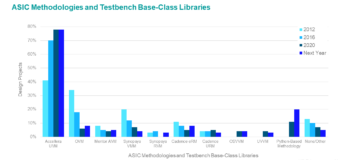
Part 10: The 2020 Wilson Research Group Functional Verification Study

IC/ASIC Language and Library Adoption Trends This blog is a continuation of a series of blogs related to the 2020...

Simulating the Real World

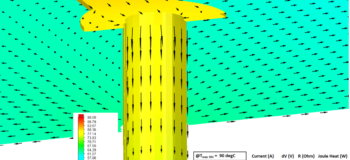
Thermal Influence on Maximum Current Carrying Capacity

Superconductors aside, anything that conducts electricity will dissipate heat. The more current that flows, the more heat is dissipated, the hotter things will get. At some point a thermal limit is reached that imposes a maximum current carrying capacity constraint.