Opcenter MES for future-ready manufacturing
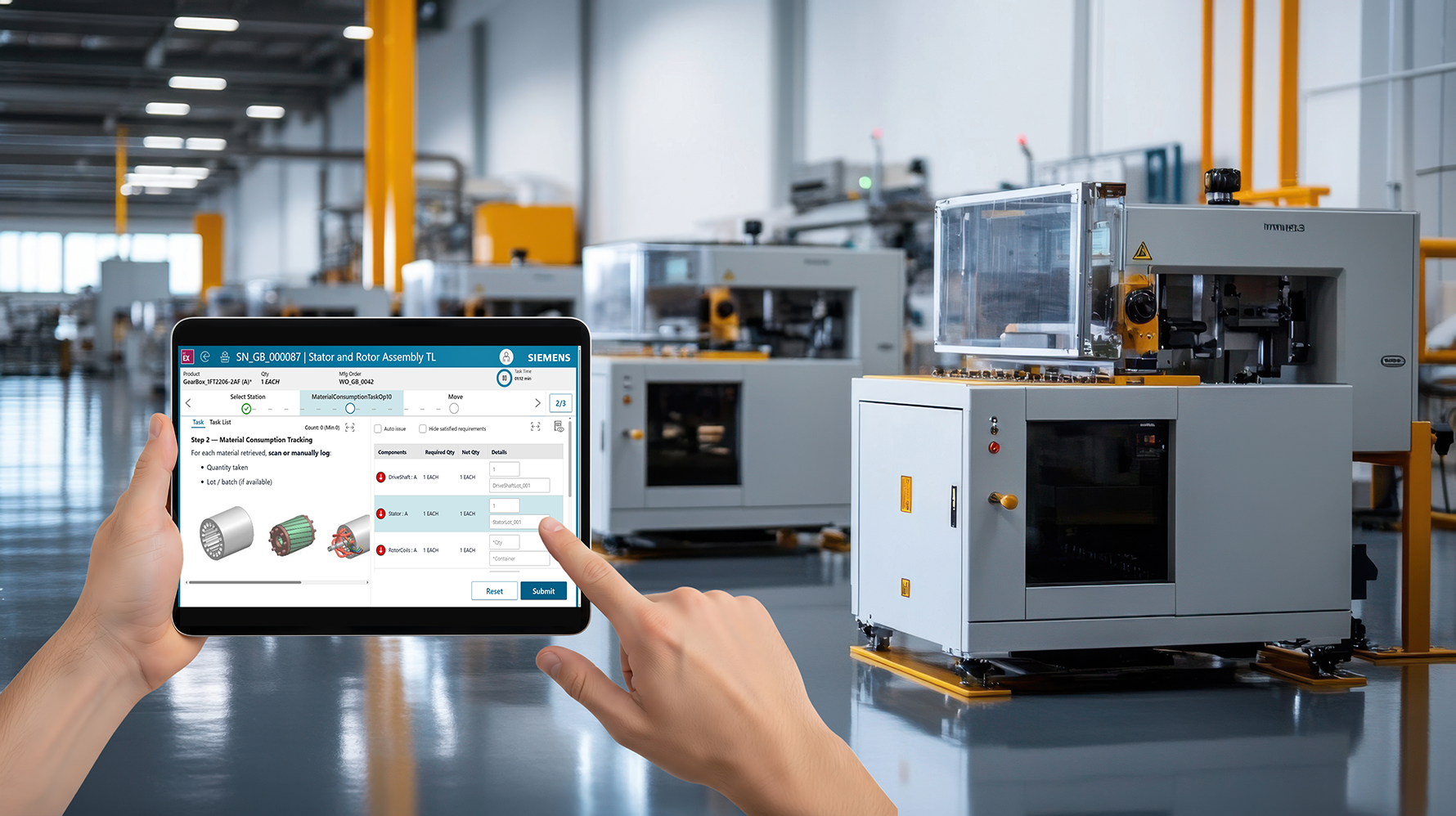
How Siemens puts the Gartner “Build/Buy/Hybrid” report guidelines into practice with a modern MES, low-code extensibility, and a modular approach that reduces TCO and protects business value.
Introduction
The recent Gartner research gives manufacturing strategy leaders a timely framework to decide whether to build, buy or adopt a hybrid MES strategy. As per our understanding, the report highlights three realities we see every day: commercial MES packages rarely cover 100% of unique needs; only a small fraction of manufacturers prefer full in‑house builds; and SaaS/subscription economics are reshaping TCO expectations.
Opcenter MES is purpose-built to translate those market signals into a practical, low risk path: buy a robust core, extend where you truly differentiate, and operate with cloud and observability patterns that protect long-term value.
Why we think Gartner findings matter — and how Opcenter MES responds
Key Gartner findings:
- “Commercial off-the-shelf (COTS) manufacturing execution systems (MES) often do not meet an organization’s full requirements. Fit-for-purpose software tends to cover only 70% to 90% of its needs. Customizations or low-code additions are required to fill that gap, and they can be costly and time-consuming.”
- “According to the 2022 Gartner Supply Chain Technology User Wants and Needs Survey, only 14% of the manufacturing clients surveyed prefer to develop custom solutions that meet all their requirements. Due to a strong vendor landscape and shortage of talent, most end up choosing a COTS solution.”.
- “Conversions of perpetual licenses to SaaS or subscription agreements often increase the annual maintenance license cost at least twofold. While it comes with an added benefit, the savings associated with keeping a low-cost maintenance license are eroding”.
How Opcenter MES maps to those recommendations:
Close the requirements gap with configurability and low code. Opcenter’s native low code integration (Mendix) lets you extend workflows and UIs without embedding heavy customization into the core product. That lowers upgrade risk while enabling site-specific innovations.
- Openness and composability. Opcenter MES exposes accessible data models and APIs, and supports composable architectures so additional functionality can be layered on without polluting the core. This enables IP protection and reduces migration risk should business needs change.
- Hybrid and cloud flexibility. Opcenter X provides SaaS and managed-cloud options while the Opcenter portfolio supports on-premises and VPC deployments — enabling phased adoption that fits Gartner’s recommendation to avoid “big bang” rip-and-replace programs.
- Modern architecture and DevOps readiness. Opcenter supports containerized deployments and Kubernetes-friendly patterns, observability with open telemetry, and reduced application/database footprints — factors that directly address Gartner’s evolution of platform expectations.
- Real business outcomes. Customers that adopt Opcenter MES together with simulation and automation have reported dramatic sustainability and efficiency benefits (for example, a Supernova natural fibers producer deployment delivered ~98% water reduction and ~70% lower CO2 in the referenced case), tangible evidence of accelerated time-to-value.
- TCO-aware design. Through reduced data/application sizing, PostgreSQL support options, and cloud deployment choices, Opcenter MES helps manage ongoing costs Gartner highlights as a key concern when moving to subscription models.
A practical path: Buy core, extend where it matters
For most manufacturers, the hybrid strategy — purchasing a robust core MES and building differentiating features on top — strikes the best balance of speed, risk and long-term control. With Opcenter MES you can:
- Buy the core execution backbone (traceability, shop‑floor execution, batch compliance) to capture fast ROI and reduce project risk.
- Use Mendix and open APIs to implement plant specific workflows, operator experiences, or IP sensitive logic as decoupled apps. Those extensions remain upgradeable and can be rolled into global templates when appropriate.
- Choose deployment models (on prem, cloud, VPC, or Opcenter X SaaS) that match your security, cost and operational needs — and evolve with you.
Decision checklist
When assessing MES choices, we believe Gartner recommends focusing on extensibility, upgradeability and the cost of customization. Use this quick checklist to evaluate Opcenter MES:
- Do core capabilities cover your immediate compliance and execution needs? (Opcenter core is feature rich across industries.)
- Can required extensions be implemented via low code or composable apps rather than core changes? (Yes — Mendix and APIs support this.)
- Will custom logic remain manageable and upgradeable globally? (Opcenter’s architecture and governance approach enable this.)
- Does the vendor offer flexible deployment and modern DevOps patterns? (Opcenter X, containerization, observability and PostgreSQL support do.)
- Will the approach protect IP while enabling innovation? (Decoupled apps and private deployments preserve control.)
Siemens Opcenter MES gives you the practical tools to act — a modern MES core, cloud flexibility, low code extensibility that turns market guidance into measurable factory results.
Access the report here:
Gartner, Build, Buy or Go Hybrid With Manufacturing Execution Systems.
Gartner is a trademark of Gartner, Inc. and/or its affiliates.