Fall Semiconductor Series: How integrated software and automation transform fab sustainability
(Part 2 of 5): Why an integrated software and automation solution is the right solution
In our Fall Semiconductor Series, we discuss the sustainability challenges faced by semiconductor fabs and why an integrated software and automation solution is the right solution to address these challenges. If you missed our first post in the Series, just click on Part 1.
Today’s unprecedented demand is driving semiconductor plants into continuous, 24/7 operation, generating a significant environmental impact due to high energy and chemical use and elevated water consumption. To meet the intense business and environmental challenges of this new era, the industry cannot continue to rely on fragmented legacy systems where responsiveness to rapidly changing markets is hindered by design, engineering and manufacturing functions that exist in silos without a common data platform or common language across systems. It is time to explore an integrated software and automation solution that can unlock the responsiveness, innovation, and sustainability required today.
It is a new era, one defined not only by the demand for speed, flawless quality and profitability, but also by the need for resilience, adaptability and sustainability. To thrive in this complex era, chipmakers must embed sustainability into the core of every decision, process and product to unlock a dynamic, data-driven and artificial intelligence (AI) enabled view of the entire semiconductor value chain. It is time for an approach where software and automation work synergistically to bring about the energy efficiency, decarbonization, resource efficiency and circularity needed to transform the fab.
Semiconductor software and automation work better together
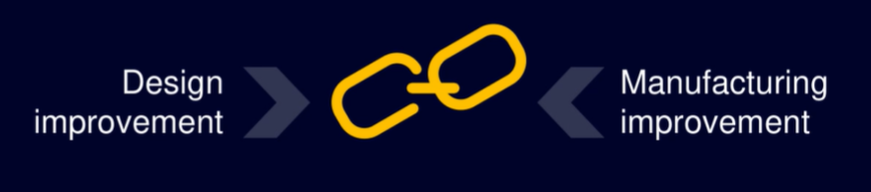
It is critical to recognize that when enterprise, operating, and automation systems are fully digitalized and seamlessly interconnected, something transformative happens: productivity soars, quality improves, and sustainability becomes achievable. An end-to-end digital solution is no longer just nice to have—it’s now essential.
By integrating critical systems using a unified digital platform, software-enabled automation creates an intelligent semiconductor manufacturing environment. This smart, comprehensive approach combines manufacturing execution systems (MES) for production management with advanced process control (APC) for process optimization, seamlessly integrating automated material handling and digital twin technology. Enhanced by AI and machine learning (ML), this holistic solution enables predictive maintenance, yield optimization and real-time control to deliver a highly efficient and adaptive production environment that maintains the highest quality standards.
Advancing digitalization across the fab and subfab
Advancing digitalization at every level transforms your company with unlimited visibility across design, engineering, manufacturing and support domains, connecting everyone from enterprise management to every team at workstations across every area of the fab.
End-to-end digitalization empowers a higher level of planning, optimization and execution. Real-time data sharing powers intelligent automation to equip both fab manufacturing systems and subfab systems for digital transformation. As an example, using the Siemens Facility Monitoring and Control System (FMCS) optimizes the use of water, chemicals and gases in the subfab to simultaneously improve sustainability, efficiency and cost-savings.
Another example is Siemens Industrial Edge, which installs an open, scalable edge computing system at the equipment level for localized data processing and analytics for rapid decision-making. By processing data closer to its source, fabs can implement faster control loops, detect anomalies instantly and power the rapid optimization of equipment performance.
Smart manufacturing facilitates sustainability

Smart manufacturing, which began as Industry 4.0, combines digital technologies with advanced manufacturing to create intelligent, efficient and connected systems.*
Smart manufacturing breaks down traditional production and data silos with a connected workflow engine across the fab to collect and share real-time performance data so the right data is available at the right time and in the right context for successful sustainability planning. It puts the data you need at your fingertips.
With smart manufacturing, you can simulate operations to continuously optimize your fab planning, processes and systems to increase efficiency while reducing carbon footprints and the use of water, energy, gases and other resources.
“Data shows you what is going on in your production environment so that you know exactly what levers you can activate to cut emissions. It’s about creating a data workflow engine for continuous sustainability improvements.”
Dr. Gunter Beitinger, Senior Vice President, Manufacturing; Head, Factory Digitalization, Siemens
In next week’s Blog, we will explore why the semiconductor fab presents such a complex challenge, while raising the question—how can you know where your journey to sustainability should begin?
Or if you’d like to discover more about this topic right now, just download our new eBook below, “Using integrated software and automation to transform fab sustainability.”
*Deloitte blog: “Digital Lean Manufacturing,” August 21, 2020, https://www.deloitte.com/us/en/insights/industry/manufacturing-industrial-products/industry-4-0/digital-lean-manufacturing.html