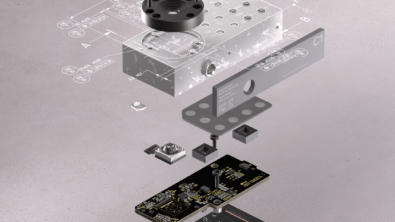
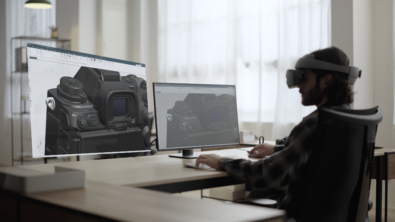
Transform electromechanical design with integrated multiphysics capabilities

The challenge: Are design flaws discovered after prototyping costing you millions in unexpected expenses and months of delay?
Discover issues after prototyping and you know that you’ll be facing expensive late-stage design iterations, delayed time-to-market and a serious risk of product failure. Traditional siloed processes prevent early discovery by keeping thermal, structural, and electromagnetic issues hidden until prototyping reveals them, when fixes are much more expensive.
Electromechanical design integration slashes late-stage costs
The solution: Bring mechanical and electronic design into one shared workflow. With Altair and Siemens Digital Industries Software, your team can integrate design, simulation and testing in one streamlined process, spotting issues earlier before prototyping, without having to become simulation specialists.
Don’t react, predict performance before prototyping
Shift from reacting to predicting. The integration of Altair’s advanced electromagnetic (EM) simulation capabilities into Siemens’ software portfolio transforms how mechanical engineers design for electronics systems.
The good news is that mechanical engineers can now conduct electromagnetic analysis, structural analysis and thermal analysis inside their familiar digital tools to solve issues before prototyping. Costly iterations are reduced and time-to-market accelerates.
Instead of being stuck in the ‘find it after prototyping’ status quo, engineers can predict performance at design time
Unite mechanical and electronic domains
The key is uniting mechanical and electronic design in a collaborative environment. We allow for both ECAD and MCAD designers to catch issues early with their own simulations. This empowers your entire team to “shift left” to move validation earlier in the design process, identifying issues and risks before they drive up costs.
Empower engineers to perform EM analysis without simulation specialists
Traditionally, mechanical engineers focused on structure, thermal, and fluid dynamics—while electromagnetic (EM) simulation remained a separate discipline. Altair’s EM electromagnetic simulation capabilities, now integrated into Siemens’ design environment, change this paradigm. Mechanical engineers can now assess electromagnetic effects, including signal integrity, electromagnetic interference (EMI), and compatibility, directly within their workflow.
Gain early design validation
This convergence enables true electromechanical co-design. Teams gain visibility across domains sooner. And they collaboratively reduce issues early to avoid costly redesigns.
Reduce iterations, accelerate innovation
Integrated simulation tools enable rapid iteration and multi-domain validation (mechanical, thermal, EM) in one workflow. This reduces the number of prototypes needed and shortens development cycles—critical for automotive, aerospace, consumer electronics and other complex industries.
Create greater business value
Integration delivers smarter workflows, better collaboration, and superior designs:
• Smarter workflows—Mechanical engineers no longer need separate tools to simulate performance. They can analyze electromagnetic fields, mechanical stress, and thermal management all within one streamlined design workflow. Which saves time and catches errors quickly, reducing iterations for a higher first-pass success.
• Better collaboration—One connected design environment eliminates tedious file transfers and decreases errors. Teams can co-simulate stress, heat, and EM fields to ensure reliability and innovation:
- Co-simulate mechanical stress with EM field interactions to avoid resonance or interference
- Optimize thermal management by coupling EM losses with heat transfer models
- Improve electromagnetic compatibility/electromagnetic interference (EMC/EMI) compliance by simulating shielding and crosstalk before prototyping
- Use AI-powered generative design to create lightweight, EM-optimized enclosures and mounts
• Superior designs—Better designs are built on unified engineering. Design better, faster, and smarter. With Altair and Siemens, engineers create reliable products without endless redesigns:
- Optimized performance across all design domains
- Faster innovation cycles with fewer iterations
- Improved reliability and regulatory compliance
• Superior business results—With fewer design respins, faster product development cycles and higher quality, your enterprise steps up to a new level of business performance. ROI is improved with better-performing, energy-efficient products built right the first time.

Altair capabilities are now integrated within the Siemens portfolio
Integrating Altair’s EM simulation into Siemens’ engineering software portfolio breaks down design silos and transforms mechanical design for electronics.
- Cross-disciplinary collaboration: Integrated tools break down silos between design, analysis, and production teams, empowering faster development.
- Advanced simulation and multiphysics: Validate complex designs faster with embedded multiphysics simulation to analyze interactions between multiple physical domains simultaneously, including thermal, structural and electromagnetic domains, reducing validation cycles and accelerating product launch.
- AI-driven design exploration: Generative design and AI-powered optimization accelerate design space exploration and evaluation of thousands of variants.
- Unified cloud workflows: Delivered through Siemens Xcelerator as a Service (Designcenter X, Teamcenter X, Simcenter X, Intelligence Center X ), providing scalable cloud-native simulation and collaboration.
- Digital thread: Connects simulation, design, and manufacturing data from concept through production for enhanced traceability and faster iteration.
- Security and IP protection: Closed security architectures support on-premises or hybrid cloud deployment, addressing data protection and intellectual property concerns.
The takeaway:
Electromagnetic simulation integrated into mechanical design workflows enables engineers to predict and prevent costly design flaws before prototyping. By unifying mechanical, thermal, and EM analysis in a single environment, teams reduce iterations, accelerate time-to-market, and deliver smart, reliable products—transforming reactive prototyping into predictive design.
The result? Fewer design iterations, faster product development, and better-performing products built right the first time.
If you’ve been stuck battling late-stage design flaws, now is the time to consider integrated workflows in electromechanical engineering. The tools are here, the process is proven, and the benefits are undeniable.
Calculate your ROI now
Calculate how much you can save by eliminating late-stage design flaws. Try the ROI calculator now: ROI calculator for accelerated electronics design
Explore more Designcenter | Siemens
FAQs
Q1: Why are design flaws discovered after prototyping so expensive?
A: Late-stage design flaws discovered after prototyping multiply costs exponentially because fixes require rework across thermal, structural, and electromagnetic disciplines. Traditional siloed processes hide these issues until prototyping, when corrections demand extensive redesign, retesting, and production delays that drive up costs, threaten product viability and compress time-to-market.
Q2: What is electromechanical co-design?
A: Electromechanical co-design integrates mechanical CAD (MCAD) and electronic CAD (ECAD), so designs develop together, preventing system and component incompatibilities and costly rework. By aligning electronic and mechanical systems early, teams make design decisions faster and earlier in the product lifecycle when changes are easier and less disruptive.
Q3: How can engineers validate a design before building a prototype?
A: Engineers validate designs digitally through simulation, running thermal, structural, and electromagnetic analysis before prototyping. Altair’s simulation capabilities, integrated into Siemens engineering software, let mechanical engineers predict performance and identify problems within their existing tools, eliminating costly prototype iterations.
Q4: Can mechanical engineers perform electromagnetic simulation without a specialist?
A: Yes. Electromagnetic simulation is no longer a specialist discipline. Altair’s EM capabilities, integrated into Siemens design tools, let mechanical engineers assess signal integrity, electromagnetic interference (EMI), and electromagnetic compatibility (EMC) directly within their workflow, without specialized expertise.
Q5: What are the benefits of multiphysics simulation in electronics design?
A: Multiphysics simulation integrates electrical, thermal, mechanical, electromagnetic, and fluid dynamics into a single framework, capturing complex interactions that single-physics analysis misses. Key benefits include: early identification of hidden failure modes, faster design cycles, improved reliability, better thermal and electromagnetic performance, support for miniaturization, reduced prototyping costs, and digital twin capabilities for virtual testing and continuous optimization throughout the product lifecycle.
Q6: How does early design validation reduce product development costs?
A: Early design validation reduces product development costs by identifying and correcting issues before they become expensive to fix. Design changes cost significantly less during the concept and design phases than after prototyping or production, reducing rework. Simulation-driven validation eliminates costly physical prototype iterations by evaluating performance digitally. Early validation prevents late-stage defects by avoiding expensive post-tooling corrections. Teams focus on innovation rather than troubleshooting, improving engineering efficiency. Issues resolved earlier accelerate time-to-market and faster revenue generation.