Redefining the world’s fastest cars | FIA and Designcenter shape the 2026 Formula 1 regulations
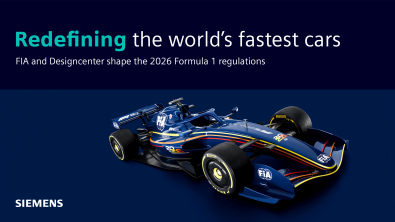
We’re halfway through the 2026 Formula 1 season, where we have seen the biggest regulation overhaul in a generation. From active aerodynamics and lighter vehicle design to major power unit changes, virtually every aspect of the sport we all know and love has been re-imagined.
These changes go far beyond incremental performance gains; they represent a huge shift in how Formula 1 cars are designed and developed, whilst also remapping how drivers go wheel-to-wheel racing. The success of all teams on the grid continues to depend on their ability to interpret these regulations. Moreover. Teams need to innovate rapidly and develop cars that can compete at the business end of the World Constructors Championship.
The Fédération Internationale de l’Automobile (FIA) continues to be the driving force behind the future of the sport. To support this new vision, The FIA has implemented Designcenter™ software as a key part of their strategy.
Why the 2026 regulations matter
Technical regulations have always shaped the competitive landscape of Formula 1. Regulation changes provide an opportunity for every team up and down the grid to reset the pecking order, rewarding those that innovate and ultimately adapt the quickest.
The challenge of designing a new generation of cars
Typically speaking, new regulation changes either focus on a new aerodynamic philosophy or a new approach to power units, but rarely do we see new regulations for both happen simultaneously. Not to mention, teams need to balance development time for a regulation change with maximizing their position in the current Constructors Championship. Combining these elements and you have a recipe for teams to thrive, or struggle with a new regulation change.
Aerodynamics remain one of most critical factors in vehicle performance. Every surface contributes to the airflow over a car, affecting downforce, drag, tyre performance and ultimately race pace. Design teams need to achieve a greater level of surface flow control and airflow management as they can. Small adjustments in a cars’ design can seriously impact on-track performance, reducing its overall competitiveness. Teams must never lose sight over the need to innovate at speed. Rapid design iteration is essential to maintaining a competitive advantage throughout any given season.
Why Designcenter?
Addressing these challenges for the FIA was key. So, they chose Designcenter as their main CAD software tool to develop the latest generation of cars. Designcenter provides the perfect environment for advanced surfacing and modeling that are needed to create highly complex aerodynamic parts. What’s more, Designcenter enables designers to explore concepts quickly, make design changes effectively and maintain complete accuracy for all critical surfaces.
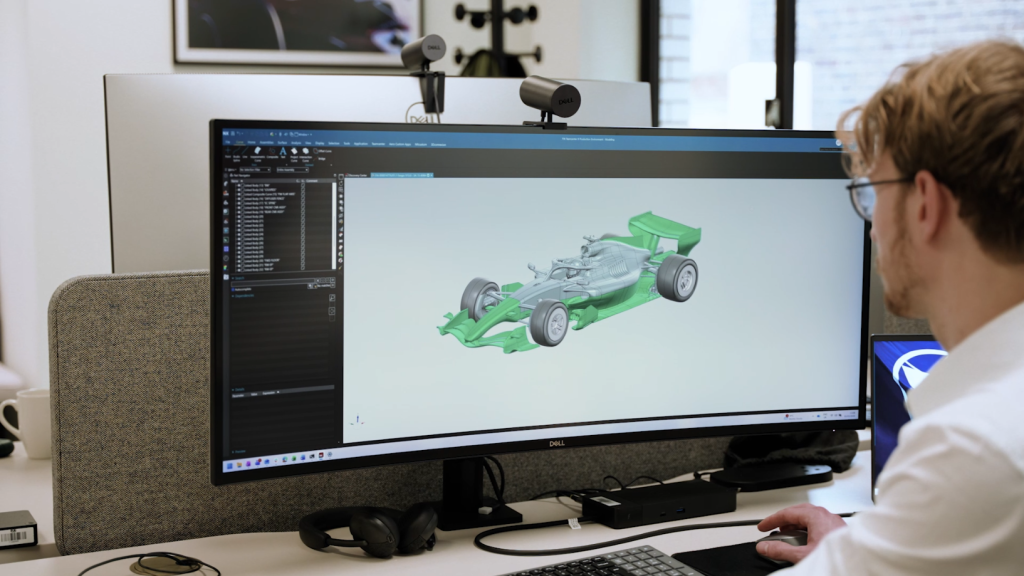
Successful implementation of the aerodynamic concept for a car can mean success or failure on the track. Designcenter enables the FIA to create and define:
- Advanced surfacing workflows
- Rapid design iteration
- Precise management of airflow-defining geometry
- Greater confidence during development
- More efficient engineering processes
Designcenter makes it possible for the FIA to accelerate innovation whilst maintaining the accuracy needed to develop regulation compliant designs.
Shaping the future of Motorsport
The 2026 regulations represented more than just a technical update; they marked the start of a new chapter in the sport’s evolution. Active aerodynamics, a redesigned wheel base and new power units changed the way teams approach conceptual design and performance optimization to maximize on track results. Behind these changes lie an engineering challenge that requires powerful CAD software that is capable of turns concepts into reality.
Designcenter makes this possible, ensuring that innovation remains at the heart of the sport. As we’re coming out of the summer break, we’ve already seen this in action during the 2026 season; teams are accelerating development plans to gain a competitive advantage and stay ahead of the competition, driven by the prize of mastering the regulations and winning this years’ Constructors Championship.
Continue your journey with Designcenter
Watch the full FIA x Designcenter case study on YouTube
Take me to the Designcenter blog 📚