How integrated fleet management is transforming modern manufacturing into a flexible powerhouse
In today’s fast-paced manufacturing landscape, the ability to adapt and integrate diverse systems is no longer a luxury but a necessity. With the rise of automation and the diversification of fleets in production environments, manufacturers face significant challenges in maintaining both efficiency and flexibility. Imagine a scenario where a new production line launches with three different autonomous mobile robots (AMR) suppliers on the same facility floor. Each fleet handles distinct tasks—raw materials, semi-finished goods, and finished products—but they’re unable to communicate. This disconnect can lead to inefficiencies and bottlenecks.
The story is common across various industries, from automotive to consumer goods. The major barrier? The inability of systems to adapt quickly to changing demands. According to a study, 86% of manufacturers prioritize total cost of ownership, maintenance, and return on investment, highlighting the importance of long-term integration strategies. Moreover, analysts predict a 140% annual growth in multi-vendor fleet management systems by 2027, underscoring the critical role of integration in maintaining competitive advantage.
Address modern manufacturing challenges
Modern manufacturing is reshaped by four major challenges: individualized production, digital disruption, globalization, and stringent environmental standards. These factors necessitate a shift in how manufacturers approach production and logistics.
- Individualized production: Customers demand customization, increasing the need for manufacturers to manage dynamic material flows.
- Digital disruption: Inconsistent and siloed data hinder system integration, affecting speed and agility.
- Globalization: Complex supply chains increase vulnerability to disruptions.
- Environmental standards: Compliance with varying global and local regulations is challenging but crucial for sustainable operations.
The solution lies in integrating planning, simulation, fleet automation, and operation. Siemens SIMOVE Fleetmanager exemplifies this approach by turning complexity into a real advantage, offering vendor-independent orchestration and centralized control of diverse fleets.
Enhance operational efficiency
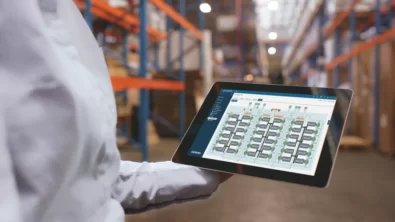
Consider a plant manager overwhelmed by managing three separate fleet systems. By implementing Siemens SIMOVE Fleetmanager, they can unify these systems into one dashboard, significantly reducing the time and effort required for layout changes and system management.
- Unified fleet control: Centralized visibility and coordination across all fleet types.
- Decreased supplier dependency: Reduced reliance on multiple suppliers for system changes.
- Maximized efficiency: Advanced algorithms balance workloads and minimize congestion.
Futureproofing through customization and scalability
For manufacturers facing increased production demands, scalable and customizable fleet management is crucial. Siemens SIMOVE Fleetmanager allows for tailored solutions that integrate seamlessly with existing systems, ensuring future-proof scalability and optimized fleet efficiency.
- Adaptability to unique needs: Customization supports specific workflows and KPIs.
- Future-proof scalability: Easy expansion of fleet sizes and system integrations.
- Optimize fleet efficiency: Minimized downtime through tailored configurations.
Embracing integrated fleet management
“Fleet integration is not a future ambition anymore; it is a competitive necessity.”
The journey from multiple dashboards to a unified system is transformative, offering manufacturers increased flexibility, efficiency, and readiness for future challenges. Siemens SIMOVE Fleetmanager exemplifies how intelligent fleet orchestration can meet the demands of modern manufacturing. By embracing these solutions, manufacturers can overcome integration challenges, streamline operations, and achieve new levels of productivity and sustainability.
Seamless fleet integration is the key to transforming manufacturing operations, enabling businesses to navigate complex challenges and unlock new opportunities for growth and innovation.