What agentic AI means for the design process Podcast – Transcript
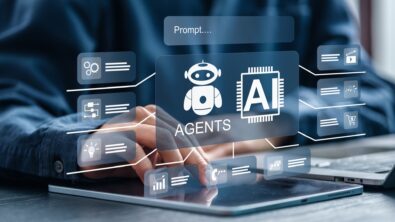
As it continues to develop, artificial intelligence is starting to be applied across many different sectors of industry with equally many different new technologies used to support that. Agentic AI represents one of the latest ways AI can be applied to more complex tasks including complex design and manufacturing processes that existing AI isn’t well suited for.
To learn more click here to listen to the full episode or keep reading for a transcript of that conversation.
Spencer: Hello, and welcome to the AI Spectrum podcast. I’m your host, Spencer Acain. In this series, we explore a wide range AI topics from all across Siemens and how they apply to different technologies. Today, I’m joined by Shirish More, AI Program Product Manager at Siemens, and Michael Taesch, Senior Director of Product Management for NX Manufacturing. Welcome, Shirish, Michael.
Shirish: Hey, Spencer, how are you?
Michael: Hey, Spencer. Hey, Shirish. Always good to talk to you guys.
Shirish: Same here. Nice seeing you, Michael at Realize Live.
Michael: Yep, face to face. In real life, like the kids say, right?
Shirish: Nice.
Spencer: So with all that out of the way, I think to start things off, I’d like to hear where do you think AI in industry is going? I mean with AI agents, foundation models and all of that kind of generative AI that’s being developed right now we’re starting to see it find a place in industry, both for product design and manufacturing but how will the addition of this kind of industrial artificial intelligence affect the way parts and goods are designed and manufactured. How will it reshape that process?
Shirish: Let me start from the design side, and then I’ll hand it over to Michael. So if you look at the overall digital thread, and when I say shift left, it’s more of like, OK, how can AI start helping the designers from concept to engineering and to manufacturing rights? Clearly, with what we have discussed so far, you can see how it’s going to shorten the engineering cycles. We promote concurrent engineering, but even once the users are getting used to following a concurrent engineering model, within those models itself, AI is going to shorten the iteration cycles that go on today between back and forth, right, with the designer and simulation engineer, for example, between the designer and the manufacturing engineer. So clearly, AI is going to start shortening the iteration cycles by enabling rapid ideation, validation, refinement based on the technical documentation that we provide, as well as best practices that they might have. And it’s not only going to shorten the iteration cycle, but it’s going to start bridging the silos between design, simulation, manufacturing, other non-CAD personas, or there are a number of stakeholders who participate in the entire product lifecycle. And you will see how not only it’s going to shorten the cycle, but it’s going to start bridging the silos by empowering both the experts and non-expert users to start participating in a collaborative product development lifecycle activities through this natural language input. And regardless of the know-how of the tools, they will be able to start collaborating across roles, letting the engineer, simulation experts, and shop floor start performing some actions in parallel, right, or promoting concurrent engineering. So you can clearly see how it’s going to shorten the iteration cycles, but still provide the necessary tools to get the quality products out, innovate further, and start leveraging AI in day-to-day activities, for the day-to-day activities.
Michael: I’m 100% with you, especially on the cross domain. That’s, for me, this integration and optimization is key, especially on looking at the design and the manufacturing. I know when I’m thinking about this question, this is probably the number one application, how are we going to bridge the gaps. If I look at the manufacturing lines, there’s really no denying that design manufacturing, for example. Even in manufacturing, we’ll even go down to the cam room and the shop floor. They’re all working in silos. Been several shops. I keep hearing the shop operator complaining about the cam program. He doesn’t know what he’s doing. He doesn’t know if he’s at speed. And he talked about it, but there’s no feedback. And the cam program, he’s always complaining about the cat guys. He doesn’t know why he’s putting this irrelevant radius on a 3D model. It’s something that came here every day. It’s the nature of industry. Even though really at Siemens, we have this complete end-to-end portfolio, where digital threat goes from the design all the way to– I would even extend to the shipping. You’re still going to hear us comment. Now, my belief is with AI, we will be able to super-drop this digital threat. And we’re going to enable knowledge upstream and downstream. The way I see this, if you think about the designer that I mentioned, now we give him a co-pilot to understand design, of course. We also understand cam. It’s going to help in making better decisions, designing the product. With the CAM, I want to say cam, the manufacturing in mind. So the part he’s going to be building will be optimize of the best optimal design for design, optimal design for the purpose of the design, but also for the manufacturing. And now when I’m looking at the cam programmer, I want him to have a co-pilot, an AI, like an AI friend, if you prefer. I can give him the best machine condition, of course, because that’s what we want, but also based on the feedback from the machine, from the shop, from the quality department. And I think this is where AI will help connecting all of those silos and boost their productivity. Choking around with my wife the other day, asking me what I’m doing and why we’re building this. And I was telling her, it’s kind of like how you have your own army or super smart interns working for you and they help you connecting all the dots throughout the manufacturing process, even within the company. So yeah, connecting the dots, cross domain integration, for me, I really think AI is going to make a difference here.
Shirish: One more thing to that Spencer is, I’m also, as I engage with more and more customers on how AI is going to help them. We should not forget about the sustainability aspect of it. So in fact, talking with a material engineer at Realize Live, wherein one of the thought process that we both were discussing about was, OK, can I recommend an approved material for the designer, as well as from a manufacturing engineering perspective, like what might be the appropriate process based on the material that the designer might have assigned or the manufacturing process that he might have used, whether it’s injection molded versus 3D printing. And we said, all right, can AI look up all historical data and other things and come up with a cost effective material, both from the physical material perspective, as well as looking at other aspects, suggest certain things. But you can clearly see how material engineers are now looking at ways in which with so much focus on sustainability and other things, AI is going to provide a means for designers and manufacturing guys going forward to support sustainable and cost efficient ways or outcome by surfacing alternate solution, keeping the performance cost and carbon footprint in mind. So I see AI also playing a key role in proposing some nice alternate solutions that the humans might have not even thought about. But you can see how AI looking at all different parameters and combinations and traditional ways of doing things might come back saying that, did you even think about this alternative? Because it’s like looking at all the KPAs and other things, this might be a best optimal approach going forward just for both design and manufacturing. And I see AI playing a key role from cradle to grave, or for example, if you look at the entire end to end cycle, it’s going to start proposing some nice ways in which you can make certain things much more efficient and sustainable going forward.
Michael: That’s a very, very good point. The key for me here is the ability for AI to look at so many different options that the human really cannot. We always think we have the same process over and over in your work, but there’s a better process. And some customers found it. But here we have a new tool that really can help us out exploring so many different options that we never thought about and really built better product faster.
Spencer: I mean, it sounds like we’ve got an exciting road ahead of us for this. There’s breaking down the silos between people, and even as well as people in data, and looking at all these possibilities. Very exciting times. But kind of related to the latest and the greatest, agentic AI is probably at the forefront of everybody’s mind right now as well as much as anything else. So Shirish, maybe you’d like to give us a brief rundown. What is agentic AI? And how is this going to be applied to all these things you’ve just been talking about? Where does it slot into this vision for the future of manufacturing and design with artificial intelligence?
Shirish: That’s a very good question, Spencer. And as the name suggests, agents. So for me, in a simple term, agentic AI refers to systems that can plan, reason, and act autonomously towards a goal. And that goal from a designer’s perspective can be a task in hand. It can be a task for validating my release, validating my design, and releasing it for production or for downstream processes. And I’m just giving an example wherein this is a task that I perform day in, day out. But from an agentic AI perspective, I can have multiple systems that are monitoring the maturity of my design. And the moment it hits a particular maturity level or a sync point, that’s the term that I normally use. Like, OK, at this particular event, I perform traditionally, I would have done certain things in a manual way. But now with an agentic AI framework, I might have systems or agents that can plan, reason, look at the state in which my design is and act autonomously towards a goal, wherein the goal here is to release my design with the appropriate quality checks and whatnot. So unlike traditional AI assistants, wherein they respond passively to the question or a query that I might ask, agentic AI or the systems, AI systems, behave as if they are proactive coworkers. They are proactive teammates, breaking down the goals into different tasks and/or steps, deciding what to do next proactively and executing those tasks often across multiple applications and things that we might have taught them to do. So think of it as if we are now moving from a passive chatbot to a more of an active digital co-worker capable of orchestrating different workflows and tasks and not just answering the questions, but working hand in hand with me autonomously and making sure that I release my design on time. So you can see how agentic AI is going to change things as we move forward, especially when it comes to mechanical product design life cycles.
Michael: That makes sense. Another thing I was thinking, I asked the same question to my developers, a long time ago, everybody talked about agent AI and asked them. And one definition that I got from them, they think it’s a little bit like the microservices. It was the big thing in cloud computing to make things easier. The main difference obviously is microservices, the input is very well defined, input and output, where on the agent, you’re expecting it to figure out how to complete a task. Another example I was given is you really want to use this in the concept of an AI integration. You want to put the agent in your workflow like you just described, right? It’s a piece that will execute your task, but it’s part of an overall workflow. In the camp, for example, working on one where you could have an AI engine to write API codes. I’m still in my chat, chat bot, for example, and I want to ask a question that, like you said, the large language model is only a return in fairly generic, but using an AI agent, it will get a much, much better answer than a generic, specific one. Another one we’re thinking is if you want to have a dedicated agent that feeds in speed, we know when we try that, we’ll get a much, much better answer than a generic foundation model. So I do think we, in the future, will have more and more AI agents as part of our overall product portfolio.
Spencer: So it sounds like these AI agents will kind of become almost intelligent co-worker, but they’re going to be taking on specialty roles compared to the more generic, large language models and even foundation models.
Shirish: Right, they can easily interact with the underlying foundational model. So for me, what’s really going to happen is if you look at the entire design to manufacture workflows, traditionally, the users might have manually jumped between tools, whereas the agentic AI framework, talking with the foundation model and other AI sources, it can chain actions and then automate those actions as well. Like, for example– and then that’s why I gave you a very simple example wherein I might be a designer trying to release my design and day in, day out, I might have performed certain validation tasks, preparing my data set in a way in which it can be consumed by downstream processes. But now in this instance, what’s going to happen is the agentic AI can chain certain actions in a way in which rather than me going through those things manually– or there are chances that if I go through those things manually, I might miss out on certain actions, whereas the AI agent now knows that, all right, if we have an AI agent implementation for preparing my data prior to release for manufacturing purposes or for simulation purposes, then it’s going to change those actions, look at the context in which I’m releasing my design data set and the state in which my design is, and it’s going to perform those actions by preparing the part and as part of the single actions doing certain things and it will reach to a point where it can say, all right, do you want me to release this design for downstream processes? And if the user says yes, it’s all going to perform all those tasks, right? So you can clearly see how it’s going to turn these complex operations into one-click tasks, whether interactively with the user’s help or behind the scenes, it can be automated. And the end result is going to be what used to take hours for menu navigation, scripting, and hands-off now becomes a much more simplified, high-level prompt or button-driven agents or automated agents that are keeping track of what I’m doing and then just simplifying things and then speeding up things. OK?
Spencer: Yeah, that sounds like it would be really handy. It almost puts you in mind of having a no-code solution for programming, except now instead of just putting building blocks of code together, you’re putting entire programs and tools together in a chain that makes it all just seamless and connected and just right there kind of one push of the button, like I said, one push solution to getting the results you want rather than having to– all the scripting, the menus, all that stuff behind the scenes. But with that, we are just about out of time. So once again, I have been your host, Spencer Acain, on the AI Spectrum podcast. We’ll see you soon again next time as we continue exploring the exciting world of AI.
Siemens Digital Industries Software helps organizations of all sizes digitally transform using software, hardware and services from the Siemens Xcelerator business platform. Siemens’ software and the comprehensive digital twin enable companies to optimize their design, engineering and manufacturing processes to turn today’s ideas into the sustainable products of the future. From chips to entire systems, from product to process, across all industries. Siemens Digital Industries Software – Accelerating transformation.