Successful SDPs include the ongoing supply chain development and post-delivery services – On the Move S01E10 – Transcript
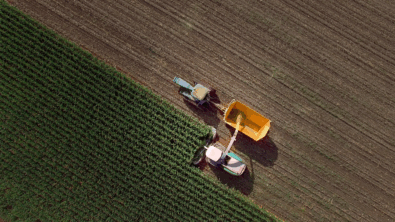
For episode 10 of On the Move: A Siemens Automotive Podcast, we are continuing out conversation with experts on heavy equipment and autonomy to talk about the future of automotive development practices.
Mike Severson
We are back for another episode of On the Move, a Siemens Automotive podcast where we explore the automotive industry and uncover the trends driving its evolution. I am your host Mike Severson and I’m joined by our VP of the Automotive and Transportation industry Nand Kochhar. This episode is part two of our discussion around software-defined products across transportation and heavy equipment. To speak to the role of autonomy in these industries, we have our expert Akshay Sheorey. We also have Hendrik Lange, the Senior Director of Heavy Equipment at Siemens Digital Industries.
Thank you all for being here. In part one we left off talking about the challenges of supply chains when delivering software-defined products for these two industries, heavy equipment and automotive. But I had a hanging question, are heavy equipment OEMs making efforts to tap into the automotive supply chain to build out their own solutions in the realm of autonomy? The more consumer side of transportation seems to be a little bit more mature.
Hendrik Lange
Yeah, but we have, they absolutely do. And we see similar or same supplier, but there are different requirements, right? So further requirements and as they don’t have the volume, so there’s obviously a trade-off for the supplier, what they invest in and their research, right? So yes, obviously they leverage the same suppliers, but what you get out of the box is probably not as much as you can get for the automotive industry, right?
Mike Severson
What about commercial vehicles? Are there more similarities to passenger vehicles than heavy equipment with off-road applications? Are there any innovations or ideas making their way into automotive?
Akshay Sheorey
So, yeah, so I would say commercial vehicles, you know, what we would call, say, class 6-7-8, you know, heavy, heavy trucks, for example, right? They are actually in a way more adaptable for the autonomous application. So actually, if you see in the industry today, there’s a lot of applications, a lot of companies trying to get to this autonomous, fully autonomous trucking where the passenger market is not yet ready for it. And part of the reason, again, is the area. So if you look at heavy trucks, commercial vehicles, the way the business models are set up with regional distribution centers that are along major highways, etc., it becomes an easier problem to tackle. Other applications, again, if you look at the economic impacts in terms of number of truckers available, operators available, that is shrinking. So again, having automation, having some of the safety requirements in terms of number of hours that they are allowed to drive, what that allows is actually increases an opportunity for automation. So, for example, if a trucker is waiting in line for two hours at a port, and if that port can be automated where you come in, load up the cargo container and then come out, you’re saving two hours of the 10-hour driving limit that a trucker has, right? So these kind of innovations and applications help support the business case associated with these industries and thus brings in the automation aspect because that is not cheap. You got to train the cost of safety, verifying the safety and the customer adoption is higher, but the business cases can potentially justify these technologies given the right application. So in that sense, yes, commercial vehicle does become a lot more closer to a classic automotive car application than a totally off-highway mining or agricultural application.
Nand Kochhar
Yeah, Mike, I’ll add on to agree with Akshay’s comments. I’ll add on from a technical perspective, for example, we talked quite a bit about sensing and processing of that information to do decision making. So there’s huge similarities between, let’s say, the automotive and commercial vehicles. I’ll use trucking in the U.S. as an example. On days at fields, trucking industry is making as much progress in autonomy and ADAS features because they need all those business case, use cases, what Akshay just touched on. Lack of driver’s availability, more putting the vehicle to use majority of the time, and that’s possible with autonomy. So there’s technical aspects, a lot of commonality, and then it’s always the business case which drives which industry makes progress on that. But in my mind, commercial vehicles are progressing on autonomy at the same speed as the automotive. And then it’s just the different use cases.
Mike Severson
Let’s switch gears here. How are companies integrating the complex electronics and software development into these highly mechanical products? And I think you can shed some light on this.
Nand Kochhar
Yeah, definitely. As you know, we’ve been working on digital transformation and leveraging product lifecycle management processes, tools, model-based systems engineering for decades. Right? So one could say, what is different now with the software-defined products or software-defined vehicles, what we are talking? It goes back to the comment I had in the opening. There’s more and more electronics, and hence there’s more software, because you can offer these feature functions not only from your operational perspective, but also creating new business models, offering features after vehicle has been in service for a number of years. And now you can sell some more. It is just like your iTunes store. that concept basically coming from, you could say, from electronics industries, iPhone being an example of a software-defined product. So that is the level of change which is happening. On the other hand, we know that the product development processes and manufacturing processes for a traditional product development works on a workflow -type structure, and it’s a much longer period, whether it’s a hardware development for electronics, could be the chip development, could be the printed circuit board development, putting it together as an EC, that type of hardware in that world, or hardware off a vehicle, building body, chassis, electronics, bringing it all together. That works on one timeline, and usually that’s much longer because it relies on building physical parts. Whereas software, on the other hand, is very agile process development. So software methodologies, which we in automotive, for example, are learning from software companies like Microsoft and Google of the world. And they work on this flow of what’s called CICD and CC, which is continuous integration, continuous deployment, and then ultimately continuous commissioning of those software. Those agile process development and software functionality development is much faster. Software developers could change a feature, develop a feature every week, and they might want to insert that into a vehicle every week, whereas a traditional vehicle development does not work in that time frame. So it poses a lot of opportunities. How do we bring these two worlds together of software development, the agile processes, and the hardware development, which is a waterfall approach, bringing it all together? And that is one of the challenges our customers struggle with. And they come to us and they ask us, that is a big problem. How do we bring it all together? It’s not only just impacting the product development at a OEM level. It impacts the entire ecosystem of suppliers. For example, today, in a traditional way, you could say the electronic control units might be coming from a supplier and they own the IP of software as well as the electronics in it. Whereas going forward, companies might adopt different methods and suppliers have a different role because OEMs are going to own that software and the corresponding hardware. So that is a major, major change. And not only internally, then you have to bring different departments and the silos within an OEM organization of mechanical, electrical electronics, software together, but also the ecosystem of suppliers, bringing them together. So that’s a huge change, which is coming through the software-defined products.
Mike Severson
very very complex challenge there and it’s taking OEMs quite a bit of effort to to solve this and deliver these software-defined products I think especially since there’s been decades and decades of processes that have been instilled and they’re instilled for the right reasons to improve quality and safety, et cetera, but having this shift to break that, these processes would be a, it is a very big, complex challenge.
Nand Kochhar
You’re absolutely right. Once again, yeah, there’s huge business benefits. Typical example we have used in automotive, when you consolidate to these new electrical architectures called zonal architectures single compute unit, you have opportunities of total wiring reduction in a given vehicle, sometimes up to more than 30% weight saving as well as cost savings, the amount of wiring required in a vehicle, as an example. So it’s a huge opportunities. And that’s why I think over the next five to ten years, every company is gearing towards how to adapt these because the value is so much more from a cost perspective, from offering functionality. And that’s the huge opportunity.
Mike Severson
Yeah, the weight reduction is a big opportunity. So when you reduce weight, you can downsize the size of the battery, the size of the brakes. Everything just snowballs when you’re able to cut weight from a vehicle. And that has a huge implication on cost. This is great. Hendrik, you mentioned having to customize many of the components going into the autonomy systems. Are you bringing new teams into the OEMs or is it through contracting work from software and hardware teams?
Hendrik Lange
Michael, please allow me to probably enhance a little bit on what Nand said. So we see in our industry, we see exactly the same challenges that Nan described, and our customers have to go through this. But I want to point out the opportunity for our customers as well. So we have many different products and equipment which is produced. So the variety of equipment is huge in our industry. And they are very complex machines which require a lot of R&D, right? And we have relatively low volume, but immediately equates to low margins. And software-enabled products and software-enabled functionality allows for new business models, particular for asset monetization in the aftermarket. And that is where all our customers have the benefit with software-defined products. Now you can embark on software-enabled functionality, which you can monetize. And let me give an example, a very simple example, right? So we have one customer produce harvester, and they come with a certain horsepower. And you know harvesting season is a precious season. You have a couple of weeks where you operate this equipment under high pressure nearly around the clock. So speed is really important, being faster. And so this customer allows for a particular harvester to buy additional horsepower for a given time, couple of hours by connecting to the digital platform. So instead of going with two miles through the field, you can through the additional horsepower with four miles. And the only thing it does is it releases through a software switch the built-in horsepower. So those are things where our OEMs embark on those new technologies and really change their business, their business model, and how they can monetize on this. I think that’s very important, probably a little bit different to the automotive industry, but very critical for our industry. Well, you know, this is interesting,
Mike Severson
Hedrick, because in automotive, this is starting to make its way in. So this whole idea of paywall. So the vehicle leaves the factory with capabilities, but they are not enabled. And the way they become enabled is through software and over the air update. So there’s the famous example of a vehicle being equipped with the hardware to run heated seats. But in order to use those heated seats, you have to subscribe to them. But there is also OEMs doing this for horsepower as well. So acceleration boost is an option. And there are other areas like autonomous driving. So level two autonomous driving for either a one-time fee or a subscription. So these business models are also being adopted in automotive, just different applications.
Akshay Sheorey
Yeah. And, you know, and if you look at, you know, the way the business models are set up for, you know, if you look at traditional automotives, right, there used to be the base trim that would draw in the vehicles, but then the sales would try to upgrade to higher trims because that is where the margins were. Now, previously, and as Nan said, what is happening is with the electronics architectures being changed, previously you had to order that specific trim level with those specific hardware and software features. That means even though you had some margin benefit because of a premium trim, you are not unlocking the full benefit of that premium trim that customers were ordering. By using software as a function, which has a high margin content, you’re basically your fixed costs are across the whole vehicle line. But then your premium features are basically being enabled through software. So your overall margin that you can geek out of these things is a lot higher. So that is one of the big things. And as Hendrik said, it is now being applied. That same concept can be applied across different operating environments, different machines, etc. For exactly that, increased range, increased machine payload capacities. So you’re not over engineering the products beyond their limits. So you can actually have software controls in place. So then again, as Henrik was saying, your ability to have post-delivery service and monetization, again, all of those capabilities are now being enabled through software at a lot lower costs.
Nand Kochhar
Yeah, and again, we touched on the new architectures allow them to put more features functions on a single unit so you could be making more efficient. But of course, there’s a limit on the hardware selection, how far you can go. One, just having this basic capability in products, whether it’s a phone or a heavy equipment or automotive, opens up doors for other things. when there are some errors, let’s say in automotive industry, recalls being one of them, and you can do some of these updates over the year and fix the problems, potential problems, if it’s a software can fix that. And you create huge efficiencies of avoiding customers to bring vehicles into the dealer showrooms and get them fixed as a good example. And those things are very, very expensive for the OEMs. And they’re very annoying for the customers when you have to do that. So now you see you have opportunities to a lot of that through what we are talking about with software-defined products, software-defined vehicles, with over-the-up date, which comes from the foundations we are discussing here in terms of the architectures and the options in making business cases.
Mike Severson
yeah i think you though need to be a little careful here though that you don’t add too much hardware to the vehicle because when you add hardware you add cost and if if the there is not the subscription to to the said feature you’re adding cost um but not getting sort of the the return during the customer’s ownership so there needs to be a balance there to manage the cost but also you know maybe the word is exploit these features during the time of customer ownership so that so it’s an interesting interesting balancing act there
Nand Kochhar
yeah no i was thinking through it and then I was thinking, you remember how we order new vehicles? There’s options packages. Industry does that today, at least in automotive. So, you know, they don’t offer you a la carte every feature. They create some bundled packages when you go to buy or lease a vehicle today, right? And it could be any car dealership. And its concept is the same. How do you bundle these things? Things which are closely related and can you see? And then there’s obviously the marketing aspect, what customers are willing to pay, what they’re willing to buy, and you bundle those things together. It’s a similar concept going here. Where do you draw that line? So you’re right, Mike, in terms of that. Nothing is, you know, a cookie cutter approach applies on everything. All this deep thought goes into, and that’s how you create these packages. You select the amount of hardware, how far you want to extend it, et cetera.
Hendrik Lange
And Michael, please let me add here something from the heavy equipment perspective. So for us, we cannot compromise on reliability and durability. So this is unplanned downtime is a no-go in our industry. And it needs to work in these harsh conditions we face. So there’s a lot of restrictions for that and considerations. The other thing is it’s the sheer lifespan of our equipment. It runs 30 plus years, right? And that brings additional challenges on really understanding the architecture and upgradability and those kind of things because it needs to be maintained over this lifespan. And whereas automotive is probably just 10 years. And if the car is for a couple of days in a garage, it’s probably not the end of the world, right? So this is slightly different with our industry and brings additional challenges for us in terms of reliability, understanding the best architecture and have a robust outline, but also ensure the supply of parts, etc.
Mike Severson
The products being delivered between these two industries do share a lot of similarities even if the applications are quite different. This discussion on the evolution of supply chains has been pretty interesting but I think this is a good spot to take another break. We will be back in a couple weeks for tor the third and final part of this discussion. The focus of the final discussion will be bringing this all together into a plan for OEMs and suppliers to deliver the best products for their respective industries.
Don’t forget to subscribe to get new episodes when they air, Until then, check out our previous episodes of On the Move or visit our website to continue your journey with us.

Comments
Leave a Reply
You must be logged in to post a comment.
Ultimately, Moto X3M is more than just a racing game—it’s a high-octane adventure that tests your nerves, reflexes, and ability to keep calm while everything around you explodes, crumbles, or flips upside down.
If you like to have fun online, please check out our site Moto X3m. We often give away free new and well-known games.