How to Optimize Automation to its Fullest in A&D – Summary
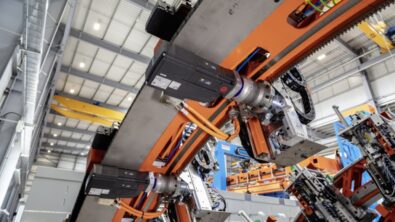
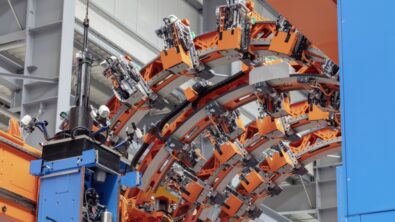
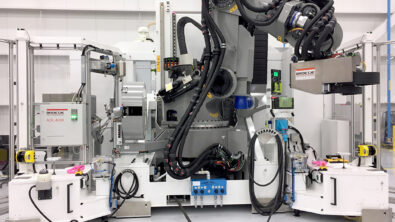
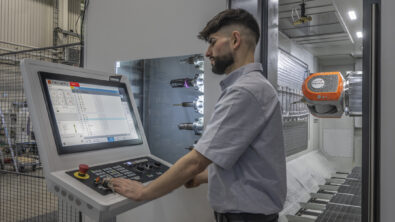
The automation of aerospace manufacturing is going to be a crucial component of its wider transformation to become smarter. By shifting the responsibility of certain manufacturing tasks from humans to machines, the A&D industry will be in a better position to accommodate demands for increased production volumes and rising variants in particular aircraft such as drones.
Successfully implementing automation strategies, however, can be challenging. Aerospace manufacturers want to make sure they are apply automation correctly in ways that secure a return on investment and do not set them up for failure.
In the latest episode of Talking Aerospace Today, Todd Tuthill, Vice President of Aerospace, Defense, and Marine for Siemens Digital Industries Software, is joined again by Suresh Rama, Portfolio Development Executive in digital manufacturing for Siemens. Together, they conclude their larger discussion on what A&D can learn from automotive in terms of implementing automation by highlighting the key factors aerospace manufacturers should target to ensure success in their automation strategies. These factors include economic viability, characteristics of production, and business strategy alignment, which can be used as key performance indicators when optimizing automation with digital transformation.
Follow the money
Perhaps most obviously, aerospace manufacturers want to ensure new automation strategies are not more expensive than they need to be. There is always an initial cost required to make these transitions, and companies want to know if the return on investment from automation will be worth that cost. The last thing they want to do is waste money in areas that perhaps do not need as much automation than others, potentially setting themselves up for exceeding costs.
To avoid this, manufacturers can carefully evaluate where in an assembly line, factory, or other production process that could lead to the most cost savings from automation, or at least the largest return on investment. The high fidelity of automation technology offers an operational consistency that can provide increases in productivity, improvements in quality, and faster yet safe executions of manufacturing tasks that can lead to higher profits down the line.
Orient for production
Another factor to consider in the implementation of automation is the demands and characteristics of the production itself. Different types of aircraft and spacecraft will have their own desired production volumes, levels of complexity, and variation between products that production processes will need to be optimized for, requiring different approaches and levels of automation and flexibility.
Aircraft and spacecraft with higher expected production volumes, for example, are easier to justify investments in automation for since companies would want to get as many products out as possible. As mentioned previously, the high fidelity and consistency automation brings can help them reach those goals. Similarly, automation is easier to justify for products and components of high complexity. Some parts may require intricate precision and alignments in their manufacturing to a degree that are simply not optimal for completion by human hands, whereas machines would be more well-equipped.
In short, areas of manufacturing dedicated to products of low production and complexity might be better off with automation after all, conserving time and resources that can be spent automation areas that can benefit from it more.
Align with the future
Lastly, aerospace manufacturers would also need to consider how their application of automation fits into their long term business strategy. Does the company want to be a digital enterprise? Does it want to be sought after as the most flexible manufacturer for all these new product variants? How would automation help or hinder these goals?
They should additionally consider how automation could help them deal with market trends, such as shifting demands and the availability of labor. The issue of labor availability is especially important to factor into discussion around automation as skilled labor for manual operations becomes more and more scarce.
Whichever direction aerospace manufacturers want to go, automation can certainly play a role in helping them get there.
The foundation of optimization through digital transformation
Expenses, production demands, and strategy alignment are just some of the factors aerospace manufacturers will need to optimize their transition to automation and smart manufacturing. To help manage all these factors and find the best path forward, manufacturers can leverage these factors to gain early insights into their transition with digital technology and tools. For example, by simulating automation plans in a digital twin of a factory, companies can find a strategy that yields an optimal reduction of costs will boosting production volumes before building such a factory physically, reducing costs even further.
The full benefits of such digital tools are numerous, too much to cover here alone. To learn more about how tools such as the digital twin of production can optimize aerospace manufacturing, be sure to tune in for future episodes of Talking Aerospace Today.
Siemens Digital Industries Software helps organizations of all sizes digitally transform using software, hardware and services from the Siemens Xcelerator business platform. Siemens’ software and the comprehensive digital twin enable companies to optimize their design, engineering and manufacturing processes to turn today’s ideas into the sustainable products of the future. From chips to entire systems, from product to process, across all industries. Siemens Digital Industries Software – Accelerating transformation.