What it takes to power a humanoid robot-podcast transcript
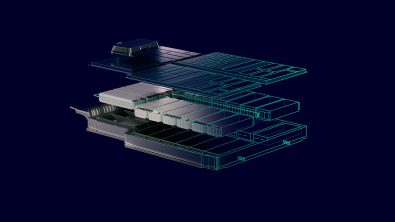
Dale Tutt: Just kind of having this mindset of, or this picture in my mind of you’re working on the chemistry and you’re looking at using digital tools, you’re looking at the chemistry of the battery and you are evaluating the performance of the battery, of that battery chemistry. But you may also be able to look at variations that, you know, from a manufacturability standpoint so that you understand that trade-off maybe between performance of the chemistry versus the manufacturability, as you talked about scaling the manufacturing process.
And, a lot of the conversations we have with battery companies around their aging process, how long it takes once they make the batch, then it may take several weeks before they actually realize whether or not they have a good batch. And, you know, so it’s the, you know, so certainly it’s a challenge. The more that they can do this digitally, the better off they are. And then using the digital manufacturing tools to really improve the process controls to make sure that they get a good batch on a consistent basis, I think is also very critical for this, for the design of the batteries. So have I captured that pretty well?
Puneet Sinha: You have amazingly well captured not only our pitch, but also because you talk about interactions, trade-offs, which are extremely critical. not only at the manufacturing stage or validation stage, but even from the innovation. When the electrochemists in R&D, they are sitting and they are thinking of the new battery technology at the chemistry level, the additives that they add, they need to have a way to understand if they make a change in electrolyte or a chemistry at any part of the battery, what are the implications of that on the performance, life, manufacturability?
And how you connect that thread is not about optimizing in silo, but having ability to carry these implications and system trade-off. And that’s what in Siemens language we call digital threads, is how you take these, hey, somebody has to come up with the electrochemistry, somebody needs to come up with the design, somebody needs to take the design to manufacture. But can we connect these domains and can we connect these business processes that a company needs to take so that before they go and start doing that or start validating that, freezing their designs or manufacturing process, they look at it holistically rather than optimizing it locally. And this is the true power of digital threads. This is the true power of how we are enabling companies to look at the system-level trade-off and interaction across all those domains.
Dale Tutt: Yeah, awesome, awesome. All right. So Puneet, a couple of minutes ago, you mentioned that the battery seems kind of simple. And when you were in college and you were looking at people that were working on batteries, it seemed very simple, but now you’ve been engaged with it for 20 years. And I think that is probably true for a lot of people.
And I don’t think a lot of people really recognize, we’ve been talking about humanoid robots here and some of the battery needs and the challenges around cooling and energy density and all that. But a lot of these topics that we talk about are really agnostic to any other industry. And I think actually maybe the humanoid industry is benefiting from what’s been happening in the automotive industry with electric vehicles, as well as maybe the aircraft, aerospace industry with eVTOLs, the air taxis that are flying around on batteries.
And I think most people would tell you they don’t realize how much batteries had have advanced over the last 20 years. I mean, you think about where we were 20 years ago, where the state-of-the-art was lead acid. Sometimes they went to sealed lead acid, so that, it was a maintenance thing. And the NICADs, nobody talks about NICAD anymore. And, you know, from a rechargeable battery standpoint. And so it’s just amazing to me how much this has changed. And I think, at least from my perspective and what I see going on in some of the industries, it seems like, it feels like that the progress across industries is for battery advancements is really starting to accelerate.
We’ve talked a little bit about the use of digital tools, but how much of a role has the digital tools really helped with the acceleration that the comment you made about moving beyond experience-based to more data-driven based?
Think about some of the other industries that you’ve worked with on batteries. and maybe dive a little deeper into how they’re using those digital solutions, as well as maybe if you have any customer examples that you can share, even if you can’t share the name of the companies, how they’ve seen the digital tools really helping them make those advancements faster.
It feels like the pace of change is accelerating in terms of the improvements in the battery design and manufacturability and certainly in being able to scale at manufacturing. What’s your view across all the industries of how digital tools solutions are helping with that simulation and manufacturing solutions as well as then maybe if you have an example of maybe a customer that, hey, well, they went, designed it six months faster, they stood up their factory a little bit faster. Are you seeing any of that?
Puneet Sinha: Absolutely, yeah. It’s a very profound question, Dale, because yes, you’re right that in last, say, 20 years, the battery technology has come a long way. There are two numbers that capture it very well. One is in those last 20 years, the energy density of battery, that means how much energy you are packing in a given kilogram of battery has gone up already three times. And the cost of battery has gone down by more than 95% between 2000, again, in last 20 years, between 2007 to 2026. I mean, think about it. This is a massive shift in the technology that has happened in front of our eyes.
Of course, this is credit to the whole battery ecosystem, from the material companies to cell companies, companies who are taking these cells, putting in packs, optimizing the overall manufacturing process, the designs, and then putting them in operation. But the role of Digital solutions cannot be ignored in helping companies or helping this industry get to where it is. And again, we are, and then the exciting part is we are just starting. In last 20 years, if you see the battery industry has been largely driven by electric vehicle as an application that was driving the demand on lithium-ion battery.
But something amazing has started happening in the last few years, and that is now the demand for lithium batteries is driven not only by electric vehicles or transportation, but also by many other applications, like as renewables are growing, how to integrate those renewables in the grid battery is a critical part of it. AI data centers, you know, they are, of course, the key for innovation across every field in future. But these AI data centers are massively power hungry.
And not only power hungry, but the fluctuations in power demand is also massive for these AI data centers compared to the normal data centers. These data centers can, for these AI data centers, again, battery energy storage, is a critical element for these AI data centers to work. If you look at all of these applications, EVs, AI data centers, renewable energy integration in the grid, we are talking about humanoid today, defense applications, every defense equipment has some battery in there, right?
All of these applications, and not to forget consumer electronics, they all now rely heavily on battery for their operation, for their advancements, so battery is now an integral part of the overall energy equation of the world, and what we are seeing because of that. is, of course, to meet these diverse demands from electric car to humanoid to a defense system to a stationary battery application like energy storage system, the demand on materials, on the designs, on manufacturing, expectant life of these systems is massively diverse.
Any company, any battery supplier, who is looking to address all of these different needs cannot achieve that just based on what they have done in past or by leveraging, you know, their traditional engineering manufacturing practices. And we are seeing a massive uptick in adoption of digital twin technology by companies across the board in battery ecosystem from top 10 battery suppliers who have massive scale of operation, as well as the new startups who are coming up with exciting technologies but need to figure out how to scale that.
And to both of these ends of spectrum, the enterprises who have a lot of scale and know how to bring the batteries in market and commercialize it to the new startups, we are seeing tremendous value that our digital solutions are giving. I’m going to give you two examples. One example is SKON. It’s a Korean battery supplier. They are working to reduce their OPEX because as battery prices go down for any company to maintain their profitability, they need to reduce their OPEX. And a lot of that comes down to how you are taking on manufacturing. How can you improve the throughput of manufacturing, how can you reduce the defects in the manufacturing? And this company, who has been doing battery manufacturing for many, many years, has a tremendous value in the market. They decided to adopt. They were looking to improve the coating process and coating technologies and see how they can reduce the defects, how can they improve the coating quality.
This is where they decided to leverage digital solution simulations and our seamless digital twin technology so that when they are looking at that process, they are not just looking from the lens of experience and machines, but also bringing in the first principle-based insights that can help them optimize the process. And as they adopted a simulation software to simulate coating behavior, to look at what are the key variables that determine the coating quality and defects. This gave them a massive accelerator in finding the defects, improving their operations, and they were able to achieve 11% improvement in coating quality, 50% reduction in defects. This is just one example.
There are many such, but this is a great example of a large enterprise who is a leading battery supplier, you know, continuing to adopt more and more of Siemens Digital Twin technology so that they can improve their quality of their battery, they can reduce their OPEX and grow their market share. On the other hand, I’ll take an example of a startup. And again, this, you know, startups’ lives are always challenging, as you know. When it comes to battery industry, life is extremely brutal for any startups because it’s not just about coming up with innovation that can improve the battery performance, life, or any aspect of battery behavior. That in itself is a massive feat.
The key challenge that we are seeing in last five years, that a lot of the battery startups are failing despite having excellent technology, they are failing because when they are looking to scale up their production, they ended up having a lot of scrap rate in the beginning, you know, more than 40% to 50% or more. And this, as they’re looking to scale their operation, looking to stabilize their production, if they have a very high scrap rate, this amounts to billions of dollars of capital going down the sink. And this has been a key reason that many of the battery startups have failed, unfortunately, in the last few years. And if you think what is at the center of it is how to reduce the scrap rate during battery production faster so that your capital is not at risk.
And again, to do that, it comes down to what I said before. You cannot rely on experience-driven manufacturing alone. because either those startups don’t have it, or even if they bring the people who have experience in battery manufacturing, they are running against time. And this is where when they bring the digital solutions that help them bring data-driven manufacturing, help them reduce the scrap rate. We have worked with the startups who have reduced the scrap rate 50% faster because they are leveraging more and more of the digital solution, making data-driven decisions. And this is key to success for any startup as well in this market.
Dale Tutt: All right, well, awesome. Well, Puneet, appreciate your time today. It’s been a great discussion. Unfortunately, it’s time to start wrapping up. Real quickly, do you have any closing thoughts before we wrap up here?
Puneet Sinha: There are two things I would say. First of all, it has been a pleasure to be on this discussion with you, Dale. And the second point I will say, just connected to what you were talking about, humanoid and batteries, I will tip my hat to everybody who is working in the battery industry to acknowledge the challenges, but also the tremendous amount of innovation and grit they are showing to drive this very critical piece of technology for the future of humankind. And also encourage any fresh student who is looking to join the workforce, we encourage them, hey, come join the battery industry. This is where the future of energy will be written.
Dale Tutt: Well, there certainly is that. I’ll echo the comments earlier. When you think about batteries in every industry, and obviously, there’s a lot of focus around the EVs. You talked about the data centers. It’s just a staggering number when you talked about the energy density has gone up by 3x and the cost has gone down by 95%. And every day we take it for granted, but think about how much longer the battery lasts on your smartphone now than it did, say, 10 years ago. And it’s not because it’s running a bigger battery, and it’s not just because the electronics are a little bit more efficient. It’s actually because it’s a better battery, pound for pound. In the context of humanoid robots, the discussion we had today has been very eye-opening for me.
And you think about the considerations around energy density, the chemistry, the safety, when you talked about the lithium ion versus a solid-state, I don’t think people really realize that. I certainly don’t realize that. And so, and the influence of cooling and the safety and, okay, you’re going to be putting these in environments with other people, but maybe sometimes you’re going to be putting them into hazardous environments where you would really need to pay maybe double attention to the safety of the battery and the cooling of it.
There’s certainly a lot of considerations. And, you know, when we talk about the enabling technologies for humanoids, the software and the AI, physical AI, and semiconductors. But again, the battery is such a critical part of it and really enabling that mobility of the humanoid robots. It’s been a great discussion.
Thank you, Puneet. Thank you for joining us today on the discussion. I really do appreciate your time. And thank you to all of our listeners. We appreciate your time as well. And we hope that you enjoyed this episode of the Industry Forward Podcast. And hopefully, had a chance to learn something new and enjoyed what you hear. And if you do like what you hear, please follow the Industry Forward podcast on your favorite podcast channel. And we’ll talk to you soon on the next episode. Thanks again.
Siemens Digital Industries Software helps organizations of all sizes digitally transform using software, hardware and services from the Siemens Xcelerator business platform. Siemens’ software and the comprehensive digital twin enable companies to optimize their design, engineering and manufacturing processes to turn today’s ideas into the sustainable products of the future. From chips to entire systems, from product to process, across all industries. Siemens Digital Industries Software – Accelerating transformation.