The AI putting the “human” in humanoid
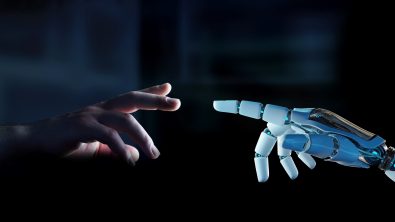
One of the key attributes of humanoid robots is their human‑like form factor paired with adaptable capabilities. Unlike simpler machines, humanoids prioritize flexibility, dexterity and increasingly, intelligence. Due to advances in AI, sensors and computing power humanoids can perceive and adapt with a level of flexibility that closely mirrors human performance.
During an episode of The Industry Forward Podcast, host Dale Tutt, Global Vice President of Industry Strategy at Siemens Digital Industries Software, and guest Rahul Garg, Vice President of Industrial Machinery at Siemens Digital Industries Software discussed how humanoids use physical AI to adapt to new environments all while augmenting the capabilities of human workers. Empowered by the physical AI, humanoids combine human compatibility with scalable, software-driven intelligence to unlock flexible automation that fits existing environments while enabling new levels of efficiency.
Augmenting the senses
Over the past decade, there have been impressive strides in AI capabilities. Large language models saw a dramatic evolution in 2022 and along with them came a new age of AI performance and efficacy. And now in 2026, there is physical AI which extends traditional AI by empowering robots to truly understand their environment and make decisions.
Physical AI integrates vision and perception and sensor feedback to enable real-world interaction and enhance motion-planning. Recent advancements in vision sensors have helped machines to recognize more objects than ever before; this, combined with traditional AI, transforms humanoids into decision-making robots that can dynamically adapt in real time.
Powered by physical AI, humanoids could potentially manipulate human tools and even operate in legacy environments. They would also be multifunctional; through physical AI, each model could successfully complete several different types of tasks after being trained once. And after that initial training, the humanoid will no longer need more training and will be able to learn continuously throughout its lifecycle.
Real-world usability
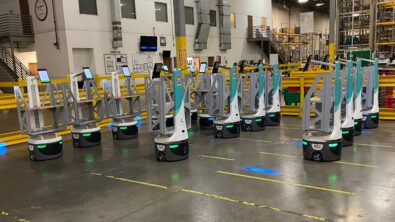
The advanced sensing capabilities granted by physical AI helps humanoids operated where they are most suited—human centric environments that may be expensive or time-consuming to renovate and update for other forms of automation. This way, humanoids can address key challenges in industries such as logistics, healthcare and manufacturing; with manufacturing and warehousing being the most significant sectors for near-term adoption.
Siemens predicts that humanoids will be especially useful in brownfield factory environments. Reconfiguring factories to accommodate new technologies can be costly; and despite the ROI digitalization guarantees in the long run, redesigns can potentially be unfeasible. Humanoids can blend into existing factory workflows with minimal disruptions, functionally bringing automation to more traditional factories.
Already, companies have been able to leverage humanoids for tasks such as unloading trucks. Unloading seems like a simple task, but for machines there are many attributes that must be considered. Using physical AI, the humanoids could identify and understand the shapes and sizes of the boxes and unpack them accordingly, efficiently and continuously with few breaks.
Ready for deployment
Here at Siemens we predict humans to shift from hype to large scale deployment over the next five years, with an upwards of 2-3 million deployed for commercial use. Humanoids will ensure strong ROI in industries that rely on repetitive and labor-intensive tasks and are likely to significantly decrease in cost as enabling technologies become more widespread and inexpensive.
Humanoids will address labor shortages and shake up several sectors due to their human-like perception and physical capabilities. Powered by physical AI, humanoids represent a major shift toward scalable, intelligent and flexible automation. Their ability to learn and adapt to real-world environments makes them highly valuable, especially legacy and traditional settings where modernization is both expensive and unfeasible. To learn more about how your enterprise can prepare for humanoids and reap their benefits, consider tuning into the Industry Forward podcast and discovering how Siemens can help every step of the way.
Siemens Digital Industries Software helps organizations of all sizes digitally transform using software, hardware and services from the Siemens Xcelerator business platform. Siemens’ software and the comprehensive digital twin enable companies to optimize their design, engineering and manufacturing processes to turn today’s ideas into the sustainable products of the future. From chips to entire systems, from product to process, across all industries. Siemens Digital Industries Software – Accelerating transformation.