A question of modularity for software-defined products in Heavy Equipment and Automotive – On the Move S01E11 – Transcript
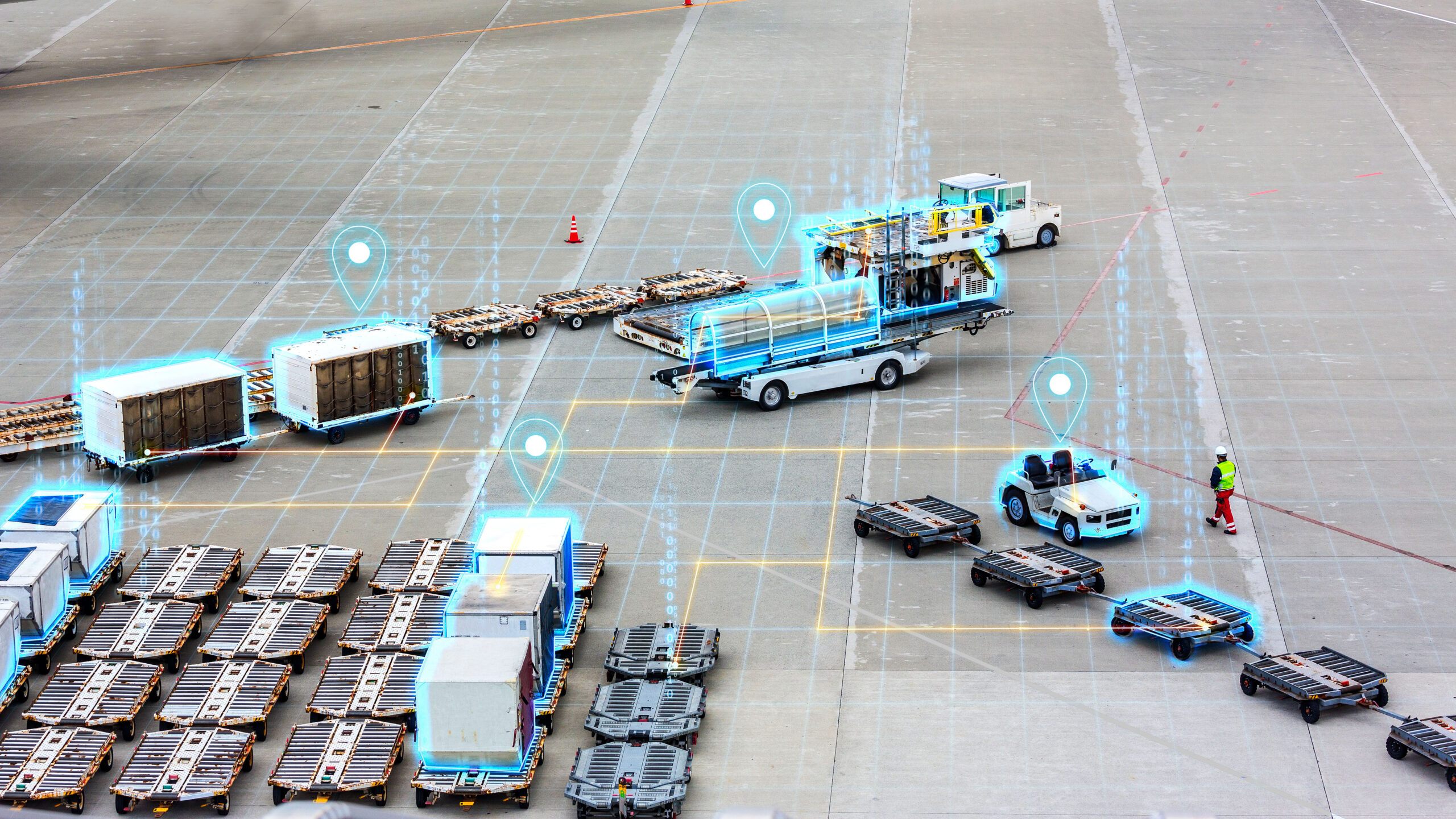
For episode 11 of the Siemens Automotive Podcast, On the Move, we are wrapping up our conversation on the overlap between heavy equipment and the automotive industry. And more specifically the impact of modularity when developing software-defined and autonomous products.
Mike Severson
Welcome back. I’m Mike Severson and it is time for another episode of On the Move, a Siemens Automotive podcast. Our host, Nand Kochhar, VP of Automotive and transportation industries is joining me as we wrap up our discussion with Hendrik Lange and Akshay Sheorey on the similarities of the automotive and heavy equipment industries in delivering autonomy and software-defined products.
In the last episode we left off talking about the need for durability and reliability in heavy equipment compared to the more consumer-focused automotive industry. Software and electronics improve a lot faster than the mechanical systems at this point, are OEMs taking a modular approach to solve this difference? Where a module might be replaced when the current feature set becomes too demanding for the initial set of hardware.
Hendrik Lange
Yeah, that is what we see. So I guess obviously we learn from the aerospace and the automotive industry. Those modular aspects or approaches have a lot of advantages. So it’s also to enable much more reuse between the different types of equipment. The variety is much higher. So there is obviously a cost aspect in there. But also modularity helps with sourcing. So because we have lower volume, so that definitely makes sense. But also modular architecture and the completely understood architecture– now I talk having the concepts of MBSE applied– this is key to maintain the products for the lifespan and what is required. So yeah, absolutely, that is what gets applied. But not everybody is there yet. And that is really where we help our customers also with their digital transformation to have the right processes in place and to be able to have a R&D environment and development environment that supports them with those considerations and processes and to apply those things.
Akshay Sheorey
Yeah, I’d like to add here exactly as Hendrik said, if you look at aerospace, 30-year machines need to run and operate and be updated. So a lot of these technologies, etc., being learned from aerospace and so on. But the key thing is, you know, this is upending the current product development process, right, where you had individual ECUs and individual hardware. Now, it’s all coming into central or zonal approaches, which makes it easy to upgrade because you are reducing the interdependencies. But at the same time brings in the overhead of making sure that everything works as expected, as it was planned and processed 20 years earlier. So that is where there’s a transformation going on in the industry in terms of how do you develop, how do you ensure that things can be upgraded and implemented future regardless of the hardware. So that is another key element of the software-defined vehicle or product is decoupling of the software and the hardware so that you are not tying each together and doesn’t make it possible to change things in the future. Having this SDV approach allows them to change hardware, update the software and still have that basic functionality that was promised when that original product was developed. Interesting.
Mike Severson
So we talk a lot about architectures here. Is there an impact on vehicle architectures stemming from the shift to over-the-air updates and this whole software-forward development process? or does it change the supply chain and partnerships that go into developing such complex products?
Nand Kochhar
Yeah, I ended up touching on that point very briefly before. It’s a huge change we talk about over the year update because that is what we can link to the business cases and advantages. But that’s typically happening at the end of the when everything else has been done. That’s the last thing. But you have to architect everything before that and for it to function what we call basically the application lifecycle management, which is a software swim lane, you could say, in the product development process. And then you have a product lifecycle management swim lane, which is the hardware. So the challenge when, while we talk big about having separate development flows for all the advantages we touched on, it is very important to keep the traceability and the compatibility of that software to hardware. Not only at the, when you release the product to the showroom or to the customer, But now for the service of that for next 10 years, typically in automotive, you have to maintain on the park side of the business, maintain parks for 10 years available for the customers. Just like Henrik touched on, heavy equipment could be 30 years. Other products could be different time frame. So you have to maintain that. So now you can see the digital transformation challenge of getting these benefits becomes huge on what I call trusted traceability of all this information and what’s called the compatibility of that hardware to software, not only at release, but maintained throughout. So that offers huge opportunity. Now, very important piece of that is if things are still coming from suppliers, suppliers do have an important role. It’s just different than what they did for the last 50 years in case of automotive, working with the automotive industry, with the OEMs. So the suppliers are playing an equally important role, but it’s just a different responsibility of who does what and who’s accountable for when there are challenges to be solved. So it’s a huge shift in the entire ecosystem, both from a business perspective and technical perspective. So I think that’s, I would touch on this briefly. And this is one area where we, from Siemens’ perspective, feel very strongly positioned with that as a key differentiator because we have the Siemens EDA organization, Electronic Design Automation, which does all the things in the electronics world of whether it’s a chip development or it’s a board development, ECUs and software, as well as in the hardware, whether it’s a vehicle architecture, of body chassis, that Siemens is in a unique position to bring these two things together for our customers and reap the benefits and address this complexity and turn, in fact, all this complexity into a very competitive advantage for our customers through these options.
Mike Severson
Okay, I think we’re to the last question, guys. So designing, planning, and manufacturing vehicles and heavy equipment in these relatively new engineering domains is a significant challenge for so many of our customers. How are we at Siemens helping our customers transform their businesses and processes?
Nand Kochhar
So, Michael, we can pause it here. And I ended up addressing that since it was flowing with the previous question. So the Siemens advantage, that’s why it kind of was flowing, touched on that. So you can cut paste that piece of it from my answer, but we can definitely have the opportunity to hear from others.
Hendrik Lange
But I would, on the previous one, I probably would like to add something. I’m allowed. Because so from a heavy equipment perspective, we also see the supply chain similar to what Nan described. But there’s another aspect for our industry. And that is typically the equipment which was produced is the as-built equipment is the first And typically that used to be through the dealership. But with the new business models, with the new opportunities, but also based on the new business models, as for instance, equipment as a service, there’s another aspect which is very important to us and we need to support our customers. And that is gathering information from the equipment in the field and bring it back into the upfront process. When you have equipment as a service, is it used conforming to the way it should be operated as, for instance? Or getting a better understanding how equipment is really used. And there’s a huge advantage for developing new equipment. but obviously also a challenge and a transformation in interacting with the end customer. It’s a B2B business. So typically both sides do what makes sense for either side, but also it is a change. Dealership won’t go away and it’s important, but it’s a change on that end as well, right? So it’s not just the new interaction with the supply chain for our industry. It’s also a new interaction with the dealership and having much more direct interaction with the owner-operator for good reasons. and learn from how the equipment is operated and feed this back into the upfront process for newer, more better equipment addressing the real needs of the customers. So there’s a lot of new things in the entire environment in our industry that has to be covered. And that affects not just the engineering manufacturing process, it affects also the service process and the feedback loops. So it’s really an entire digital enterprise, which requires new processes and interaction with all parties there.
Mike Severson
The feedback loop is really interesting. So with that, you can understand usage. And then if you get that feedback upstream, well, customer isn’t really using this feature of the vehicle. You can delete it save cost but also um get the feedback loop into uh the folks to make potentially redesign a part that that is failing so it this is really interesting
Akshay Sheorey
and just in since we are talking about autonomy you know that feedback loop is extremely critical because most of these are autonomy features rely on what one would call machine learning and AI technology. So the more data that you have that is real world application, the better you can train the algorithms and the better they are able to react and operate these machines or these vehicles in their design domain. So that feedback loop is extremely critical. And then as Henrik and Nan said, that digital thread that goes through the complete design development in service, in operation, and back is extremely critical to achieve the set benefits of these automation and autonomous technologies.
Mike Severson
Wow this has been such a good discussion and so many insights from our experts today. Before we end today, is there anything else, Hendrik, Akshay, or Nan, that you want to leave with the audience that we haven’t covered today?
Akshay Sheorey
I think in terms of, you know, if we talk about autonomy and SDV, right? SDV is a general application across, you know, software driving features and functions. And as, you know, as the new generation starts using, some of the things that were taken for granted are now enabled by software. And that comes down to, you know, having Apple CarPlay in your car and having the same Spotify and the same apps that you have in your car also running on, you know, your tractor that you’re running. taking you know harvesting and so on so I think some of these technologies that are coming up in terms of user experience technology automation that you expect in different environments are now becoming standardized across different industries so it’s just very interesting and times where all these technologies are coming together but re-engineering is also happening in how software and hardware interact. And it’s great to be with a company like Siemens that offers these technologies that can help customers transform their enterprises. So it’s a fun time to be in this area.
Hendrik Lange
Yeah, I can just add there, it’s very exciting to be part of the heavy equipment industry and see what’s going on. So all of this happens to improve sustainability, to innovate faster, but to leverage new opportunities for the OEMs, but also to address the challenges of the end customer. And as I said before, it’s a B2B business, and they invest in this. But that means they have to build up the digital enterprise. They have to transform the business. And while they do this, they need to balance the investments and to win in the market and to invest in the future. It is challenging, but we are there to help our customers to go through this major transformation. And I guess we, as Nan pointed out, we are well equipped to address those and to help our customers to address this transformation and to help develop this exciting new product, which really make an impact for the end customers, but also for the society when we think about sustainability and how we have much more sustainable construction, mining, equipment or agriculture equipment. So and increase efficiency, have a better working environment and have, as for instance in agriculture, better efficiency and production. So this is really exciting time for heavy equipment. A lot of changes there, but we are there to help our customers to address those.
Nand Kochhar
Yeah, and I’ll summarize. I think we touched on almost many different aspects during our software-defined product, software-defined vehicle discussions. It is a journey. I think I’ll quote from someone from the research institutions. For next five to 10 years, companies need to look at this software-defined products seriously and plan to build on our digital transformation journey. That’s what is a challenge for everyone in the industry, but it is a trend for the next five to 10 years. We need to get on this journey, and we are here to help and work with our customers on this journey.
Mike Severson
Thank you all for taking the time to talk about the growing role of software and electronics in automotive and heavy equipment, and how the solutions are evolving to meet the demand. And thank you to our listeners for tuning into On the Move, we hope you find these conversations interesting and enlightening. Make sure to subscribe so you don’t miss out on our future episodes. And until next time, make sure you check out our prior episodes which have a variety automotive topics and interesting guests.