Evolving beyond MBSE to tackle aerospace complexity – Summary
Systems engineering is deeply intertwined with the aerospace and defense industry (A&D), especially in the space sector. Beginning with the Apollo program, systems engineering brought a new methodology of breaking the complexity of aircraft and spacecraft into individual pieces to be designed, then assembled back together for the final product.
Yet systems engineering alone, even newer forms such as model-based systems engineering (MBSE), may not be enough to manage the new innovations in aerospace technology being developed today. To successfully navigate their complexity and bring the next generation of aircraft and spacecraft, A&D companies should invest in the digital transformation of systems engineering methodologies.
In the latest episode of Talking Aerospace Today, Todd Tuthill, Vice President of Aerospace, Defense, and Marine for Siemens Digital Industries Software, is joined by Dale Tutt, Vice President of Industry Strategy for Siemens. They begin a new series of episodes exploring the role of systems engineering in A&D and the need for digital transformation, starting with current trends in the industry, why systems engineering needs to change, and the importance of interconnectivity in systems engineering.
To the moon and the stars
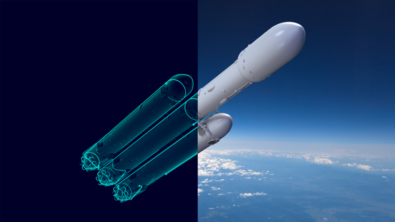
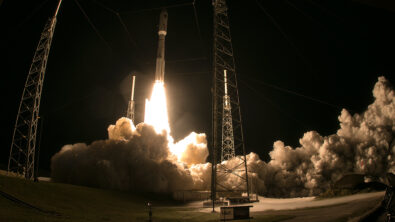
It is not exaggerating to say the A&D industry finds itself in a time of great excitement and possibility. As Dale points out, in the space sector alone, both longtime players and a multitude of new startup companies are developing new rocket engines, satellites, material systems, and more at breakneck speeds. The rates of innovation happening now has the potential to open access to space for more people than ever before.
That same level of ingenuity can be found across the rest of the A&D industry as well. From sustainable aviation to advanced air mobility to new types of drones, numerous aerospace innovations are being developed and have a very real chance of becoming reality withing the next few years. Systems engineering has been a vital factor in getting many of these technologies to this point.
New complexities for a new age
These new aircraft and spacecraft are precisely the reason systems engineering needs to change, as they integrate more new systems, each with their own sets of complexities, than their predecessors. Today’s aerospace products, according to Todd, carry not only complex mechanical and electrical systems, but also electronics, software, and more, adding to the number of siloes aerospace engineers must manage.
With new complexities and design considerations derived from these siloes, the A&D industry cannot afford to continue engineering in siloes if they want to launch new aircraft and spacecraft successfully. They are too integrated; changing one piece in one system will also change everything else. To account for this deep integration between aerospace systems, systems engineering needs to enable free communication and information exchanges between disciplines, ensuring the final product meets the engineers’ expectations.
Beyond MBSE
Model-based systems engineering attempts to address these concerns by centralizing data into digital models of systems. In both Todd and Dale’s words, however, MBSE is only a small part in a broader context. Just as important is how integrated these models are with each other, such as how simulation models are connect with parametric models for manufacturing, cost, and more.
As Dale says, successful products today no longer rely on the traditional, serial process of designing, then testing, building, and delivering. Instead, engineers not only codevelop their product’s mechanics, electronics, software, etc., but they are also designing for manufacturability, sustainability, and maintainability throughout the entire process. If A&D companies want to contribute to the future of aerospace, their systems engineering methodologies must enable this level of interconnectivity across the product lifecycle.
From space to commercial to defense, the A&D industry is undergoing an exciting period of growth and innovation, but systems engineering need to change, to allow for more cross-domain collaboration and integration to manage the complexity of new aircraft and spacecraft. As later episodes in this series will discuss, many of the solutions to this problem can be found in digital transformation.
Stay tuned to learn more on this topic on Talking Aerospace Today.
Siemens Digital Industries Software helps organizations of all sizes digitally transform using software, hardware and services from the Siemens Xcelerator business platform. Siemens’ software and the comprehensive digital twin enable companies to optimize their design, engineering and manufacturing processes to turn today’s ideas into the sustainable products of the future. From chips to entire systems, from product to process, across all industries. Siemens Digital Industries Software – Accelerating transformation.