Enhance and optimize CNC operations with the digital twin
From job shops producing wide varieties of products to industries such as aerospace or heavy machinery working with complex parts requiring high precision machining, manufacturers utilizing CNC machines face a number of challenges. On top of these, manufacturers across all industries face common demands for shorter production times, higher product quality, and more efficient uses of time and resources. Many manufacturers, therefore, are turning to digital transformation to overcome these challenges, and the comprehensive digital twin is a critical component.
As a virtual representation of a physical product or process, the digital twin enables manufacturers to design and simulate CNC machining processes in a digital environment. By gaining insight into machining operations before they ever begin physically, manufacturers have new abilities to validate processes and uncover errors faster than ever before, leaving more time to optimize processes that lead to higher quality products.
Accelerate validation
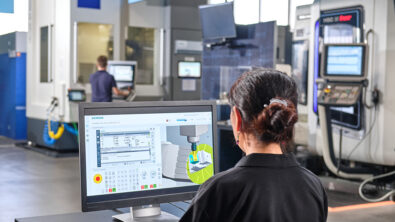
Validating CNC machining can be significantly hastened with the digital twin. In a simulated digital environment, CNC machine users can safely prepare and test machining jobs without conducting setup and testing physically, including everything from tool selection to defining parameters. This enables users to perfect their toolpaths and minimize errors, all the while saving time by getting the machining process done right the first time.
Another benefit of this capability is how it can be done offline, without actively operating the CNC machine. This helps reduce the downtime between operations and provide more time for machines to be productive. Job shops in particular can benefit from this, as they often deal with low product volumes, but also a high variety of products that require multiple changeovers between tool setups.
Prevent errors and collisions
Collisions, meanwhile, are a bane to any machining process, capable of causing delays in production and the waste of valuable material. Manufacturers of all types are not immune to this. Job shops that work in fast-paced environments where rapid changeovers are susceptible to collision risks from mistakes in setup. Meanwhile, minor errors for complex parts that require precise, multi-axis geometries can lead to costly scrap or compliance issues. This is especially devastating for industries that rely on repetitive machining processes, such as automotive or medical.
Fortunately, the digital twin can identify errors before the machining process begins. By simulating CNC operations virtually, CNC machine users can find errors and correct them entirely in the digital space, saving physical resources and allowing the operations to continue without issue. Additionally, the digital twin can be used to monitor a machining process in real time. Should the digital twin detect a potential collision that was missed earlier, it can stop the machine automatically before any damage is done.
Optimize operations with data
The reduction in validation and testing times also gives more time to optimize machining processes themselves even further. The digital twin can visualize both virtual and real toolpaths and their dynamics, which CNC machine users can use to analyze their results and compare them with the designed part. This data can help root out even more errors and find the most optimal result for the users and improve the performance of the overall performance, all before any machining process starts physically.
By mimicking the physical world in a virtual environment, the digital twin gives manufacturers using CNC machines multiple ways to revolutionize their machining processes. Through data-informed simulation, CNC machine users can validate their toolpaths faster and identifying urgent errors and collisions before and during operations, accelerating their production output and giving more time to optimize their operations even further. Manufacturers leveraging the digital twin are well-equipped to overcome the challenges and demands faced by their industries today.
To learn more about how the digital twin accelerates and optimizes CNC machining, check out this article or this white paper.
Siemens Digital Industries Software helps organizations of all sizes digitally transform using software, hardware and services from the Siemens Xcelerator business platform. Siemens’ software and the comprehensive digital twin enable companies to optimize their design, engineering and manufacturing processes to turn today’s ideas into the sustainable products of the future. From chips to entire systems, from product to process, across all industries. Siemens Digital Industries Software – Accelerating transformation.