Large product structures at scale: Clone and reuse up to one million parts with Teamcenter

Large product structures can now be cloned more efficiently in Teamcenter, enabling organizations to reuse proven designs and launch derivative programs containing up to one million parts.
Large and complex product structures are becoming increasingly common as products grow in complexity across industries such as shipbuilding, aerospace, and heavy equipment. As organizations develop more sophisticated products, they need efficient ways to reuse proven designs, launch derivative programs, and manage millions of interconnected parts. At the same time, organizations are under increasing pressure to manage product complexity while maximizing the reuse of proven engineering designs across product families and derivative programs.
As product complexity grows, however, so does the challenge of reuse. Large product structures can contain hundreds of thousands or even millions of parts, making it increasingly difficult to efficiently duplicate and adapt existing designs for new programs. For many organizations, the challenge is not simply managing large product structures, but efficiently reusing them while preserving engineering relationships, configuration context, and program-specific requirements throughout the product lifecycle. These large product structures form the foundation of complex engineering bills of materials (BOMs) that must be managed throughout the product lifecycle.
Clone large product structures with up to one million parts
With Teamcenter 2606, we’ve significantly improved the performance and scalability of structure cloning for large product assemblies. Teams can now duplicate large product structures at a much greater scale, supporting products that contain up to one million parts. This enhancement helps organizations accelerate product reuse strategies, manage product complexity more effectively, and reduce the effort required to create derivative product programs from existing large product structures.
These enhancements are powered by optimized bulk processing and parallel execution of cloning operations, helping organizations efficiently manage even the most complex structures. The objective behind these improvements was to support cloning scenarios involving up to one million parts within practical engineering timeframes.
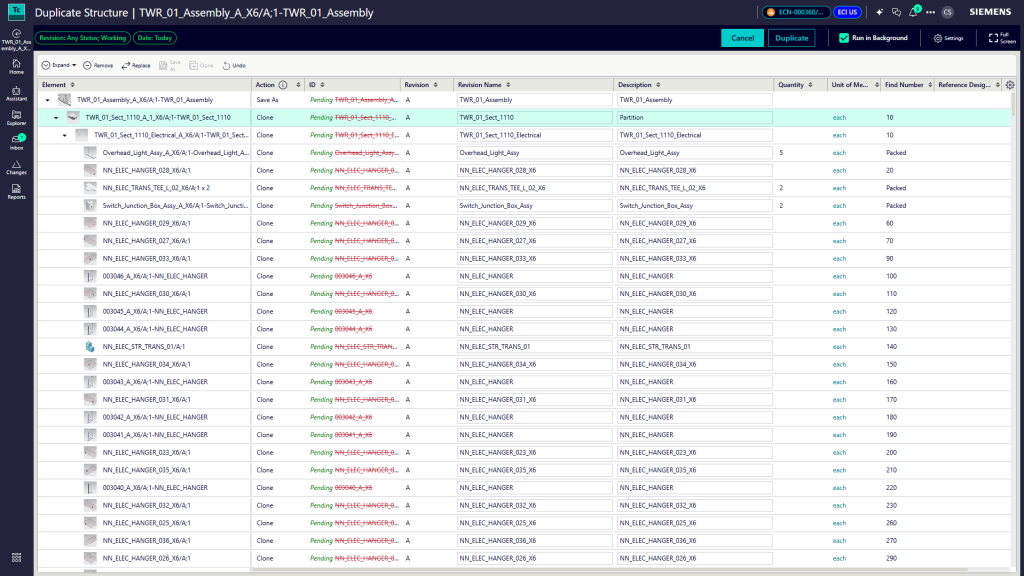
Built for complex engineering programs
Large-scale structure cloning is especially valuable for industries that rely heavily on design reuse. In shipbuilding, for example, new vessel programs are often based on existing ship designs, standard templates, or selected portions of previous projects. Engineers frequently reuse structural sections, equipment arrangements, piping systems, electrical layouts, and HVAC designs while adapting them for new requirements.
Similar reuse scenarios exist across aerospace, heavy equipment, and other industries where highly complex products evolve over multiple generations and organizations rely on engineering reuse to accelerate development.
The growing importance of scalable reuse is evident in the shipbuilding industry, where some of the world’s largest and most complex product structures are designed, manufactured, and maintained. Similar challenges exist wherever organizations manage large product structures containing hundreds of thousands of interconnected parts, including aerospace systems, mining equipment, industrial machinery, and defense platforms.
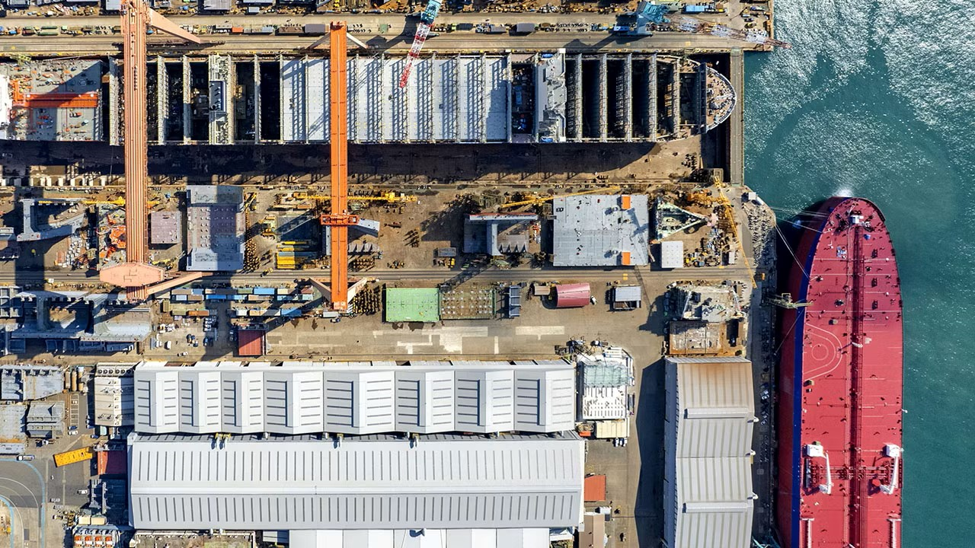
Earlier this year, HD Hyundai selected Siemens as a preferred partner for its “Future of Shipyard” initiative, which aims to establish an integrated digital platform connecting ship design and production through a unified digital thread. As shipbuilders manage increasingly complex products and connect engineering and manufacturing through a digital thread, the ability to efficiently reuse and adapt large product structures becomes a key enabler of faster, more consistent program execution.
Efficient management of large product structures supports digital thread initiatives by enabling engineering, manufacturing, and service teams to work from a consistent product definition throughout the lifecycle while reusing proven product data across programs.
Preserve engineering context across large product structures
When engineers clone large product structures, preserving engineering context is essential to ensure downstream teams can confidently continue development.
Performance is only part of the story. When cloning large product structures, engineering teams must preserve the engineering context needed to continue development confidently. This is particularly important at this scale, where relationships, dependencies, and ownership information must remain intact as designs are reused and adapted.
Teamcenter helps maintain critical engineering context by preserving relationships, dependencies, ownership information, project assignments, and associated design data as structures are duplicated and reused.
The result is faster reuse without sacrificing the integrity of the underlying product definition.
Accelerate derivative product development
By reducing the effort required to duplicate and adapt large product structures, Teamcenter helps organizations accelerate derivative product development, increase engineering reuse, and maximize the value of proven engineering designs.
Learn more about Teamcenter BOM Management and how Teamcenter helps organizations efficiently manage large product structures, product complexity, and engineering reuse throughout the product lifecycle.
FAQ
How can manufacturers efficiently reuse large product structures?
Manufacturers often reuse proven product designs when creating derivative products, product variants, or next-generation programs. As product complexity grows, manually recreating large product structures becomes increasingly time-consuming and risky. Teamcenter helps organizations efficiently duplicate and adapt large product structures while preserving relationships, dependencies, ownership information, and other engineering context needed to continue development.
What is structure cloning in Teamcenter?
Structure cloning in Teamcenter enables engineering teams to duplicate existing product structures and reuse them as the foundation for new programs. Rather than recreating complex assemblies from scratch, teams can clone proven product structures, preserve engineering context, and adapt designs to meet new requirements.
Why is managing large product structures and product complexity important?
Many organizations develop products that contain hundreds of thousands or even millions of interconnected parts. Efficient management of large product structures helps teams manage product complexity, support digital thread initiatives, improve collaboration, and accelerate the development of new products based on proven designs.
Can Teamcenter clone product structures containing one million parts?
Yes. Teamcenter 2606 introduces enhancements that improve the scalability of structure cloning operations, enabling organizations to efficiently duplicate product structures containing up to one million parts. This helps support large-scale engineering reuse and derivative product development for highly complex products.
How does structure cloning support engineering reuse?
Structure cloning helps organizations reuse proven product designs by allowing engineering teams to duplicate existing product structures and adapt them for new programs. This reduces the effort required to recreate complex assemblies from scratch while preserving engineering context, relationships, and associated design data.
🧠 Make smarter decisions with AI-powered PLM
🚀 Start fast and grow with Teamcenter X
🚗 Take the Teamcenter X 30-day test drive
🌟 Learn more about Teamcenter solutions