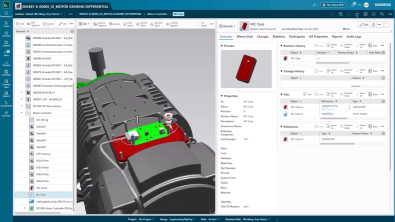
Boost ECAD MCAD collaboration with electrical-mechanical validation

Validate multi-domain integration earlier to reduce risk, rework, and delays
We’re excited to introduce Teamcenter Visualization Electrical-Mechanical Validation, a new solution designed to improve ECAD MCAD collaboration and bring together electrical and mechanical design in a single, integrated digital mockup (DMU) environment. Designed to improve ECAD MCAD collaboration, the solution enables electrical and mechanical teams to visualize, validate, and resolve integration issues earlier in the development process.
As products become more complex, especially in aerospace and defense, engineering teams are under growing pressure to coordinate across domains, meet strict compliance requirements, and deliver faster. Electrical-mechanical validation in Teamcenter helps teams do exactly that by enabling continuous, cross-domain validation directly within Teamcenter. The result: fewer surprises late in the program, faster decisions, and greater confidence that designs will meet both performance and regulatory requirements.
What is electrical-mechanical validation in Teamcenter? Electrical-mechanical validation is a Teamcenter capability that improves ECAD MCAD collaboration and enables continuous validation of electrical and mechanical designs in a shared digital mockup environment.
Rising complexity is exposing gaps between electrical and mechanical teams
As products become more complex, effective ECAD MCAD collaboration becomes increasingly important. Today’s systems demand tight coordination between electrical wiring, structures, embedded systems, and mechanical components—all within increasingly constrained spaces.
But in most organizations, these domains still operate in silos:
- Different tools
- Limited visibility across disciplines
- Disconnected validation processes
This creates a familiar problem: integration issues are often discovered too late—during physical builds or certification testing.
When that happens, the impact is immediate:
- Costly rework
- Program delays
- Increased certification risk
The real question becomes: can you confidently validate electrical-mechanical integration before you commit to hardware?
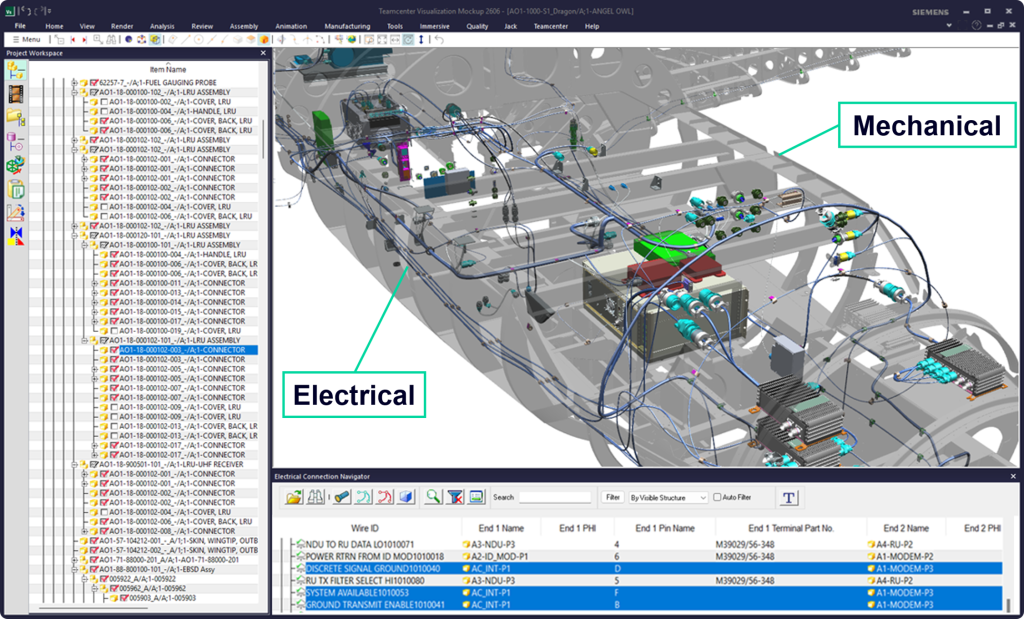
ECAD MCAD collaboration through a multi-disciplinary digital mockup environment
Electrical-mechanical validation in Teamcenter solves this challenge by bringing electrical and mechanical data together in Teamcenter’s unified environment. It combines ECAD and MCAD data in a single digital thread, ensuring all stakeholders work from one source of truth and enabling multidisciplinary collaboration and early validation across domains. It also enables unified BOM, change management, and DMU analysis on one platform, allowing teams to quickly assess design changes and maintain alignment across domains. This allows teams to validate designs in context across domains throughout the development process, not just at key milestones.
📺Watch the video to see electrical-mechanical validation in action 👇🏼
With Electrical-mechanical validation in Teamcenter, teams can:
🔍 Identify conflicts earlier
Detect wiring interferences, clearance issues, and integration conflicts before they impact downstream builds.
🛡️ Continuously validate compliance
Ensure EWIS, FuSa, and other regulatory requirements remain satisfied across every design change.
⚡ Assess change impacts faster
Evaluate electrical and mechanical changes together with same-day validation turnaround.
🤝 Maintain alignment across teams
Work from a shared, up-to-date product definition without manual data reconciliation.
Built on an integrated electrical-mechanical data flow
Effective ECAD MCAD collaboration depends on synchronized data. Electrical-mechanical validation in Teamcenter connects design information across domains so teams always work from the latest product definition:
- Electrical design from Capital
- Mechanical design from NX or CATIA
- Product structure and lifecycle data in Teamcenter
This creates a continuous feedback loop where:
- Data stays synchronized
- Errors are reduced
- Teams always work with the latest information
And because everything comes together in Teamcenter’s DMU environment, teams can visualize, validate, and investigate without switching tools.
For customers who manage products with an EBOM in Teamcenter, this same integrated approach makes it even more seamless to work in full product context, see electrical and mechanical design together, and validate changes against the product structure they already use every day.e product structure they already use every day.
Integration-driven validation, embedded in your PLM backbone
Because this capability is built into Teamcenter, validation becomes part of your everyday workflow, not a separate step. That helps teams reduce development cost and certification risk, involve more stakeholders in validation, and respond faster when engineering changes occur. Teams can:
- Load electrical and mechanical data into a shared DMU
- Analyze spatial relationships, routing paths, and constraints before physical prototypes
- Validate design intent and compliance across the full product context without disrupting active workflows
At the same time, Teamcenter maintains:
- Unified BOM structures
- Change management traceability that supports same-day impact analysis across disciplines
- A shared validation record that more cross-functional stakeholders can use without specialized CAD expertise
This ensures every stakeholder is working from the same source of truth.
Practical benefits for engineering and validation teams
Electrical-mechanical validation in Teamcenter delivers clear day-to-day benefits for engineering, validation, and cross-functional review teams:
🔧 Automated integration checks
Run clearance, separation, and interference checks to identify issues early, before they propagate.
🔄 Continuous validation across changes
Revalidate designs automatically as engineering updates occur, without disrupting active workflows.
👥 Accessible to more teams
Enable cross-functional stakeholders, not just CAD specialists, to participate in validation and decision-making.
✅ Accelerate certification
Produce traceable, reviewable compliance evidence faster, helping teams reduce audit risk and keep certification activities on track.
Validate earlier. Move faster. Deliver with confidence.
Electrical-mechanical validation in Teamcenter helps organizations shift from late-stage problem discovery to continuous, integrated validation. If you’re looking to improve how your teams validate complex systems and manage cross-domain integration, this is a critical step forward.
Contact your sales representative today to learn how electrical-mechanical validation in Teamcenter can help you improve ECAD MCAD collaboration, reduce integration risk, and support faster product development across complex multidisciplinary programs.
Frequently Asked Questions
What is ECAD MCAD collaboration?
ECAD MCAD collaboration is the ability for electrical and mechanical engineers to collaborate on ECAD MCAD data in a shared context throughout product development. It enables teams to identify integration issues earlier and maintain alignment across disciplines.
Why is ECAD MCAD collaboration important?
As products grow more complex, electrical and mechanical teams need to work in sync to avoid costly surprises. Strong ECAD MCAD collaboration helps to reduce rework, delays, and integration risk.
How does Teamcenter support ECAD MCAD collaboration?
Teamcenter brings electrical and mechanical design data together in a shared environment, allowing teams to visualize, validate, and manage changes across domains.
Does Teamcenter support validation of electrical and mechanical designs together?
Yes. Electrical-mechanical validation in Teamcenter enables continuous validation of electrical and mechanical design data within a unified digital mockup environment.
How does ECAD MCAD collaboration improve certification readiness?
By validating electrical and mechanical designs together throughout development and not just at milestones, teams catch compliance issues like EWIS and FuSa violations early.
🧠 Make smarter decisions with AI-powered PLM
🚀 Start fast and grow with Teamcenter X
🚗 Take the Teamcenter X 30-day test drive
🌟 Learn more about Teamcenter solutions