AI in PLM: Turning product data into product lifecycle intelligence

Manufacturers have more product data than ever.
Requirements, designs, software, simulations, bills of materials (BOMs), manufacturing plans, quality records, supplier updates and service information all contain insights that can support better decisions. But for many organizations, that information is still difficult to find, interpret and act on.
| The problem is not the amount of data. The problem is that product data is complex, distributed and constantly changing. |
That is where AI in PLM becomes valuable.
AI in PLM refers to the application of artificial intelligence within Product Lifecycle Management processes to help teams understand product information, assess impacts and make better decisions.
When AI is embedded in Product Lifecycle Management (PLM), it can work within the context of product structures, engineering changes, requirements, configurations, manufacturing processes and quality information. Instead of simply helping users search for documents, AI in PLM can help teams understand relationships, assess impacts and make better decisions across the lifecycle.
By combining PLM AI with a connected digital thread, manufacturers can begin turning product data into product lifecycle intelligence.

Product lifecycle intelligence is becoming a competitive advantage
Manufacturers are under pressure to deliver increasingly complex products faster while improving quality, maintaining compliance and controlling costs.
Products now combine mechanical, electrical, electronic and software systems. Engineering teams work across disciplines, locations and suppliers. Regulations continue to expand. A single change can affect requirements, BOMs, tooling, manufacturing processes, service plans and downstream documentation.
In this environment, visibility alone is not enough.
Teams need to understand how product information is connected. They need to know what changed, what is affected, what risks exist and what action should be taken next.
That is the value of product lifecycle intelligence.
It is the ability to use connected lifecycle data to understand products, changes, dependencies and risks across the full lifecycle. It helps organizations move beyond simply managing product data and begin using that data to support faster, more confident decisions.
In the 2026 Gartner® Critical Capabilities for PLM Software in Discrete Manufacturing Industries report, Siemens scored the highest in the Product Lifecycle Intelligence Use Case. We believe this recognition reflects Teamcenter’s ability to connect product data, processes and people across the lifecycle to support informed decision-making.
AI in PLM builds on this connected foundation by helping users understand how information is related, assess the impact of changes and act faster with greater confidence. The most effective AI PLM approaches use connected lifecycle data to provide context-aware recommendations rather than isolated answers. Rather than simply reporting on lifecycle data, AI helps users understand relationships, evaluate impacts and take action more efficiently. In other words, AI in PLM transforms product lifecycle intelligence from passive insight into active assistance.
What makes AI in PLM different from general-purpose AI?
General-purpose AI tools can summarize content, answer questions and generate text. Those capabilities are useful, but product development requires more than general knowledge.
PLM data has structure, context and dependencies that generic AI tools do not automatically understand.
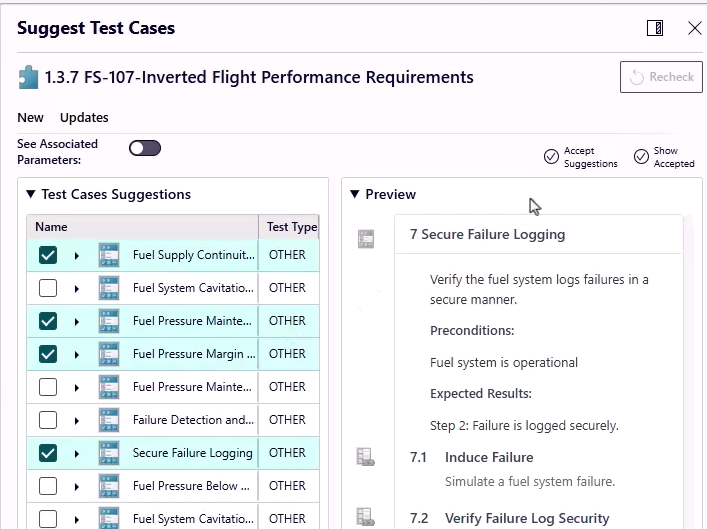
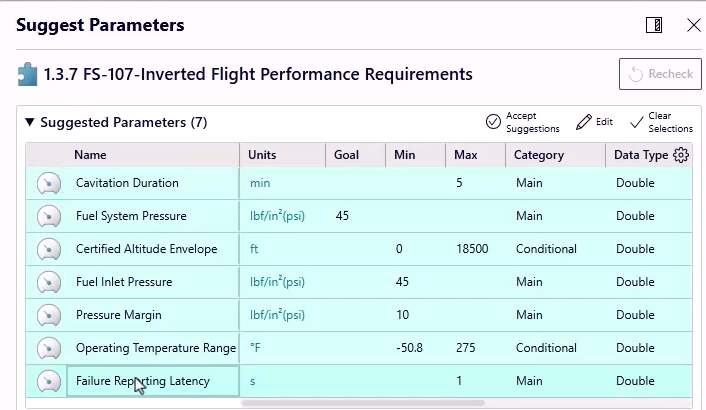
Consider a typical engineering change. A requirement may be linked to software functions, test cases and compliance rules. A design change can affect manufacturing processes, tooling and suppliers. A BOM update may influence sourcing decisions and configuration rules, while a quality issue may ultimately trace back to a specific revision or engineering decision. These relationships are what generic AI systems often miss.
These relationships matter. Without them, AI may provide an answer that looks plausible but misses the product context needed to make the answer useful.
AI in PLM is different because it operates within lifecycle context. It can use the relationships managed in PLM to help users understand not only the data itself, but also the implications of that data across engineering, manufacturing, quality and service.
When AI is embedded directly in PLM processes, it has access to the product context needed to provide more relevant insights and recommendations.
Why the digital thread matters
AI is only as useful as the data and context it can access.
For manufacturers, that context comes from the digital thread. A digital thread connects product information across disciplines and lifecycle phases, creating continuity from requirements and engineering through manufacturing, quality, service and support.
This connected foundation helps teams maintain traceability across lifecycle data, understand the impact of product changes before they occur and reduce the time spent searching for information. It also improves collaboration between engineering and manufacturing teams, helps organizations identify risks earlier in the lifecycle and provides the product context needed for more relevant AI-driven insights.
Without a digital thread, AI can only work with fragments of the product story.
With a digital thread, AI can understand how product information is connected across the lifecycle and provide guidance that reflects those relationships.
That is why AI and the digital thread are complementary capabilities. AI can accelerate insight, recommendations and action, but the digital thread provides the trusted product context that makes those results more relevant and useful.
How AI in PLM helps manufacturers
The practical value of AI in PLM is not simply that it can answer questions. Its value is that it can help teams work through common product lifecycle challenges more efficiently.
AI in PLM can help users:
- Find relevant product and process information faster
- Analyze engineering change impacts
- Improve requirements quality and validation
- Surface risks, dependencies and related lifecycle knowledge
- Automate routine product development activities
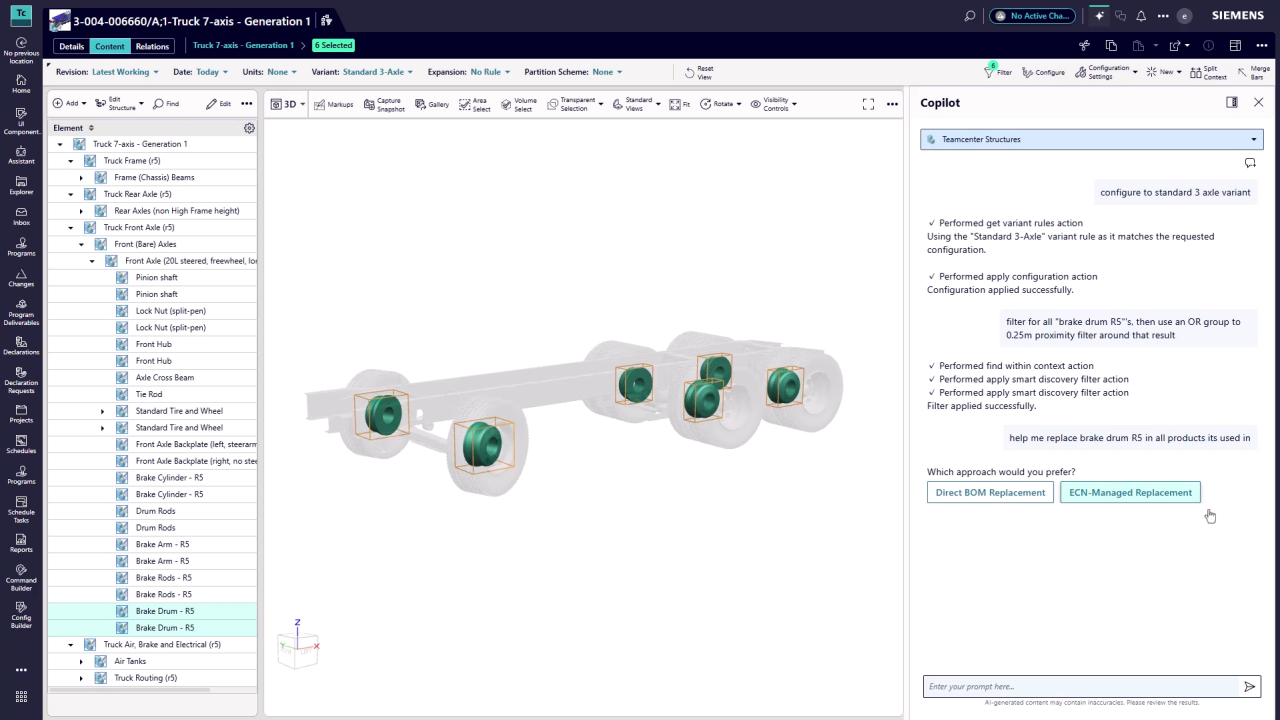
For example, instead of manually tracing a change across multiple systems and documents, a user could ask for an impact summary. Instead of reviewing requirements one by one, a team could use AI to identify potential gaps or inconsistencies. Instead of relying on tribal knowledge, users could access relevant lifecycle knowledge in the flow of work.
| The goal is not to replace engineering judgment. The goal is to help teams find the right information faster, understand the implications more clearly and act with greater confidence. |
Teamcenter brings AI into the product lifecycle
As product complexity continues to grow, manufacturers need more than systems of record. They need systems that help teams understand product data and act on it.
Teamcenter combines PLM, the digital thread and AI capabilities designed specifically for product development and lifecycle processes, providing a foundation for enterprise-scale AI PLM initiatives.
This is where Teamcenter differs from many standalone AI solutions entering the market. Rather than asking users to move information into separate AI tools, Teamcenter brings AI directly to the product data, relationships and lifecycle processes already managed within PLM. This allows AI to operate with the same context, traceability and governance that teams rely on to develop complex products.
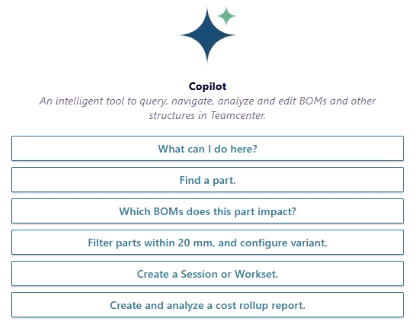
Teamcenter Copilot helps users apply AI to practical PLM use cases such as change impact analysis, requirements quality improvement, lifecycle knowledge access, test generation and workflow automation.
Recent Teamcenter innovations extend AI across more product lifecycle activities. These capabilities include AI-supported BOM and engineering change work, requirements analysis, test-case recommendations, lifecycle knowledge access, Microsoft 365 Copilot integration and agentic workflows.
Because these capabilities are connected to the product lifecycle, they can provide more relevant and actionable results than AI tools working only from disconnected documents or isolated data sources.
The result is AI that understands not only the data, but also the relationships, processes and decisions that shape the product lifecycle.
| The opportunity is not just to make product data easier to search. It is to make product data easier to understand, trust and use. |
Learn how Teamcenter AI helps organizations apply AI in PLM to improve decision-making, accelerate product development and strengthen lifecycle intelligence.
Frequently asked questions
What is AI in PLM?
AI in PLM is the use of artificial intelligence within Product Lifecycle Management systems to help users find information, understand product relationships, assess impacts and automate lifecycle processes.
How does AI in PLM improve product development?
AI in PLM helps teams find information faster, identify risks earlier, understand change impacts and make more informed decisions using connected lifecycle data.
What makes AI in PLM different from general-purpose AI?
AI in PLM works within the structure, relationships and context of product lifecycle data. Unlike many general-purpose AI tools, PLM AI solutions operate within the context of requirements, BOMs, configurations, engineering changes, manufacturing information and quality processes when generating insights or recommendations.
Why is the digital thread important for AI in PLM?
The digital thread provides the connected product data and lifecycle context that AI needs to deliver more relevant insights. It helps AI understand relationships across requirements, engineering, manufacturing, quality, service and support.
What are the benefits of AI in PLM?
AI in PLM can improve visibility, strengthen traceability, automate routine work, accelerate impact analysis, improve requirements quality and support better decision-making across the product lifecycle.
How does Teamcenter support AI in PLM?
Teamcenter combines AI capabilities with PLM and a connected digital thread to support lifecycle intelligence, change impact analysis, requirements quality improvement, knowledge access, test generation and workflow automation.
Is AI in PLM the same as generative AI?
Generative AI is one technology that can be used within PLM, but AI in PLM extends beyond content generation. It includes capabilities such as impact analysis, requirements quality improvement, lifecycle knowledge access, workflow automation and context-aware recommendations based on connected product data.
🧠 Make smarter decisions with AI-powered PLM
🚀 Start fast and grow with Teamcenter X
🚗 Take the Teamcenter X 30-day test drive
🌟 Learn more about Teamcenter solutions
Gartner Disclaimer:
Gartner is trademark of Gartner, Inc. and/or its affiliates.
Gartner does not endorse any company, vendor, product or service depicted in its publications, and does not advise technology users to select only those vendors with the highest ratings or other designation. Gartner publications consist of the opinions of Gartner’s business and technology insights organization and should not be construed as statements of fact. Gartner disclaims all warranties, expressed or implied, with respect to this publication, including any warranties of merchantability or fitness for a particular purpose.
Gartner, Critical Capabilities for PLM Software in Discrete Manufacturing Industries, Marc Halpern, Sudip Pattanayak, Rajan Saini, Brady Barnes, 10 June 2026.