AI in PLM: How it enhances the user experience
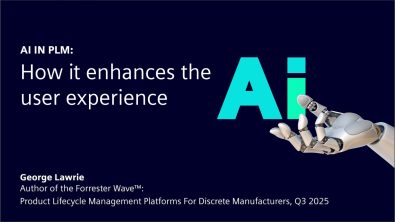
As AI in PLM continues to evolve, manufacturers are moving beyond simple productivity assistants toward AI that can help engineers find information, automate work and execute complex workflows.
According to guest speaker George Lawrie, author of The Forrester Wave™: Product Lifecycle Management Platforms for Discrete Manufacturers, Q3 2025, AI is becoming one of the most important forces shaping the future of PLM.
AI in PLM combines artificial intelligence with product lifecycle management processes to help engineering teams find information faster, automate tasks, improve decision-making and execute workflows more efficiently. As product complexity increases, manufacturers are using AI-powered PLM solutions to scale expertise across teams while maintaining governance and traceability.
Watch the Exclusive Interview featuring George Lawrie -> ->
Scaling engineers, not replacing them
“Does AI replace people? Not really. What it does is to scale people.”
Guest speaker George Lawrie, author of The Forrester Wave™: Product Lifecycle Management Platforms for Discrete Manufacturers, Q3 2025
That means an engineer can work across multiple products simultaneously, spend less time on repetitive data tasks, and direct their energy toward problem-solving and design, the work that actually moves a product forward.
This shift matters because engineering expertise is a limited resource. Organizations are increasingly exploring AI in PLM solutions, such as Teamcenter, to improve engineering productivity, knowledge reuse and cross-functional collaboration across complex product development programs.
From AI assistance to agentic AI workflows in PLM
Agentic AI represents the next phase of AI in PLM. Rather than simply providing information, AI agents can understand context, reason through multiple steps and help move work forward.
Teamcenter’s AI BOM Agent is an example of this evolution. The agent can analyze complex bill-of-materials structures, identify impacted assemblies, propose changes and help execute engineering workflows while keeping users in control through human oversight. This moves AI beyond information retrieval and toward practical workflow execution.
AI in PLM is already reshaping everyday workflows
AI in PLM is no longer limited to searching for information. Organizations are increasingly applying AI across engineering and product lifecycle workflows.
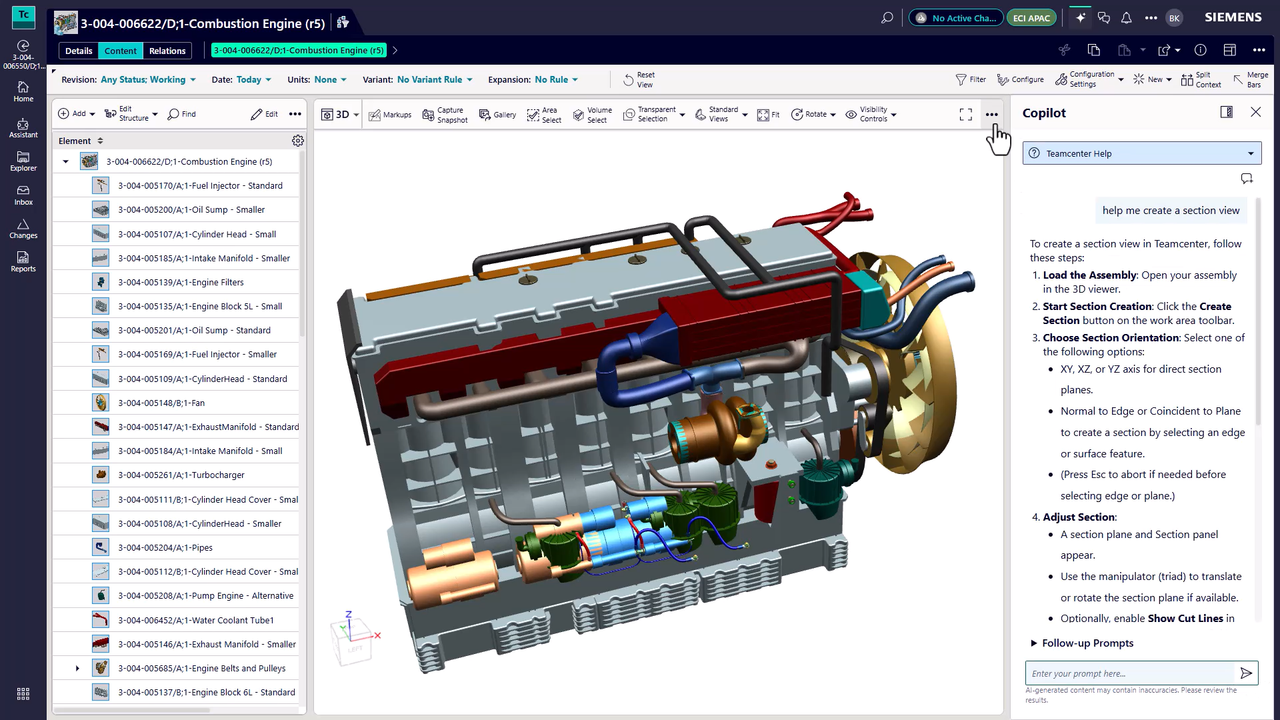
In Teamcenter, AI in PLM capabilities support a range of activities such as improving requirements quality, automating manufacturing process planning tasks, assisting in quality processes, and driving engineering changes. These capabilities help organizations scale expertise across teams while maintaining governance and traceability.
What this means across the product lifecycle
AI in PLM isn’t just about individual productivity. It supports better decisions at every stage, from early design through to maintenance and service. As George notes, cloud and AI are the two forces currently reshaping PLM. Together, they give engineering teams better data, clearer priorities, and fewer manual steps between insight and action.
Combined with a digital thread strategy, AI in PLM can help connect information across design, manufacturing, quality and service functions, improving visibility throughout the product lifecycle.
As AI in PLM continues to evolve, organizations that combine AI, lifecycle data and engineering expertise will be better positioned to accelerate innovation while maintaining control and traceability.
See How Siemens Teamcenter Stacks Up
In the full Forrester Wave™: Product Lifecycle Management, Q3 2025, see how Siemens Teamcenter earned status as a Leader with the highest possible scores in 11 of 36 evaluation criteria, the highest Strategy category score among all 8 evaluated vendors, and recognition as a Customer Favorite.
Explore the full Q3 2025 Forrester Wave™ report
Frequently Asked Questions
What is AI in PLM?
AI in PLM applies artificial intelligence to product lifecycle management processes to help teams find information faster, automate work, improve decision-making and plan and execute engineering workflows.
How does AI in PLM help engineers?
AI in PLM helps engineers reduce time spent searching for data, navigating complex product structures and performing manual administrative tasks so they can focus on design and innovation.
What are examples of AI in PLM applications?
Examples include natural language search, requirements quality improvement, BOM analysis, workflow recommendations, manufacturing planning support and engineering change management.
What is agentic AI in PLM?
Agentic AI in PLM goes beyond information retrieval by helping analyze context, recommend actions and execute multi-step engineering workflows while maintaining human oversight.
Why is AI becoming important in product lifecycle management?
As products become more complex and engineering resources remain limited, AI in PLM helps organizations scale expertise, improve productivity and make better lifecycle decisions.
🧠 Make smarter decisions with AI-powered PLM
🚀 Start fast and grow with Teamcenter X
🚗 Take the Teamcenter X 30-day test drive
🌟 Learn more about Teamcenter solutions
Forrester does not endorse any company, product, brand, or service included in its research publications and does not advise any person to select the products or services of any company or brand based on the ratings included in such publications. Information is based on the best available resources. Opinions reflect judgment at the time and are subject to change. This report is part of a broader collection of Forrester resources, including interactive models, frameworks, tools, data, and access to analyst guidance. For more information, read about Forrester’s objectivity here .