How Saab uses model-based systems engineering software to strengthen its digital thread
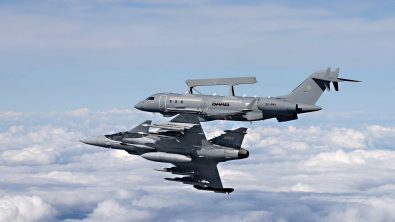
As aerospace and defense systems become more software-defined, connected and electronics-intensive, engineering organizations need to manage growing product complexity across systems, electrical, electronics, mechanical and manufacturing disciplines. Model-based systems engineering software can help teams define complex systems earlier, but its value grows when models, requirements, product structures and manufacturing information remain connected throughout the lifecycle.
For Saab, that meant rethinking how product information moves across engineering and manufacturing. Disconnected applications, manual data transfers and document-centric processes made it harder to maintain continuity across disciplines and downstream processes.
Saab launched a business-led Digital Transformation initiative to address those challenges. Using Siemens Xcelerator, Saab is building a model-based digital thread that connects engineering and manufacturing around trusted product data and creates a foundation for future AI-enabled innovation.
This wasn’t an IT project. It was a business development project. We wanted to build a data model that doesn’t care about what system you’re using.
Emil Riddervold, technical project manager for Saab’s Digital Transformation initiative
Building the digital thread with Teamcenter
At the center of Saab’s transformation is Teamcenter software, which provides the digital backbone for product configuration, change management, bill-of-materials management, manufacturing process planning and collaboration across engineering, manufacturing and service.
Within that environment, Teamcenter Systems Modeler for SysML® v2 provides model-based systems engineering capabilities. It enables system architects to define requirements, architecture and system behavior before detailed designs are realized downstream. Connections with Teamcenter help keep system models, requirements, product structures and related engineering information synchronized throughout development.
But Saab’s transformation extends beyond systems engineering.
Bringing engineering teams together earlier
Mechanical engineers work in a multi-CAD environment using Designcenter together with CATIA. Capital supports electrical systems engineering and harness development, while Xpedition supports electronic systems and printed circuit board design. Teamcenter connects these specialized engineering domains through shared product information and synchronized product structures.
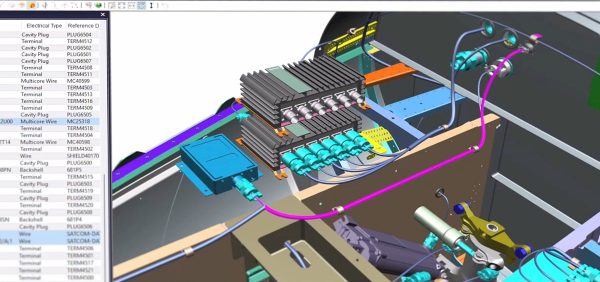
By integrating these domains, electrical, electronic and mechanical engineers can collaborate earlier in the design process. Shared product definitions support 3D electrical design, helping teams identify integration issues before physical prototypes are built.
This multidisciplinary connection extends Saab’s approach to include requirements, system models and product structures that remain connected to the specialized environments where electrical, electronic and mechanical designs are developed and prepared for production. Teams can work concurrently with greater configuration control rather than relying on disconnected documents and manual transfers.
Extending digital continuity into manufacturing
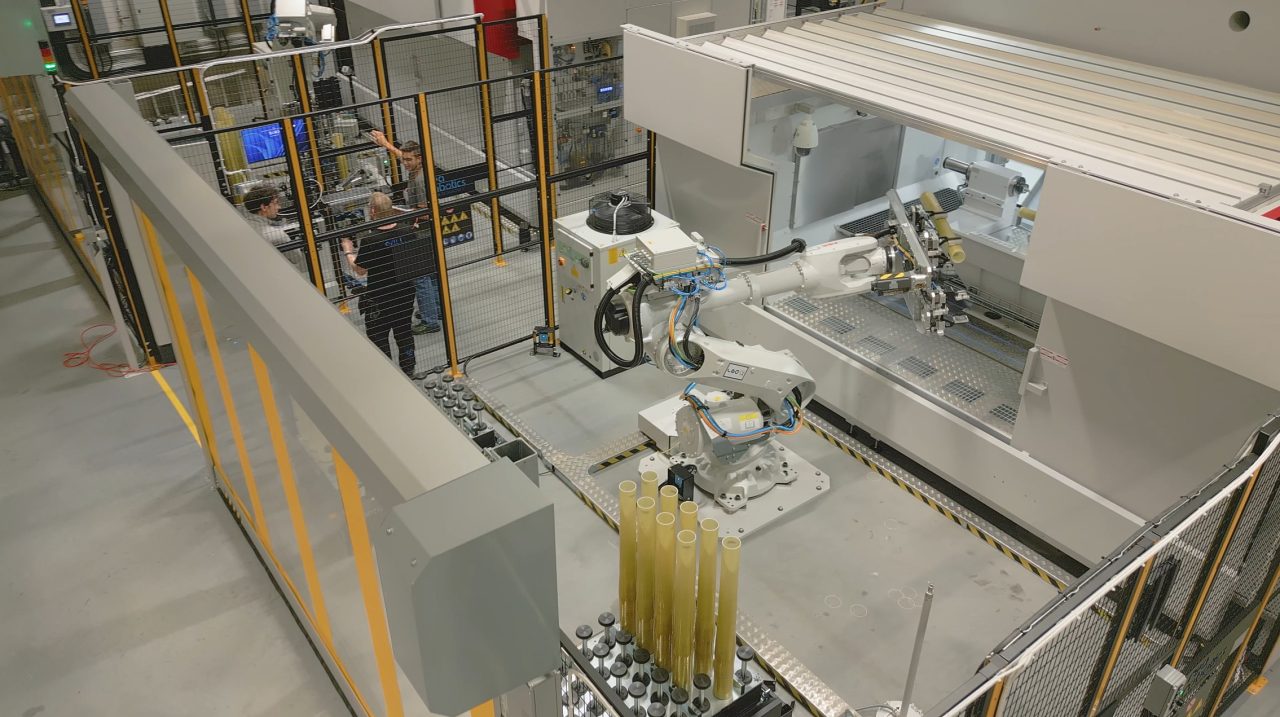
Saab extends the same Teamcenter-managed product information into manufacturing process planning with Teamcenter Easy Plan. A unified environment connects engineering bills of materials, manufacturing bills of materials and production processes, helping manufacturing planners respond to engineering changes while returning quality and production information through Teamcenter Change Management.
Saab’s longer-term vision is to make manufacturing information readily available downstream so shop floor operators can find what they need without searching across disconnected sources. This preserves continuity between the product engineering defines and the product manufacturing builds.
Delivering measurable improvements with Teamcenter
Saab’s transformation is already delivering measurable results.
70%
reduction in product data management lead times
90%
less effort required to manage material definitions
These results demonstrate how a connected product data environment can reduce the time and effort required for critical product lifecycle processes.
The value of Teamcenter Change Management software is huge for us. It will save us a lot of time and money and also raise the quality of everything we do within our products.
Emil Riddervold, technical project manager for Saab’s Digital Transformation initiative
These improvements go beyond making individual engineering tasks faster. They give Saab a stronger product data foundation for managing increasingly sophisticated products across engineering and manufacturing.
Building an engineering foundation for AI
Moving from document-centric processes toward structured, reusable product data gives Saab a stronger basis for connecting, governing and applying engineering knowledge. That becomes increasingly important as the company explores future uses of AI.
Systems models establish relationships among requirements, behavior and product architecture. Teamcenter carries that context across engineering disciplines and the product lifecycle. Together, they give Saab trusted product information that can support more intelligent engineering processes as new opportunities emerge.
We don’t know where we’ll be in five years. But we know what we’re doing today is laying the foundation for AI using MBSE and Siemens Xcelerator solutions.
Emil Riddervold, technical project manager for Saab’s Digital Transformation initiative
Saab’s experience shows how MBSE can create greater business value when it is connected to the broader digital thread. By linking systems engineering, detailed engineering and manufacturing around trusted product data, Saab can manage increasing product complexity while preparing for more intelligent engineering processes.
💡 Explore more Teamcenter customer experiences
🧠 Discover how AI is transforming PLM
🌟 Explore Teamcenter PLM solutions