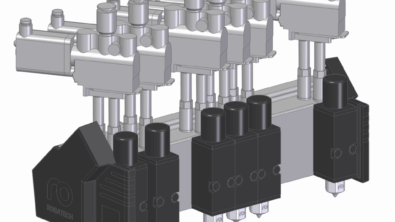
Scaling Custom Engineering Without Compromising Precision

How Nagel Technologies Speeds Up Custom Honing Design
In modern manufacturing, precision is no longer enough. Customers increasingly expect highly specialized solutions tailored to their unique production requirements—delivered with shorter lead times and uncompromising quality.
For machine tool manufacturer Nagel Technologies GmbH, meeting those expectations requires more than engineering expertise. It demands a digital design approach capable of scaling customization without sacrificing efficiency.
Based in Nürtingen, Germany, Nagel Technologies has built a global reputation in honing and superfinishing technology, serving customers across the automotive, industrial, medical, renewable energy, and research sectors. From high-precision tooling to fully automated manufacturing systems, the company delivers complete process solutions designed around each customer’s specific requirements.

“Our customers don’t come to us just for a tool or a machine,” says Erkan Hodza, Head of Design and Quality Assurance for Tooling and Ecohone Machines at Nagel Technologies. “They come to us for a complete solution—from process design and tooling to measurement systems, automation, and final quality control.”
Engineering for Micron-Level Precision
Nagel operates in an environment where tolerances are measured in microns and consistency is critical. Components often require extreme levels of accuracy, with dimensional tolerances as tight as one micron across lengths of 40 to 50 millimeters.
Each project begins with a unique manufacturing challenge. A pharmaceutical customer may require exceptional concentricity, while an automotive supplier may need ultra-smooth surface finishes on hardened components. Rather than adapting standard equipment, Nagel engineers an entire manufacturing process around the part itself.
These solutions can include:
- Custom honing tools
- Specialized clamping systems
- Integrated measurement technology
- Robotic handling cells
- Automated inspection systems
- In-house developed tooling and gauges
While this customer-centric approach creates tremendous value, it also introduces complexity. As customization increases, engineering teams face growing pressure to deliver faster while maintaining quality and consistency.
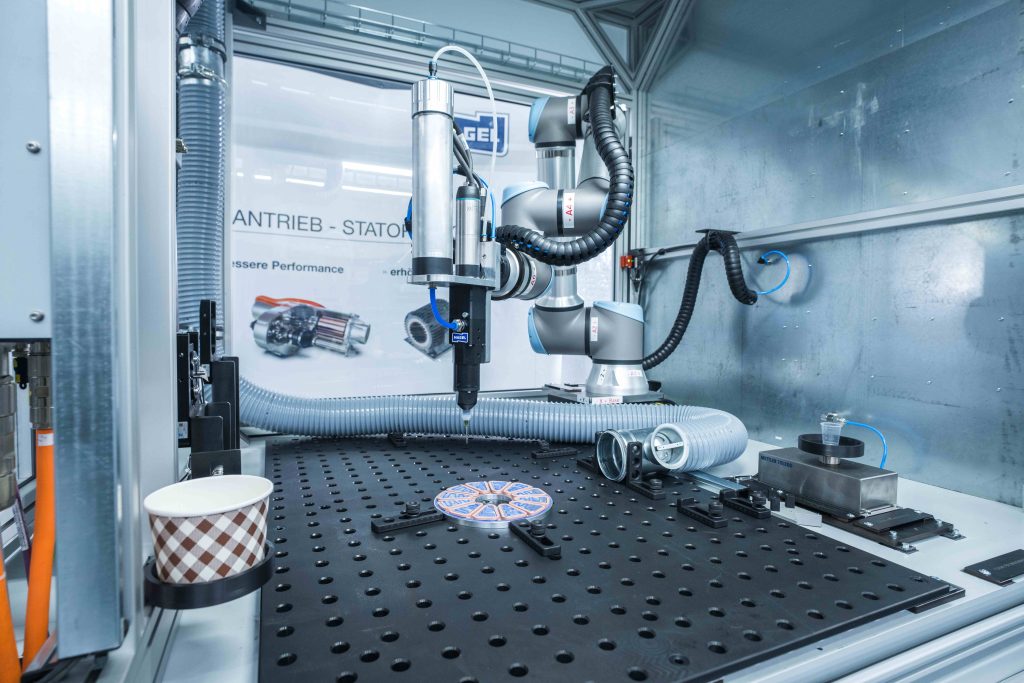
The Challenge of High-Mix, Low-Volume Engineering
For years, designing custom honing tools required significant manual effort.
Each new tool body had to be modeled individually, dimensioned, checked, documented, and prepared for manufacturing. Even minor modifications—such as changing a bore diameter—often required engineers to rework substantial portions of a design.
“We were spending eight to ten hours programming and preparing a single tool body for manufacturing,” says Hodza. “When you’re producing custom tools constantly, that time adds up quickly.”
The challenge extended beyond productivity. With multiple engineers creating similar but slightly different designs, maintaining consistency across drawings, tolerances, and manufacturing standards became increasingly difficult.
Nagel needed a way to standardize its core engineering knowledge while preserving the flexibility required for customer-specific solutions.
The answer came through Designcenter Solid Edge from Siemens.
Turning Custom Tooling into a Parametric Process
At the center of Nagel’s digital transformation is the parametric modeling and variable table functionality within Designcenter Solid Edge.
Instead of creating each honing tool from scratch, the engineering team developed fully parameter-driven master models. Key dimensions, features, and configurations are linked directly to variable tables that control the design.
Today, engineers simply enter a small number of critical parameters—such as bore diameter—and the entire 3D model updates automatically.
“In many cases, we only need to change three parameters,” explains Hodza. “The tool body updates instantly. Then we generate the drawings and they’re ready for manufacturing.”
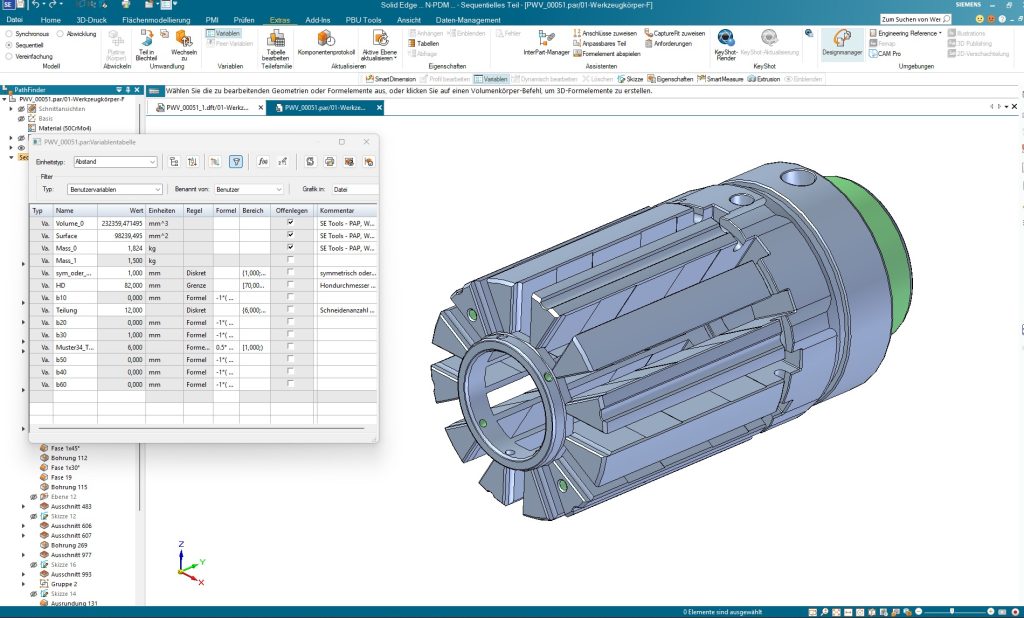
The impact has been significant.
What once required hours of engineering effort can now be completed in minutes. Equally important, every design follows the same standards and rules.
“It’s error-free, uniform, and independent of who is designing the tool,” Hodza says. “That was a huge benefit for us.”
Reducing Manufacturing Preparation Time by Nearly 90 Percent
The benefits extend far beyond design.
Nagel feeds Designcenter Solid Edge models directly into its CAM environment, allowing manufacturing programs to be generated much more efficiently. Because the geometry is standardized and driven by parameters, programming becomes faster, more predictable, and less prone to errors.
Before implementing its variable-driven workflow, CAM preparation for a single tool body typically required eight to ten hours.
Today, that effort has been reduced to approximately one hour.
For a company producing large volumes of custom tooling, these savings translate directly into shorter delivery times, lower engineering costs, and increased capacity.
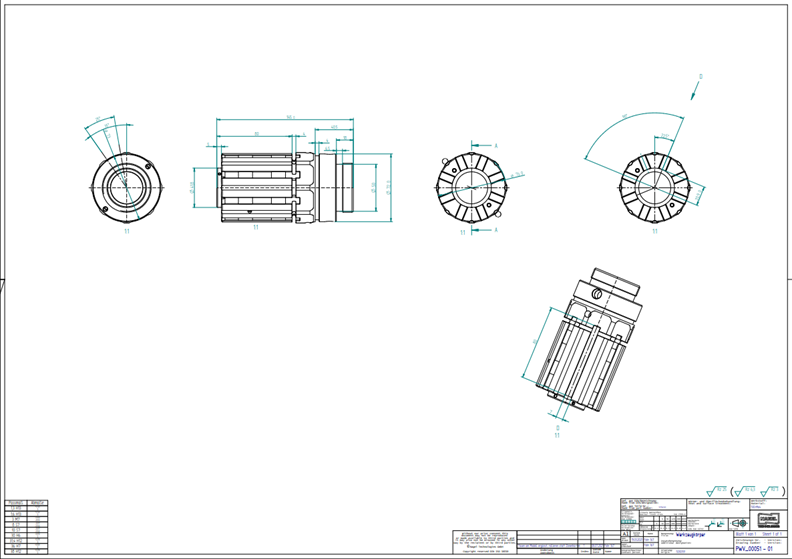
Accelerating Innovation Through Rapid Prototyping
Nagel combines its digital engineering workflows with in-house manufacturing and rapid prototyping capabilities.
When customers introduce new materials—such as sapphire, ceramics, or specialized glass components—the company can quickly design tooling in Designcenter Solid Edge, produce prototypes using additive manufacturing, and begin process testing within days.
“We can have prototype tool components in about ten days,” says Hodza. “Then we post-process them and begin trials right away.”
This speed allows Nagel to explore new applications beyond traditional honing markets, including medical technology, renewable energy systems, and advanced research environments.
The company’s transformation was further supported by Siemens solution partner Var Group.
“We received support from Var Group, who helped us overcome various challenges and requirements,” says Hodza. “Together we developed customized parameterization training and implemented a CAM modeler tailored specifically to our processes.”
The result was a substantial reduction in design and programming time, while simultaneously improving standardization and reducing potential sources of error.
“It has been a very satisfactory collaboration,” Hodza adds.

Designing Complete Automated Process Chains
Nagel’s solutions increasingly combine multiple manufacturing technologies into fully automated production cells.
Honing, measurement, brushing, inspection, and robotic handling are often integrated into a single system. Using large assembly models in Designcenter Solid Edge, engineers can validate concepts digitally before physical construction begins.
“We can move axes, simulate robot positions, and ensure there are no collisions,” says Hodza. “It helps us validate concepts early in the design stage.”
This virtual validation supports Nagel’s strategy of delivering complete manufacturing systems rather than standalone machines, helping customers reduce risk while accelerating implementation.
Building the Future with AI and Cloud Technologies
Nagel has relied on Designcenter Solid Edge for more than 15 years, but its digital journey continues.
The company recently expanded its investment in Designcenter Solid Edge X licenses and is exploring cloud-based collaboration, AI-assisted engineering workflows, and generative design capabilities.
“During our visit to the Digital Experience Center IMPACT in Erlangen, Siemens vividly demonstrated its end-to-end toolchain—from design through manufacturing,” says Dr. Ronald Angerbauer, Senior Consultant for Control Technology and Systems Engineering at Nagel Technologies. “This motivated us to evaluate expanding our use of Siemens software solutions beyond Designcenter Solid Edge X.”
According to Angerbauer, the company expects significant gains in efficiency and effectiveness through AI-powered capabilities, value-based licensing, and enhanced collaboration across global locations and external partners.
Hodza sees even greater possibilities ahead.
“If I could make one wish, it would be that I describe my idea and Designcenter Solid Edge designs it automatically.”
While that vision may still be evolving, Nagel is already using technologies such as generative design to investigate lightweight structures and optimized geometries for additively manufactured components.
Precision, Standardization, and Speed
As manufacturers face growing pressure to deliver increasingly customized products, engineering teams must find ways to scale expertise without increasing complexity.
For Nagel Technologies, parametric design in Designcenter Solid Edge has become a key enabler of that strategy.
By transforming custom tooling into a standardized, parameter-driven process, the company has dramatically reduced engineering effort, accelerated manufacturing preparation, improved consistency, and positioned itself to take advantage of emerging technologies such as AI and generative design.
In a world where customization is becoming the expectation rather than the exception, digital engineering is proving essential to delivering precision at scale.
To learn more about Variable Tables in Designcenter Solid Edge, watch this video.