Achieve greater efficiency in vehicle NVH prediction with complete next-generation workflows
What’s new in Simcenter Testlab 2606
Simcenter Testlab Neo 2606 introduces a complete next-generation System NVH Prediction workflow that brings source characterization, virtual assembly, and system-level assessment together in a single intuitive environment. Engineers can now characterize subsystems, assemble virtual vehicle architectures, and evaluate predicted noise and vibration performance before physical prototypes exist, enabling virtual validation and delivering up to 60% greater workflow efficiency than traditional multi-tool approaches.
Vehicle development is approaching a tipping point.
New market entrants are dramatically reducing vehicle development cycles, while established manufacturers face increasing pressure to make engineering decisions earlier and with greater confidence. Virtual prototyping has become a key enabler of this shift because engineers can no longer rely on complete vehicle prototypes, which arrive late in the program, as the primary means of validation.
For NVH teams, this creates a fundamental challenge.
The complete vehicle rarely exists when critical decisions must be made. Engineers must predict interior noise and vibration performance using a combination of subsystem measurements, supplier data, simulation models, and component characterization data, often long before a drivable prototype becomes available.
The challenge is not simply technical complexity.
It is turning fragmented subsystem knowledge into trustworthy system-level understanding.
Simcenter Testlab Neo 2606 represents an important milestone in that journey by delivering a complete next-generation system NVH prediction workflows that enables engineers to characterize sources, assemble virtual vehicles, and assess predicted vehicle behavior before physical hardware exists. By consolidating activities previously distributed across multiple tools and workflows, organizations can achieve up to 60% greater workflow efficiency while accelerating the transition to virtual validation and zero prototyping.
The significance of this release is not any individual feature.
The significance is that the complete workflow now lives in Neo.
Characterize. Assemble. Assess.
Together, these capabilities move organizations closer to practical virtual validation and ultimately toward zero prototyping.
Why system-level NVH prediction matters
Historically, NVH engineers validated complete vehicles after physical prototypes were available.
Today’s development environment increasingly requires decisions to be made before those prototypes exist. OEMs are often forced to predict vehicle behavior using independently characterized components, supplier-delivered blocked-force data, simulation models, and carry-over subsystem knowledge.
This shift fundamentally changes NVH engineering.
Rather than evaluating only completed products, engineers now need a repeatable process that predicts the behavior of products that have not yet been built. The goal is to assemble a digital representation of the complete vehicle from independently characterized components and use that model to guide engineering decisions significantly earlier in the development cycle.
At the heart of this process is component-based system NVH prediction.
Subsystems are characterized independently and stored as reusable component models. Those models can then be assembled into virtual architectures, allowing engineers to predict the response of configurations that have never physically existed. Test data, simulation data, supplier information, and virtual models all contribute to the same prediction workflow.
This hybrid approach, combining testing and simulation, is what enables practical virtual prototyping. More importantly, a complete next-generation workflow built around reusable component models, virtual assembly, and system-level assessment reduces the effort spent on data preparation, model management, and tool-to-tool handoffs. The result is a more scalable prediction process that delivers up to 60% greater workflow efficiency than traditional multi-tool approaches.
Characterize: Building confidence at the source
Every prediction begins with source characterization.
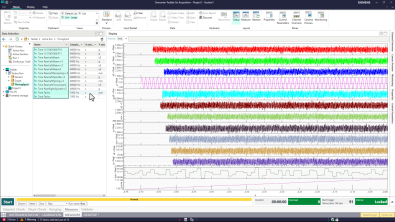
Transfer Path Analysis (TPA) in Simcenter Testlab Neo allows engineers to quantify operational loads and understand how vibration and noise energy enter a system through specific paths and interfaces.
In release 2606, Simcenter Testlab Neo expands these capabilities by supporting full-time-domain transfer path analysis workflows. Engineers can now evaluate transient events and multiple sources directly in the time domain while maintaining seamless integration with audio replay and post-processing workflows.
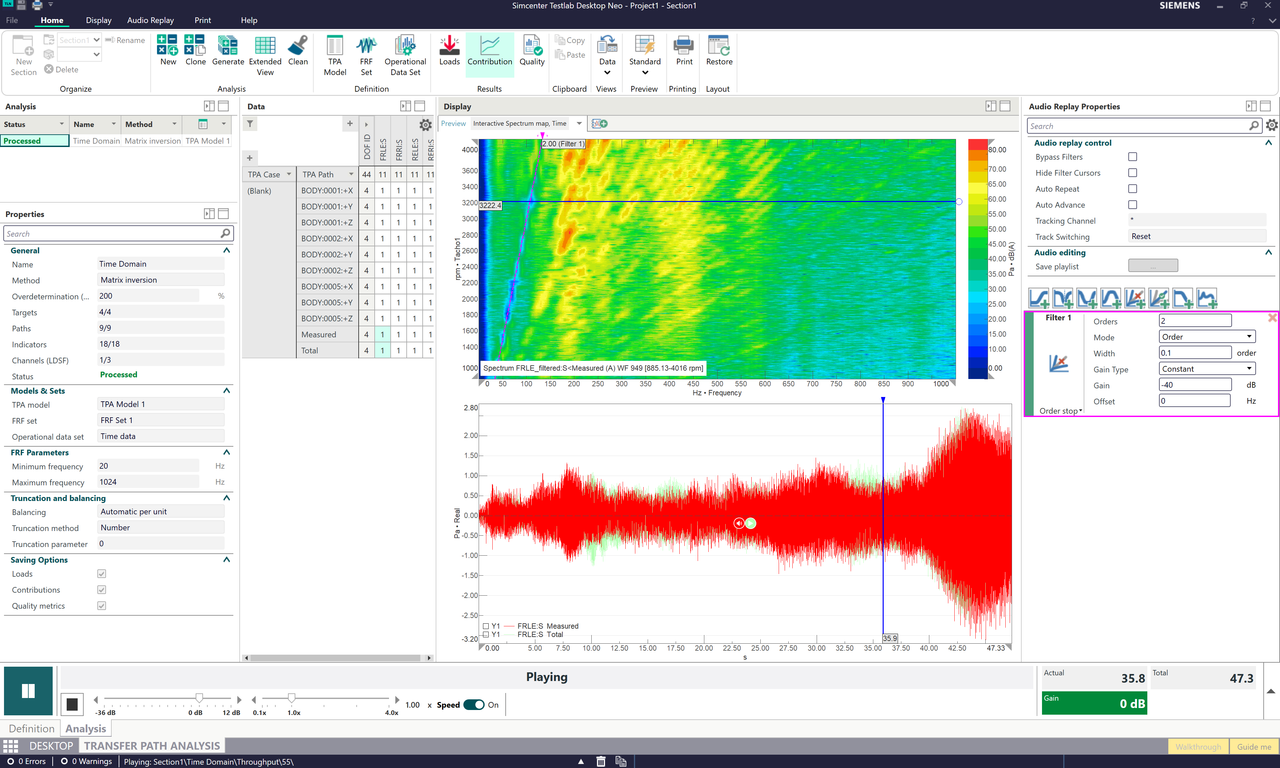
Time-domain Transfer Path Analysis in Simcenter Testlab Neo
A new Adaptive Tikhonov regularization method improves operational load estimation by replacing abrupt singular-value truncation with a smoother and more physically realistic approach. This reduces non-physical discontinuities while maintaining robustness to noise.
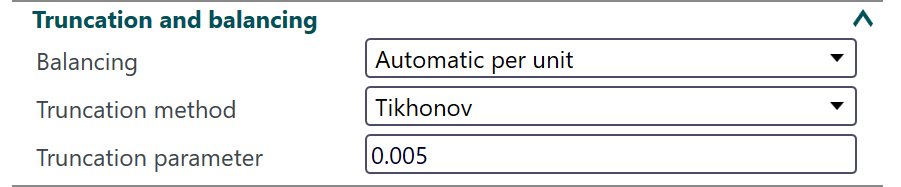
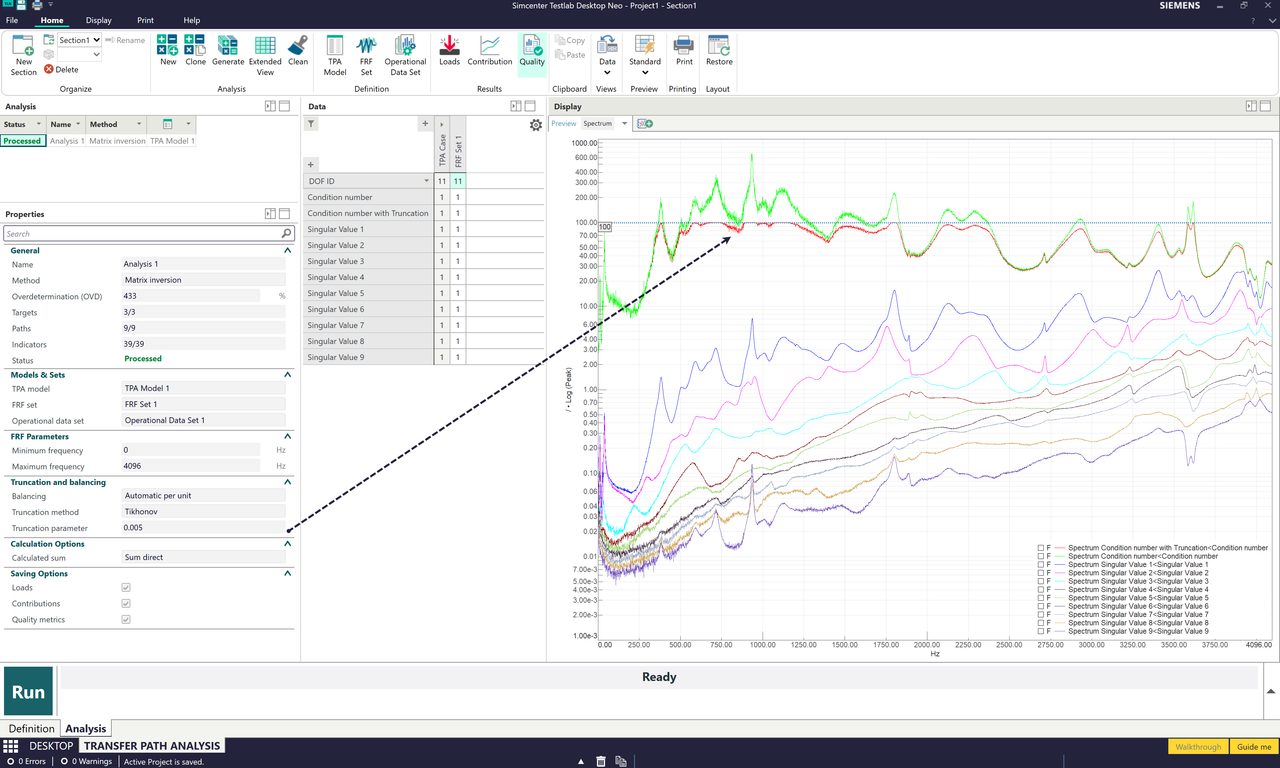
Adaptive Tikhonov truncation method in Simcenter Testlab Neo
Support for the Mount Stiffness method extends transfer path Analysis in Simcenter Testlab Neo’s operational load estimation portfolio, enabling estimation of contact forces in assemblies containing resilient mounts using measured or supplier-provided mount stiffness data.

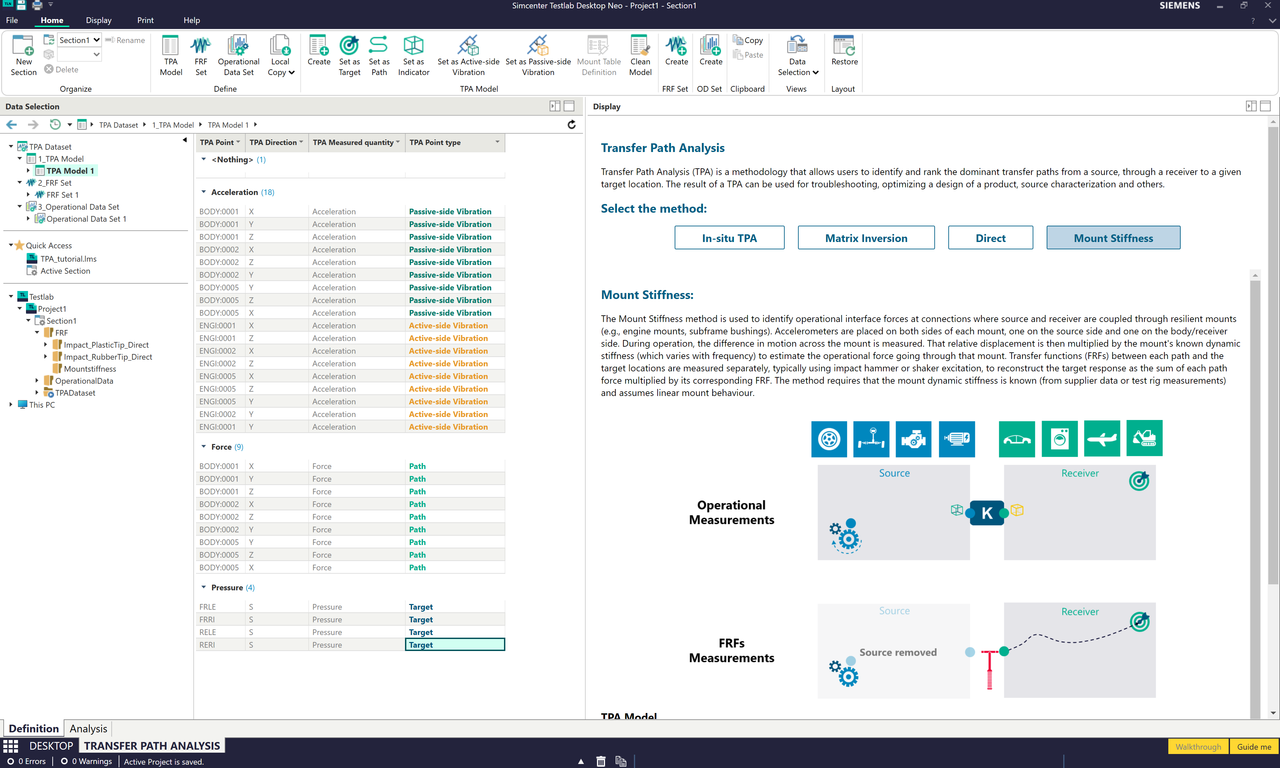
Mount stiffness method in Simcenter Testlab Neo
For engineers evaluating multiple operating conditions, automated generation of operational datasets and TPA analyses dramatically reduces setup effort. Campaigns containing dozens of operating conditions can now be prepared automatically, allowing engineers to spend less time managing datasets and more time interpreting results.
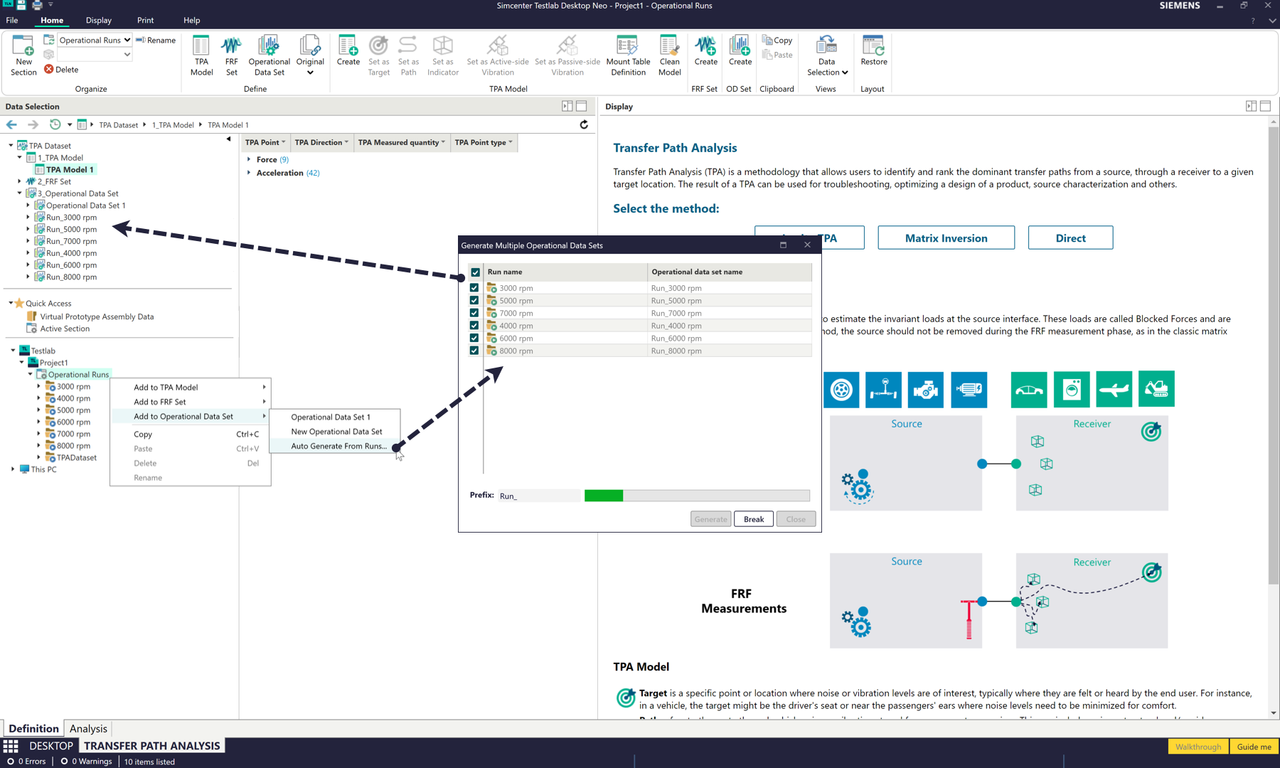
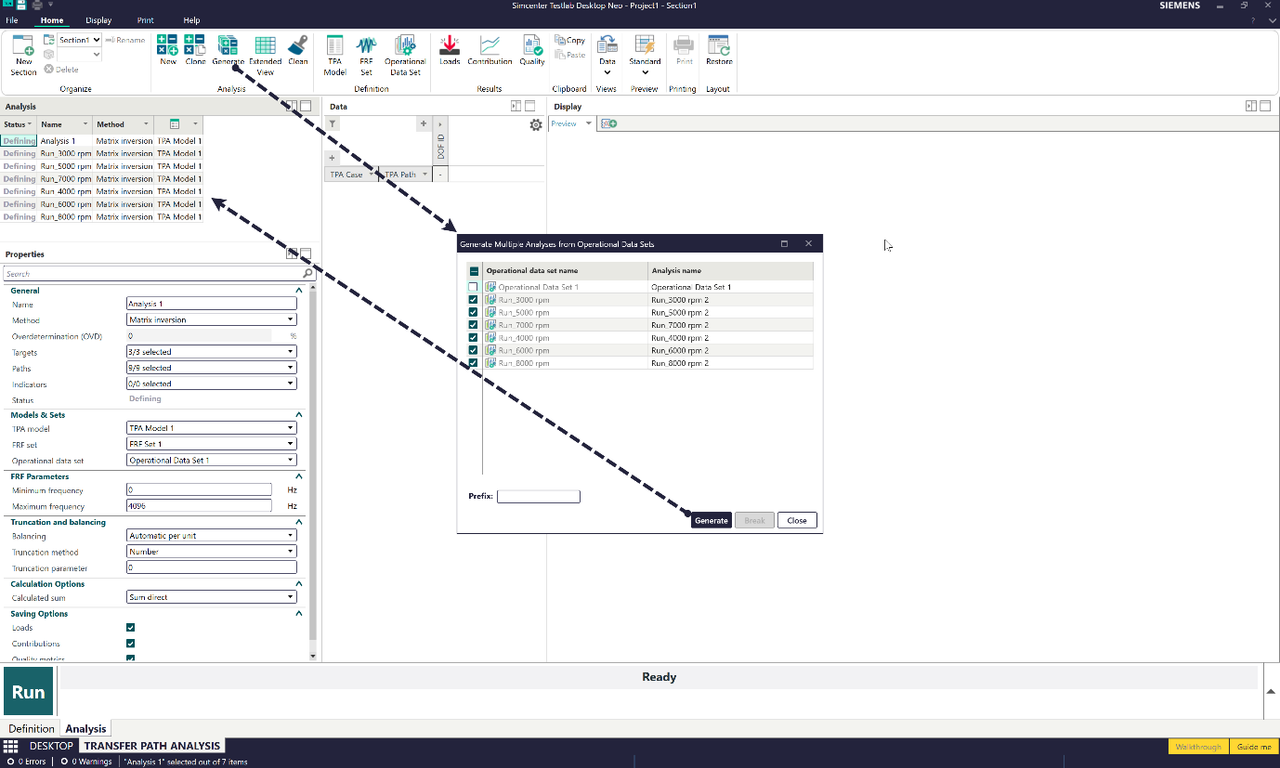
Autogeneration of operational datasets and analysis in Simcenter Testlab Neo
The outcome is faster characterization, more robust source models, and greater confidence in downstream predictions
Assemble: Turning components into virtual vehicles
Once sources are characterized, the next challenge is assembling them into realistic virtual products.
Virtual Prototype Assembly (VPA) provides a framework for integrating measured and simulated subsystem behavior to create complete virtual systems that predict full-vehicle responses.
A major milestone in 2606 is the introduction of the VPA definition directly within Simcenter Testlab Neo. The final remaining piece of the traditional VPA workflow has now moved into Simcenter Testlab Neo, enabling source characterization, component publishing, assembly, and assessment to occur within a single environment.
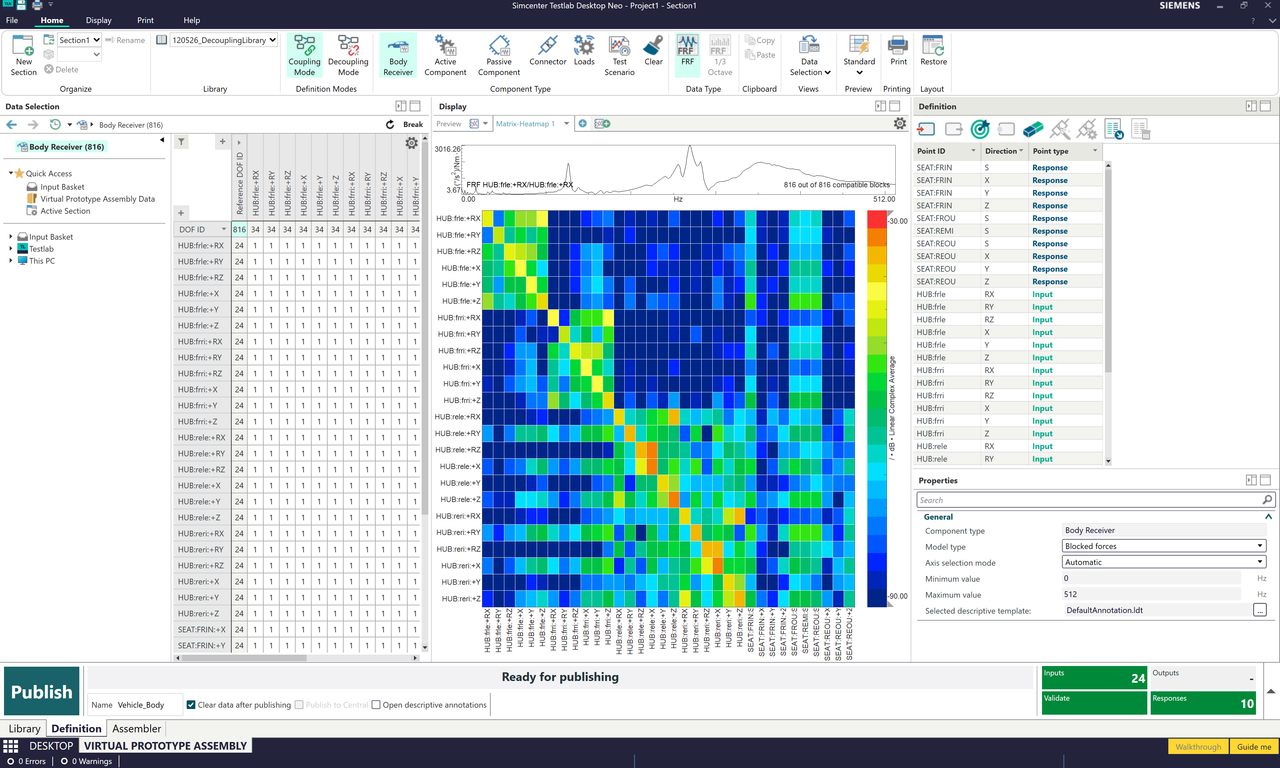
Virtual prototype definition assembly in Simcenter Testlab Neo
VPA definition simplifies the creation of reusable component libraries that can be shared, stored, and assembled into different virtual architectures. These libraries become the foundation for scalable system-level prediction workflows.
The release also introduces experimental Frequency-Based Decoupling capabilities.
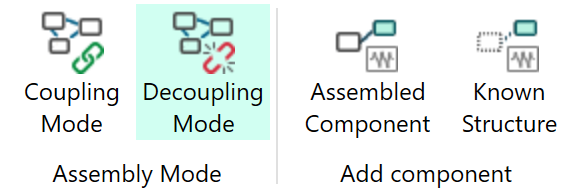
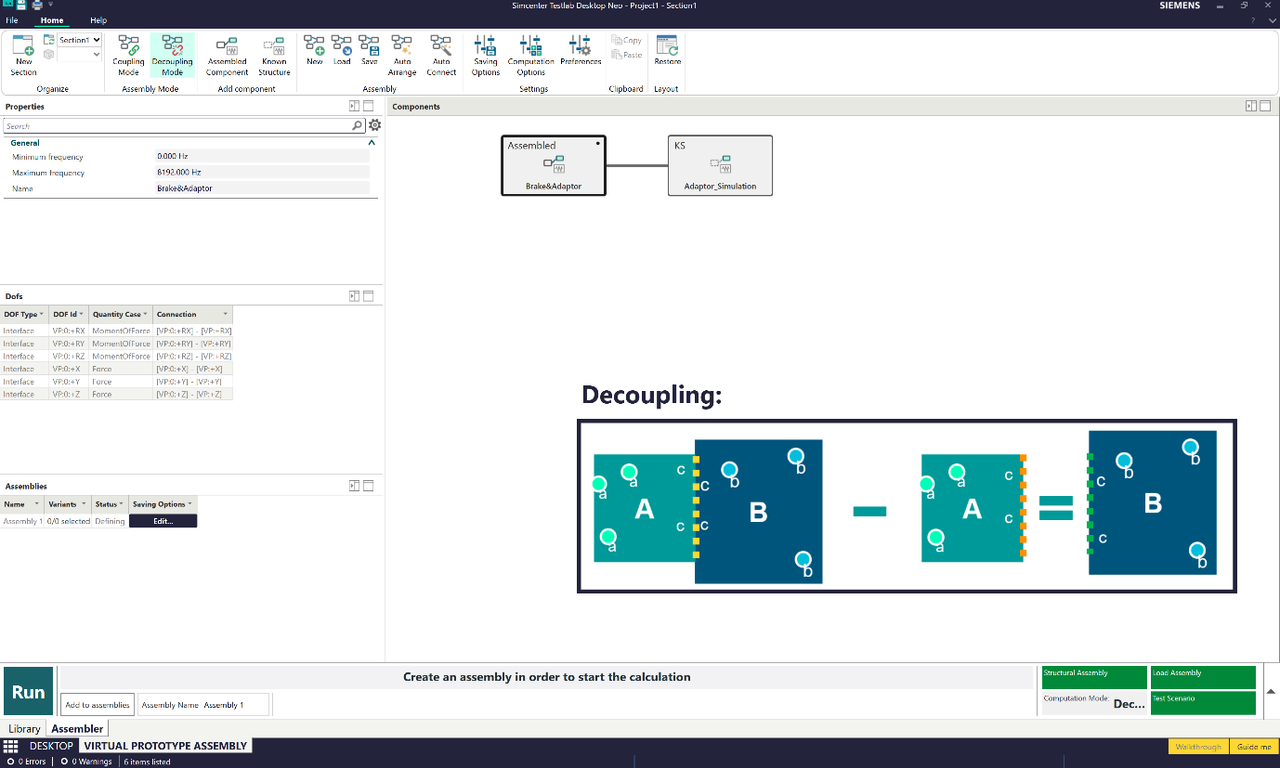
Decoupling in Simcenter Testlab Neo
Many components cannot be measured realistically in isolation because their behavior depends on preload, boundary conditions, or contact effects. Decoupling allows engineers to extract component behavior directly from measured assemblies while preserving the conditions under which those components actually operate.
This enables workflows such as:
- Tire characterization under preload and rolling conditions.
- Suspension characterization under realistic boundary conditions.
- Mount characterization using in-situ measurements.
- Recovery of component dynamics from test rigs and integrated assemblies.
The release further expands VPA support for airborne NVH prediction through sound power components and sound-power-based transfer functions, allowing airborne and structure-borne phenomena to coexist within the same virtual prediction framework.
Bringing source characterization, component publishing, virtual assembly, and system-level prediction into a single and intuitive workflow eliminates many of the manual transitions that historically slowed system NVH prediction projects. This integrated approach is a key contributor to the reported up to 60% improvement in workflow efficiency achievable with modern workflows.
Assess: Turning predictions into decisions
Accurate models only matter if they lead to better decisions.
The final stage of the workflow is evaluation.
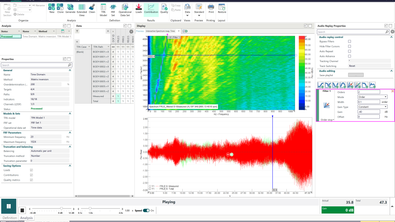
NVH Simulator transforms predicted responses into immersive listening experiences, enabling engineers and stakeholders to assess vehicle behavior before physical prototypes exist.
This capability plays a central role in virtual validation because subjective perception remains critical to NVH development. Engineers must evaluate not only measured performance but also how predicted vehicle behavior will actually sound to customers.

Simcenter Testlab NVH simulator
Simcenter Testlab 2606 introduces output mapping capabilities to create realistic listening positions and automatically resolve naming inconsistencies across multiple datasets and sources.
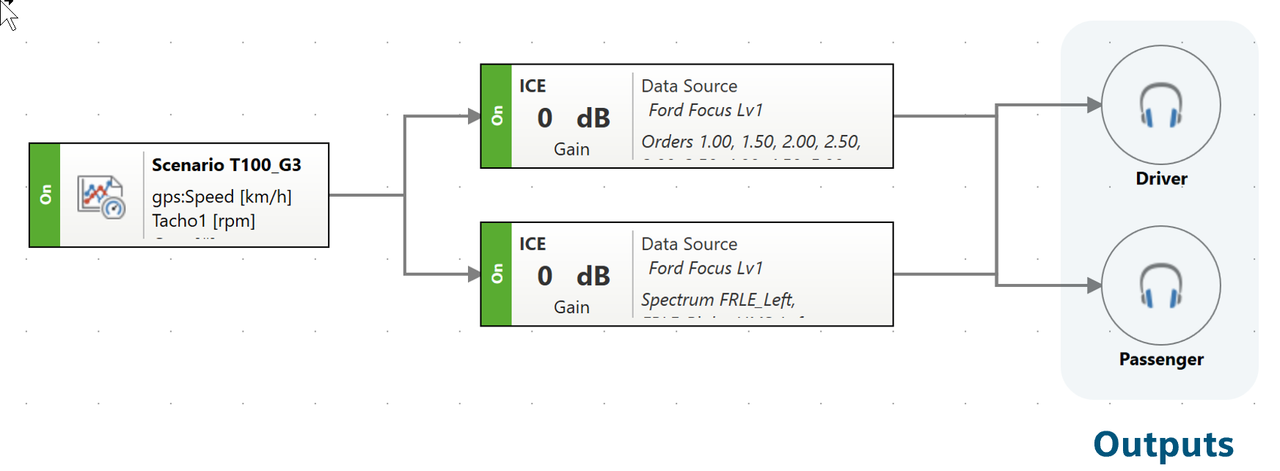
Output mapping in Simcenter Testlab Neo
A new stereo synthesis engine improves spatial realism through physics-based interaural coherence processing, enabling more immersive binaural evaluation and more representative jury assessments.
A dedicated live synthesis task adds interactive scenario replay, allowing engineers to switch between configurations, isolate contributors, compare alternatives, and evaluate trade-offs in real time without re-running simulations.
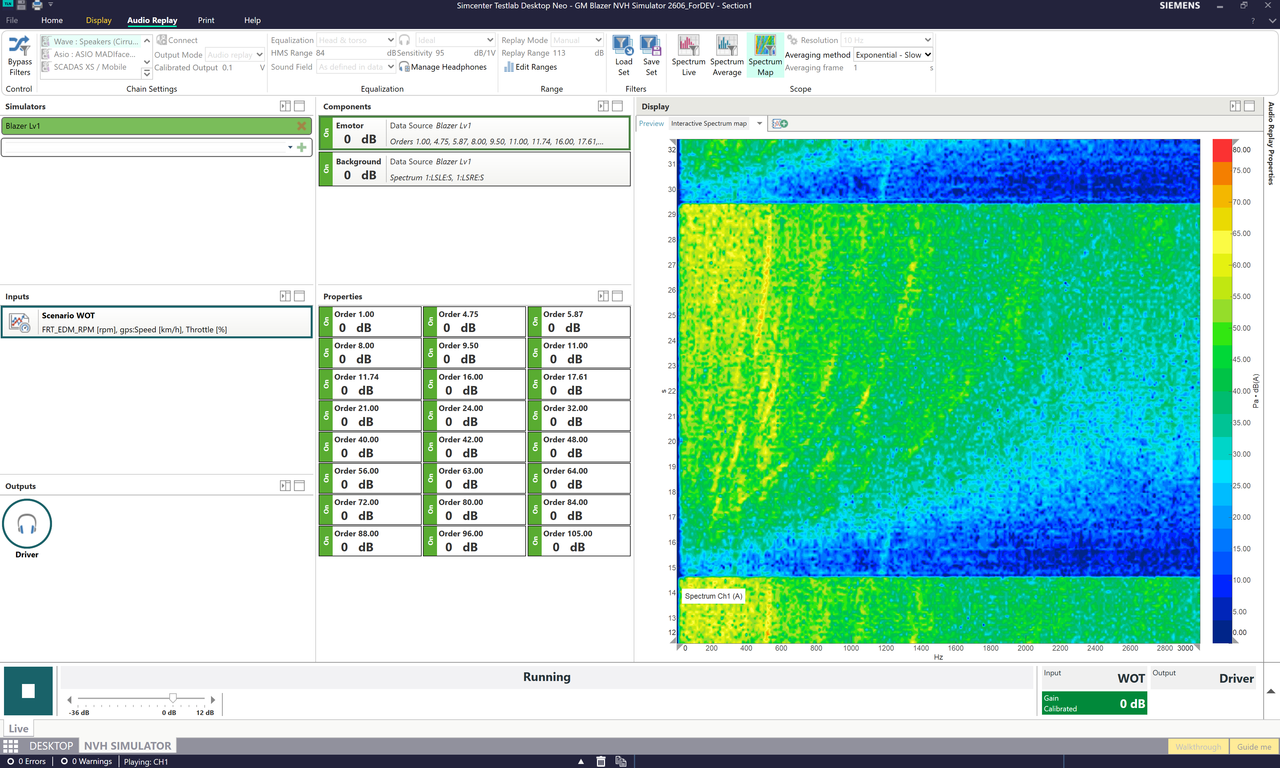
Live synthesis and scenario replay with Simcenter Testlab Neo
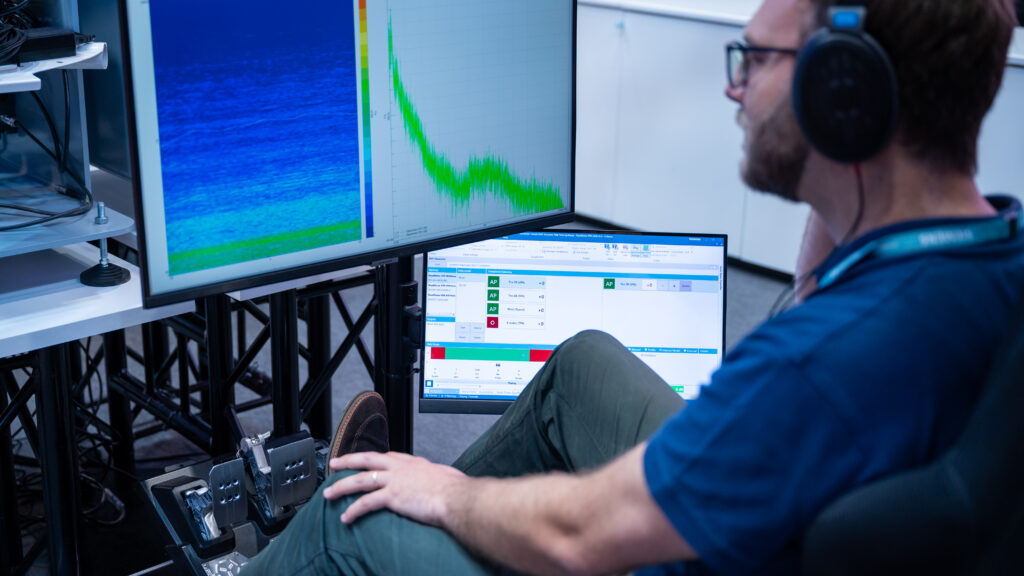
Simcenter Testlab Neo provides the entire workflow to assess full-vehicle NVH performance before physical prototypes
Additional enhancements simplify spectrum handling across mixed-resolution datasets and introduce native Simcenter Testlab data management integration for sharing complete simulator configurations across global teams.
Integration with Simcenter Testlab data management
The result is an environment where engineers can listen, evaluate, and make decisions before hardware exists.
Efficiency gains enabled by the complete next-generation workflows
Simcenter Testlab Neo 2606 integrates System NVH Prediction, streamlining everything from operational load characterization to full-vehicle assembly and auralization in a single and intuitive environment. It empowers engineers to predict how a whole vehicle will sound and vibrate long before a prototype exists, with new levels of efficiency and accuracy. But what does this mean in practice for you?
We put the complete next-generation workflows integrated in Simcenter Testlab Neo to the test against traditional workflows using industrial-grade setups and expert users. The results were clear: across virtual point transformation processing and validation, classical TPA, and multi-reference TPA pre-processing, we observed up to 60% average efficiency gain. Thanks to integrated Neo-native workflows and automated batch processing, you can now turn scattered component data into a trustworthy full-vehicle prediction significantly faster. Here are a few examples:
- VPT processing and validation: Simcenter Testlab Neo reads the virtual point model straight from geometry and automatically selects indicators, no manual virtual point model building like in Classic. Combined with a more interactive workflow for checking rigidity across the 100–2000 Hz band, that’s up to 77% faster (~4x) virtual point transformation processing and validation.
- Multi-reference TPA pre-processing: Multi-condition studies, road noise across surfaces, powertrain across gears, EV whine across a torque map, used to mean hand-building one dataset and analysis per run. With “Auto generate from runs” and batch analysis generation, pre-processing that once took an afternoon now takes a single click, for up to 62% efficiency gain.
- Classical TPA: Time-domain analysis, Tikhonov regularization, and the new mount stiffness method remove the manual, band-by-band tuning that classical matrix-inversion TPA used to demand, delivering trustworthy force estimates without hand-tuned truncation. Engineers achieve up to 54% faster classical TPA processing without sacrificing force-estimate fidelity.
Combined with recent innovations, these new capabilities drive even greater efficiency. From FBS decoupling and airborne sound-power paths in VPA to live synthesis scenario replay and stereo output mapping in the NVH Simulator, this release optimizes your entire system NVH workflow for faster, more confident engineering decisions.
The bigger story: Zero prototyping through next-generation workflows
The individual features introduced in Simcenter Testlab Neo 2606 are significant.
Time-domain TPA.
Adaptive Tikhonov regularization.
Mount Stiffness.
Intuitive VPA Definition.
Frequency-Based Decoupling.
Sound Power integration.
Stereo synthesis.
Live scenario replay.
Each delivers meaningful improvements on its own. Yet the larger story is not any individual capability. The larger story is the workflow itself.
For years, engineers moved between separate environments for source characterization, component definition, virtual assembly, simulation, and subjective assessment. Simcenter Testlab Neo 2606 brings those activities together into a complete next-generation system NVH prediction workflow that spans the entire journey from subsystem knowledge to virtual validation.
Characterize component behavior. Assemble virtual architectures. Assess system-level NVH before the vehicle exists.
That next-generation workflow within Simcenter Testlab 2606 enables organizations to spend less time managing tools and more time evaluating engineering alternatives. It enables earlier insight, earlier decisions, and greater confidence throughout vehicle development. Most importantly, it allows teams to predict and validate system-level NVH before a physical prototype is available, while delivering up to 60% greater workflow efficiency than traditional multi-tool processes.
The story of Simcenter Testlab Neo 2606 is not a single feature.
The story is the complete next-generation workflow. An intuitive end-to-end workflow that transforms subsystem knowledge into full-system understanding, enables virtual validation before hardware exists, and accelerates the industry’s journey toward zero prototyping. Discover it now!