How Simcenter is accelerating innovation across industries
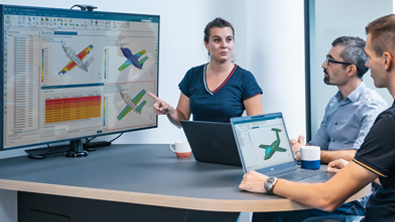
This article examines how manufacturers across aerospace, automotive, pharmaceuticals, consumer goods and other industries are leveraging the power of simulation and AI to transform product development.
In today’s fast-paced world, innovation is key to staying ahead. From compressing development cycles to improving product quality, these case studies demonstrate how Simcenter, combined with AI, enables faster, more efficient and more accurate design procesess.
Discover how these cutting-edge approaches are transforming industries and driving the future of engineering.
Foresee Power: achieving 95% accuracy without physical testing
Forsee Power’s goal is simple: democratize electrification of mobility applications by providing comprehensive, modular and intelligent battery systems. To accomplish this, Foresee Power accelerated their design processe by implementing Simcenter STAR-CCM+ for battery and thermal design. Simulating battery pack heating conditions virtually has helped them significantly reduce experimental and time costs with simulations providing a margin of error of just five percent when compared to real-world data.
Results achieved:
- Reduced battery thermal design and experimental time and costs for air-cooled battery systems using simulation
- Improved simulation accuracy and efficiency and product development fidelity levels
- Enhanced understanding of the battery pack’s temperature distribution under various operating conditions
- Optimized heat dissipation efficiency using Simcenter STAR-CCM+ simulation and verification
Using Simcenter STAR-CCM+, we could accurately obtain thermal design performance early in the design stage.
Kinny Ruan, Mechanical Engineer, Forsee Power
Read the full Foresee Power case study.
Cummins: reducing engine prototypes by 50% using system-level simulation
Cummins, a global manufacturer of diesel and alternative fuel engines, was challenged with reducing the length and cost of development cycles, as well as demonstrating capabilities of products before building physical prototypes.
The realized benefits of Simcenter Amesim to Cummins:
- Won new business by creating integrated and scalable mechatronic system simulations
- Reduced number of prototypes by 50%
- Shortened test result lead time by 1 month
What this means: By integrating Simcenter Amesim into their design process, Cummins could optimize engine designs early on and benchmark products against alternatives, significantly reducing the need for physical prototypes, saving both time and cost.
Read the full Cummins case study.
Briggs & Stratton: achieving best-in-class NVH performance
Briggs & Stratton is the manufacturer of small internal combustion engines sold in over 100 countries. Briggs & Stratton stays competitive by continuously developing their engine models and new engine families.
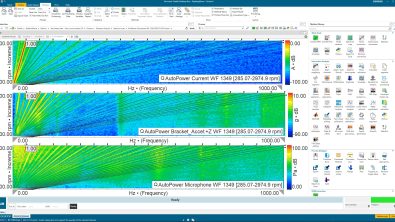
Most importantly is ensuring sound and vibration are best-in-class. To achieve the right noise, vibration and harshness (NVH) balance, their engineers use flexible and intuitive Simcenter software and hardware throughout the entire testing process.
Key improvements:
- Reduced testing and postprocessing time during analysis
- Correlated sound and vibration to analyze data and correct issues
- Used tokens to test innovations and discover new techniques
What this means: Briggs & Stratton achieved product goals early in the development cycle by implementing Simcenter Testlab to monitor live data and processes during the recording and Simcenter SCADAS to calculate engine sound pressure and the sound power and quality.
Read the full Briggs & Stratton story.
AI-powered simulation transforms pharmaceutical manufacturing
Tablet coating is a critical process in pharmaceutical manufacturing, directly impacting product quality and efficacy.
Achieving uniform coating presents significant challenges, often leading to costly batch rejections and production inefficiencies. Non-uniform coating can result in visual defects or compromised performance, while excessive compressive forces during the process can damage tablets. Furthermore, suboptimal spray settings contribute to material waste and reduced production efficiency.
To address these challenges, life sciences manufacturers are taking an innovative approach combining Discrete Element Method (DEM) simulation, Reduced Order Modeling (ROM) and AI-powered optimization.
DEM allows for detailed analysis of particle movement, interactions and potential stress points within the coater. ROM enables significantly faster iterations and analysis without sacrificing accuracy.
Finally, AI-powered optimization leverages the ROM to rapidly explore a vast parameter space for spray settings, improving coating uniformity and minimizing waste as well as preventing breakage and cosmetic damage.
Demonstrated benefits:
- Hundreds of virtual simulations completed in minutes instead of weeks
- Reduced waste
- Improved yield by minimizing broken tablets and ensuring consistent coating across batches
What this means: This integrated solution offers a robust framework for achieving unparalleled precision and efficiency in tablet coating, so manufacturers can ensure superior product quality, reduce waste and optimize production processes.
Learn more about AI-powered engineering.
How AI is helping fan acoustic optimization and reducing design iterations by 90%
Optimizing fan acoustics involves predicting how a fan will sound before it’s built. By using geometric deep learning models and training them on vast amounts of computational fluid dynamics (CFD) simulations and real-world test data, engineers can rapidly forecast the acoustic behavior of different fan designs.
This approach helps identify potential noise issues early in the development cycle, enabling design modifications for quieter, more efficient fans. Simulation technology moves beyond traditional trial-and-error methods and greatly reduces the high compute costs which can limit the number of design iterations that can be practically evaluated.
Making CFD simulation and AI become part of the fan design development process
- Trained model of acoustic performance using pre-existing CFD simulations and test data
- Generated a Simcenter PhysicsAI software model in minutes using prepared dataset
- Used trained models to estimate sound pressure level (SPL) and evaluate multiple fan designs in seconds
This methodology moves beyond traditional trial-and-error while dramatically reducing computational costs, enabling engineers to explore larger design spaces and achieve superior acoustic performance.
Learn more about AI-powered engineering.
Same Deutz-Fahr: compressing agricultural equipment development time by 30% using model-based systems engineering
The agricultural industry is cyclical and dependent on changing environmental factors as well as farm income, changing interest rates and overall farm profitability.
As a leading manufacturer of tractors, harvesters and diesel engines, Same Deutz-Fahr (SDF) understands that uncertainty in climate and harvest periods leads to customers’ hesitation in agricultural machinery investments. Their challenge was to drastically cut time-to-market, improve product price and performance and enhance lubrication system efficiency for tractors that must operate on 45° inclines and in extreme dust.
With Simcenter Amesim, SDF is taking a model-based systems engineering and a front-load approach to compete in an ever-changing environment.
- 30% compression of development cycle time
- Shifted testing approach from trial-and-error to validation only
- Improved system performance through optimizing parts definition
By simulating worst-case field conditions, such as a 120°C oil temperature and clogged filters, engineers could optimize engine designs before physical testing, generating quality data and multi-criteria analysis quickly.
Northrop Grumman: managing spacecraft development complexity through digital threads
Northrop Grumman develops spacecraft for missions ranging from low-earth orbit satellites to deep-space exploration. Dr. Tom Stoumbos, simulation and test leader at Northrop Grumman, leads a team of over 100 experts working on long-term projects requiring unprecedented levels of complexity management, data sharing among partners and performance validation.
Simcenter helps Northrop Grumman explore the digital realm and manage design constraints
- Automated design space exploration process resulted in a 30-50% reduction in analysis time
- Efficient parallel work and reusable space vehicle system models
- Excellent simulation accuracy using closed loop between analytical models and physical tests to achieve
Part of the Siemens Xcelerator portfolio, Northrop Grumman also uses Teamcenter® Simulation software, to keep the digital thread running accurately throughout complex processes.
Siemens has the vision and the suite of tools that allow us to move quickly into digitalization and advanced engineering simulation. We hope to continue to grow along with Siemens as a partner.
Dr. Tom Stoumbos, Simulation & Test leader, Northrop Grumman
Read the full Northrop Grumman story.
Across aerospace, automotive, pharmaceuticals and other industries, manufacturers using Simcenter are achieving 30-50% faster development, 50% fewer prototypes and 95%+ design accuracy. This proves that simulation-driven design is no longer optional but essential for competitive advantage.
Hear from Siemens product and sales experts Peter De Clerck and Jonah Normand are joined by Monica Schnitger, President and Principal Analyst of Schnitger Corporation. Together, as they discuss why simulation can no longer be just a specialized activity. Watch the recording to learn why simulation must develop into a shared, strategic capability to fasten and improve decision-making throughout the organization.

Why engineering transformation is key to faster decisions across the organization
FAQs about how Simcenter and engineering transformation can benefit companies
1. What is a Digital Twin and how does it reduce physical prototyping?
A Digital Twin is a virtual replica of a physical product or system. Simcenter uses the Digital Twin to simulate real-world performance, allowing engineers to test and refine designs virtually. This significantly reduces the need for physical prototypes, saving time and resources by identifying and correcting issues in the digital world before any physical manufacturing begins.
2. How does AI-powered simulation differ from traditional CFD analysis?
AI-powered simulation in Simcenter leverages machine learning to accelerate and optimize traditional CFD. Unlike conventional CFD, which relies on explicit numerical models, AI models can learn complex fluid behaviors from data, enabling faster predictions and exploring a wider design space. This reduces computational time and resources, making simulations more efficient and accessible for design optimization.
3. What ROI can manufacturers expect from simulation-driven design?
ROI from simulation-driven design includes significant cost savings by reducing physical prototypes and rework. Faster time-to-market is achieved through accelerated design cycles and early issue detection. Improved product quality and performance lead to increased customer satisfaction and competitive advantage. Enhanced innovation is fostered by the ability to explore more design variations virtually, ultimately boosting profitability and market share.
In this webinar, Siemens product and sales experts Peter De Clerck and Jonah Normand are joined by Monica Schnitger, President and Principal Analyst of Schnitger Corporation. Together, they discuss why simulation can no longer be just a specialized activity. Watch the recording to learn why simulation must develop into a shared, strategic capability to fasten and improve decision-making throughout the organization.
Why engineering transformation is key to faster decisions across the organization