Beyond steady-state, building a dynamic digital twin of gas turbine to predict transients with system simulation

Modern gas turbines are expected to deliver more than excellent efficiency at rated conditions. Whether operating in industrial power generation, combined heat and power plants, offshore installations, or marine propulsion applications, they must start reliably, follow load demands, respond safely to operational disturbances, and maintain compressor by avoiding surge and rotating stall throughout the entire operating envelope.
While traditional performance tools and spreadsheet-based calculations remain valuable for design-point sizing, they cannot adequately capture the complex transient phenomena that occur during start-up, acceleration, load changes, shutdowns, or restart sequences. This is where system simulation becomes a critical engineering capability.
The challenge: why static tools fall short in transient environments
The energy industry is changing. Power generation assets are expected to be more flexible than ever. Grid-connected generators need to follow increasingly dynamic demand profiles. Operators are under constant pressure to maximize availability, reduce risk, and accelerate development programs.
Yet one challenge remains remarkably difficult: What really happens inside a gas turbine during a start-up, shutdown, restart, or rapid load change?
Traditional sizing calculations can answer what happens at nominal operating conditions. But the most critical engineering questions often occur far away from the design point.

Traditionally, preliminary gas turbine sizing and performance evaluations have relied on custom in-house software or static Excel calculation sheets. While these tools are well-suited for calculating design-point steady-state performance under nominal conditions, they hit a brick wall when confronted with real-world dynamics:
- Transient phenomena: thermal inertia, rotor shaft dynamics, gas accumulation in combustor and plenum volumes, and fluid-dynamic delays cannot be captured by static balance equations.
- Control integration: real systems require sophisticated control loops (speed/load governors, fuel scheduling, acceleration control, temperature limiters) that interact dynamically with the fluid and mechanical systems.
- Operational sequences: evaluating off-design behavior during load acceptance, emergency shutdowns, cold/hot restarts, and ramp-up sequences demands a physics-based time-domain approach.
Engineers need a platform that bridges the gap between component-level physics and system-level integration, delivering high fidelity without sacrificing computational speed.
Combining Cranfield University’s expertise with Siemens’ technology
Answering those questions requires more than spreadsheets, performance charts, or steady-state calculations. It requires a dynamic digital twin. That is precisely the challenge addressed through a collaboration between Cranfield University, internationally recognized for its expertise in gas turbine technologies, and the Siemens Simcenter Amesim team.
Together, they developed and validated a complete dynamic simulation model of the Siemens Energy SGT-600 industrial gas turbine, demonstrating how system simulation can unlock insights that are simply inaccessible through traditional methods.
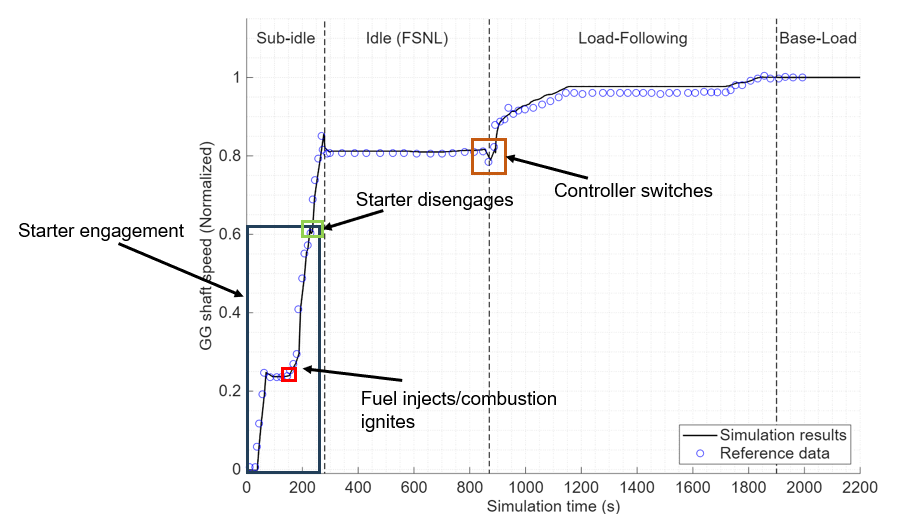
A complete dynamic digital twin workflow was developed and demonstrated on the Siemens Energy SGT-600 industrial gas turbine, from an end-to-end approach. The project successfully combined steady-state calibration, turbomachinery map adaptation, control-system implementation, and transient simulation into a unified system-level model.
Why transients matter more than ever
The Siemens Energy SGT-600 has earned a reputation as one of the most reliable industrial gas turbines in its class, with applications ranging from industrial power generation and combined heat and power plants to mechanical drive and marine-related onboard energy systems. The turbine delivers approximately 24.5 MW of power while offering high reliability, fuel flexibility, and operational robustness.
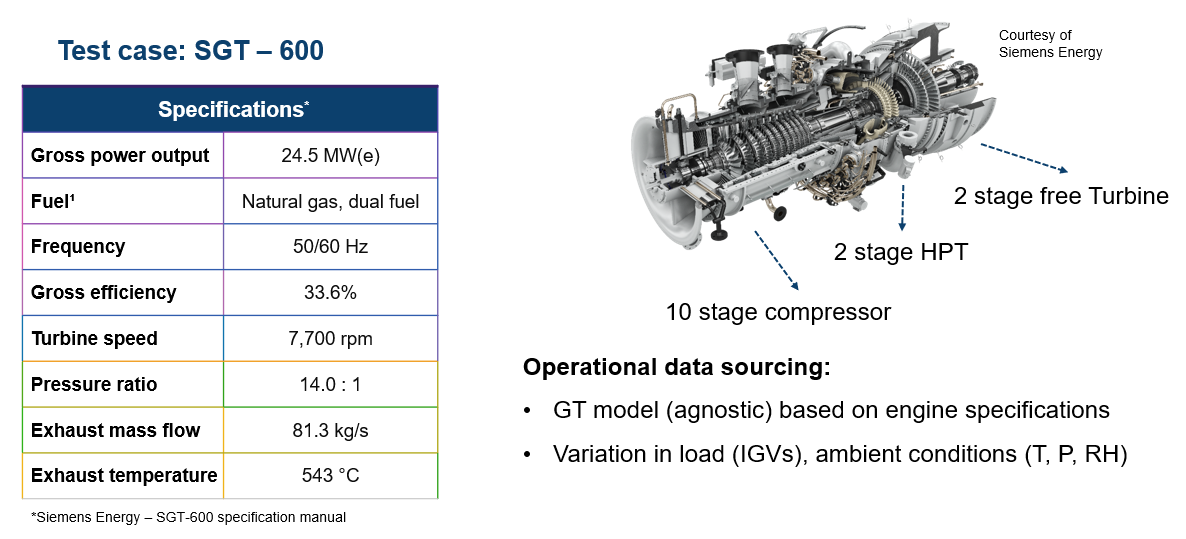
But designing or operating a gas turbine isn’t just about achieving rated power. The real engineering challenges emerge during transitions: cold start-up sequences, hot restarts, shutdown procedures, load ramps, emergency operating conditions and rapid demand changes.
These transient events generate complex interactions between compressor aerodynamics, combustion dynamics, turbine performance, rotating inertias, thermal effects and control systems.
As an example, transient temperature overshoots at the combustor exit can expose hot-section components or turbine blades to excessive thermal stress, accelerating material degradation and reducing gas turbine service life. Dynamic simulation helps engineers optimize fuel scheduling and temperature-limit controls to minimize these effects.
Understanding these interactions can make the difference between a robust design and an operational problem that only appears after commissioning.
Why steady-state models are not enough
Most organizations already have tools for design-point calculations.
Steady-state approaches can quickly estimate: power output, fuel consumption, pressure ratios and design efficiencies.
However, they cannot answer questions such as:
❌ Will the compressor cross a surge line during acceleration?
❌ Is the start-up sequence properly tuned?
❌ What happens to turbine temperatures during a rapid restart?
❌ How will different control strategies impact machine operability?
❌ How quickly can the system respond to a change in demand?
These questions require a fundamentally different approach. They require capturing the physics of the entire system over time.
Capitalizing on dedicated libraries – Bringing the entire gas turbine to life
One of the key advantages of Simcenter Amesim is that engineers do not start from scratch.
The “Gas Turbine Performance Tool” allows you to evaluate the design and off-design performance of most common types of gas turbines and aero-engines. You can then automatically generate in one click the Simcenter Amesim model from the results obtained at the design point, providing you with additional capabilities for off-design performance assessment, transient maneuvers, integration, and investigations of new configurations (hybrid architectures, etc).
The gas turbine generated is built from a dedicated gas turbine library containing calibrated physical components specifically developed for turbomachinery applications. This library provides reusable building blocks, coming with specialized app tools on top. This dramatically accelerates model development while maintaining a strong physics foundation.
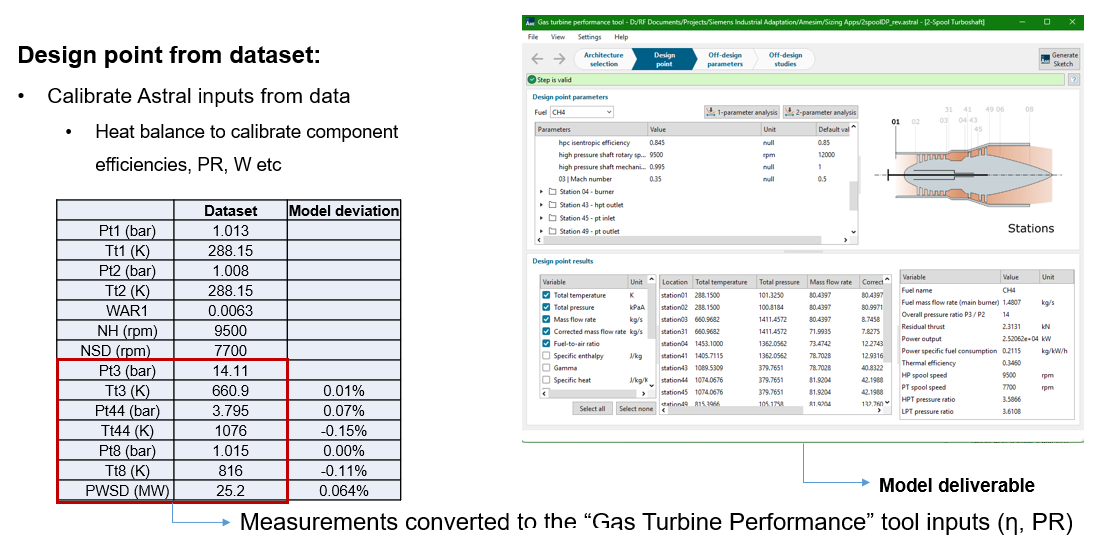
Instead of creating custom equations and models for every new project, engineers can assemble and calibrate digital twins from validated, reusable components that reflect established gas turbine physics.

Using the dedicated gas turbine capabilities available in Simcenter Amesim, the project team developed a comprehensive digital twin of the SGT-600. Rather than focusing solely on performance maps, the model represented the physical behavior of the complete machine.
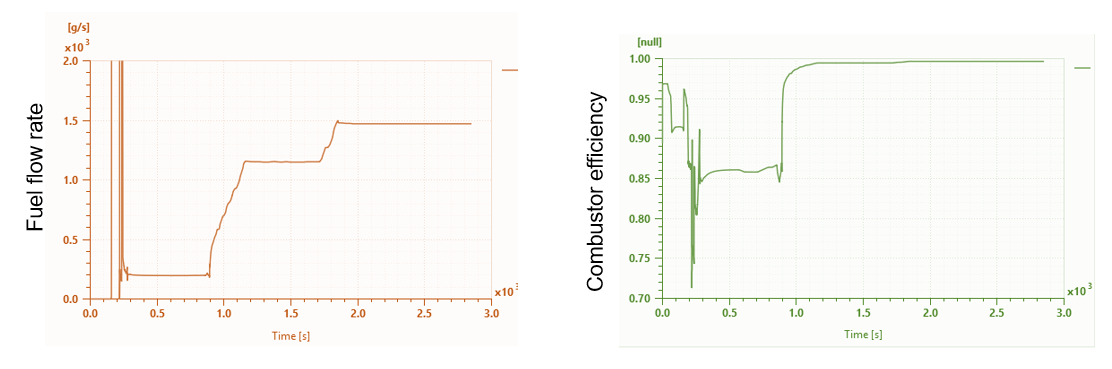
The result was not simply a performance calculator. It was a virtual gas turbine capable of reproducing real operational behavior from ignition all the way to full load operation.
Managing the heart of the model – The secret ingredient: the turbomachinery apps
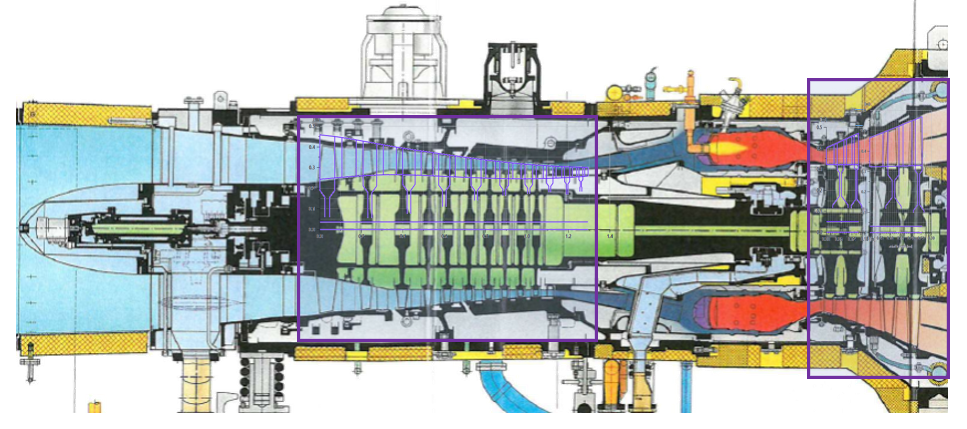
For any gas turbine digital twin, compressor and turbine maps represent the foundation of predictive accuracy. The “Axial compressor pre-design” and “Turbine pre-design” apps allow estimating the flow path and the weight of axial compressors and turbines. The dimensions and the weight of the casing, connecting hardware and shaft are then computed. The last step is computing the dimensions and weight of the disks.
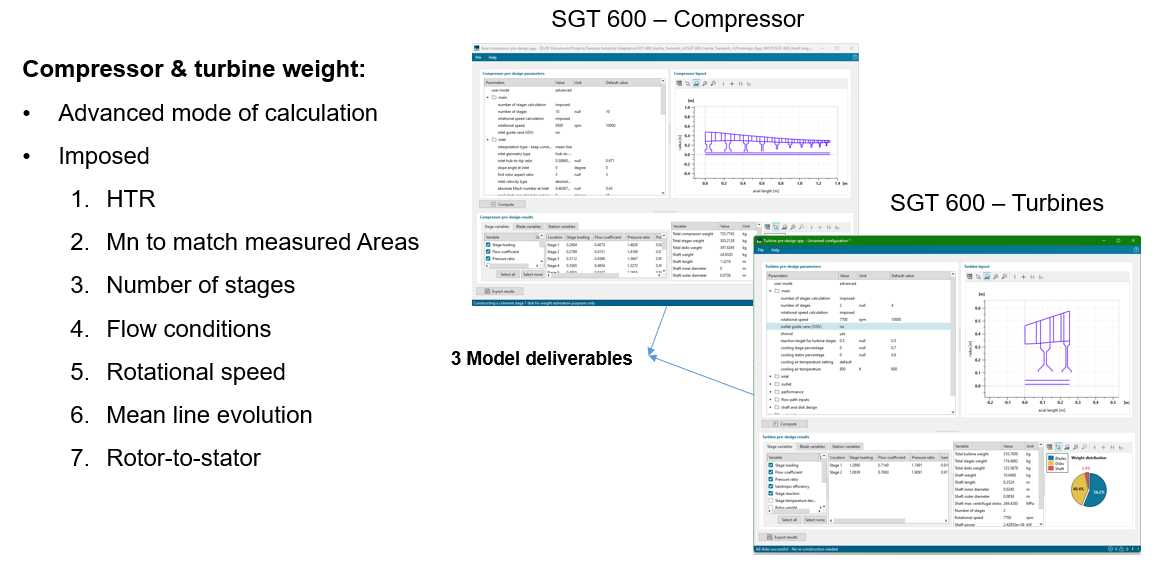
Layouts of the compressor or turbine are then displayed, and they’re used to check if the obtained designs are consistent with the reference picture of the studied gas turbine (here the SGT-600 gas turbine with its reference design obtained from literature). For an accurate transient modeling, those apps allow to retrieve component volumes and solid thermal weight for heat soakage prediction, as well as spool shaft inertia.
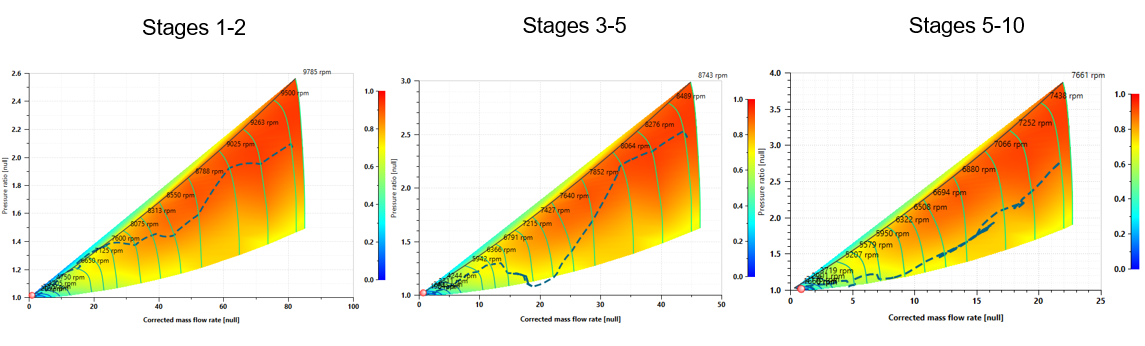
Compressor and turbine maps define the operating envelope of the machine and govern critical behaviors such as efficiency, pressure ratio, and surge margin. The project team used an extensive dataset covering approximately 200 operating conditions to calibrate the model and adapt the compressor and turbine characteristics.
Variable Inlet Guide Vanes (IGVs), corrected speed relationships, flow characteristics, and efficiency maps were systematically refined until the virtual turbine accurately reflected real operating behavior.
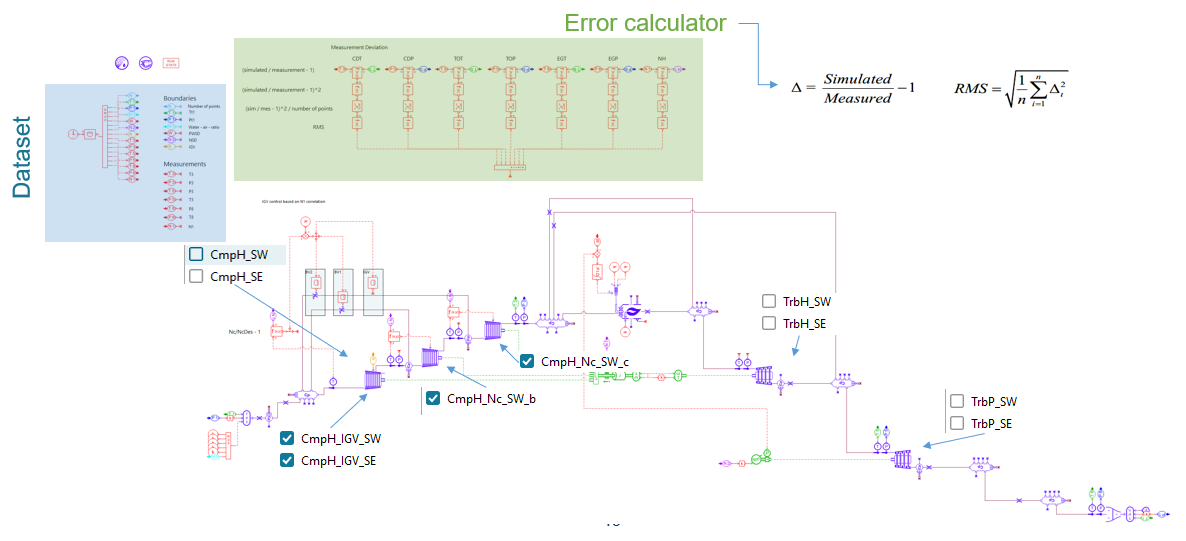
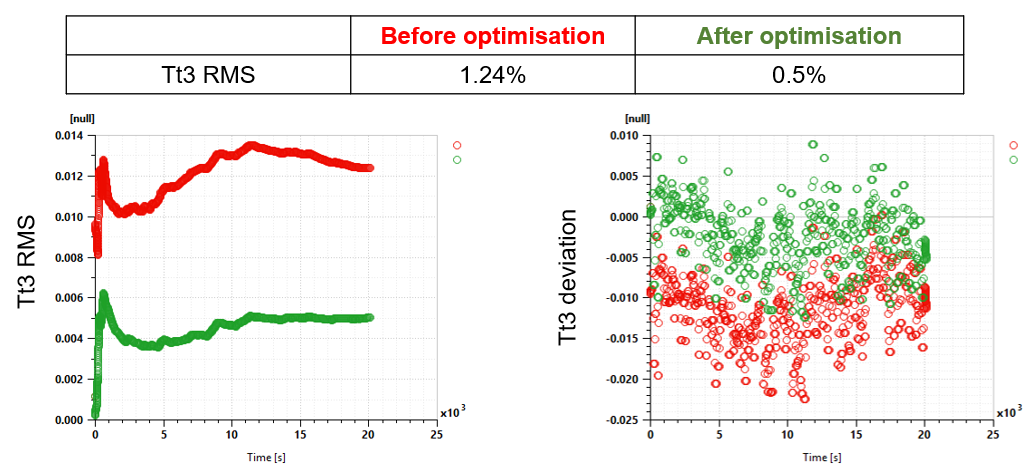
The result was a highly predictive model capable of closely matching reference performance data across the operating range. For engineering teams, that confidence is crucial.
Control systems meet physics
One of the greatest strengths of system simulation is the ability to bring controls and physics together. A gas turbine is much more than rotating machinery. Its performance depends heavily on the embedded control logic responsible for coordinating:
- Fuel delivery
- Ignition
- Starter disengagement
- Shaft speed regulation
- Load and power management
- Operational state transitions
- Safety and protection functions
With Simcenter Amesim, engineers can simulate the complete control architecture alongside the physical system.

This allows control strategies to be tested virtually before implementation, reducing risk and shortening development cycles. In other words, engineers are no longer tuning controls against assumptions. They are tuning controls against a realistic digital twin.
Validation: the foundation of trust
A digital twin is only valuable if it can be trusted. One of the most important outcomes of this work was the successful validation of the model against reference data and gas turbine knowledge available from literature and industrial sources.
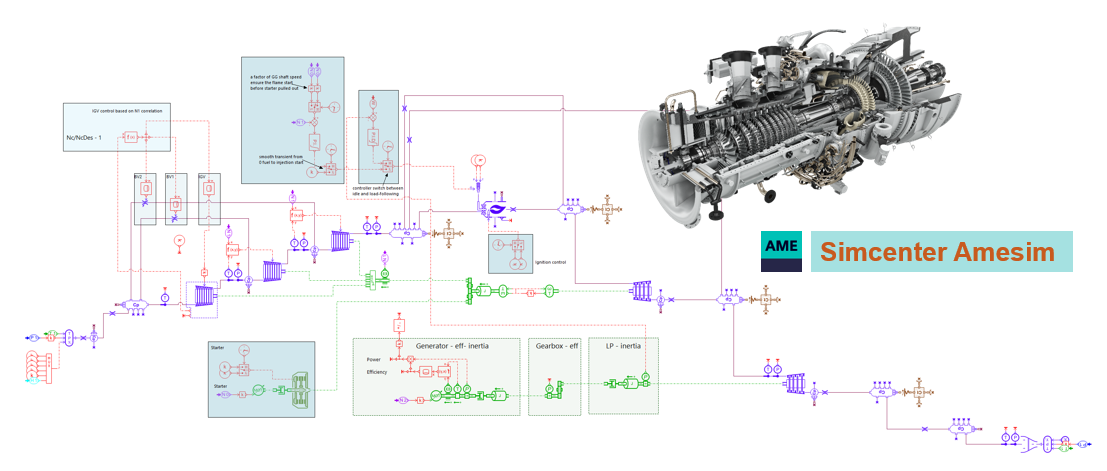
The comparison demonstrated excellent agreement between simulated and reference performance, confirming that the model accurately reproduces the behavior of the real machine.
This validation step is essential because it transforms the model from a theoretical exercise into a predictive engineering asset capable of supporting design and operational decisions.

A powerful example of industry and tool-vendor working together
This project showcases what becomes possible when industrial software expertise meets world-class gas turbine knowledge.
With decades of experience in gas turbine technology, Cranfield University brought deep domain expertise in turbomachinery, power generation, and gas turbine systems.
Combined with the system simulation capabilities of Simcenter Amesim, the collaboration delivered a validated digital twin methodology that can be applied to future gas turbine development programs across power generation, energy transition, and marine propulsion sectors.
The future of gas turbine development is dynamic
As gas turbines operate in increasingly flexible environments, understanding transient behavior is becoming just as important as achieving peak efficiency. By combining validated turbomachinery maps, advanced control strategies, thermal effects, mechanical dynamics, and real-world operating scenarios into a single digital twin, engineers gain a powerful new lens through which to understand machine behavior.
The result is not just a model. It is a faster path to innovation, reduced development risk, improved operability, and greater confidence in every engineering decision. Because the most important moments in a gas turbine’s life rarely happen at steady state. They happen during the transients. And with Simcenter Amesim, those moments can be understood before they happen in the real world.
Learn more about Simcenter Amesim
Simcenter Amesim is the leading integrated, scalable system simulation platform, allowing system simulation engineers to virtually assess and optimize the performance of mechatronic systems.


