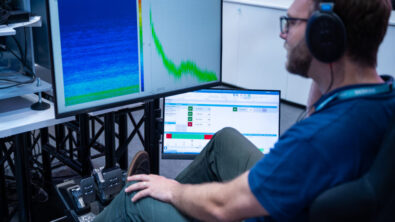
Real‑time XiL testing to accelerate EV powertrain validation: Look back at the XiL masterclass in Chengdu

The pace of automotive development is accelerating dramatically. According to McKinsey, China’s EV‑focused automakers can now take a vehicle from concept to launch in roughly 24 months, including platform development—about half the time required by traditional OEMs operating on 40‑ to 50‑month cycles. This rapid compression of development timelines, enabled in part by approaches such as XiL testing, is reshaping competitive dynamics across the global automotive market.
What is XiL testing for EV powertrains?
As development cycles shrink, engineering teams increasingly rely on advanced physical virtual validation methods to keep up. This is where the Simcenter XiL testing solution plays a pivotal role. XiL testing, or X-in-the-loop testing, blends real-time simulation with physical components to enable earlier, faster and more accurate system validation, helping manufacturers adapt to the urgent pace of EV development while maintaining quality, safety, and performance. The approach integrates virtual models with physical systems in real time, providing a robust foundation for modern model based system testing and reducing the need for full physical prototypes.
A focused masterclass supporting a rapidly changing industry
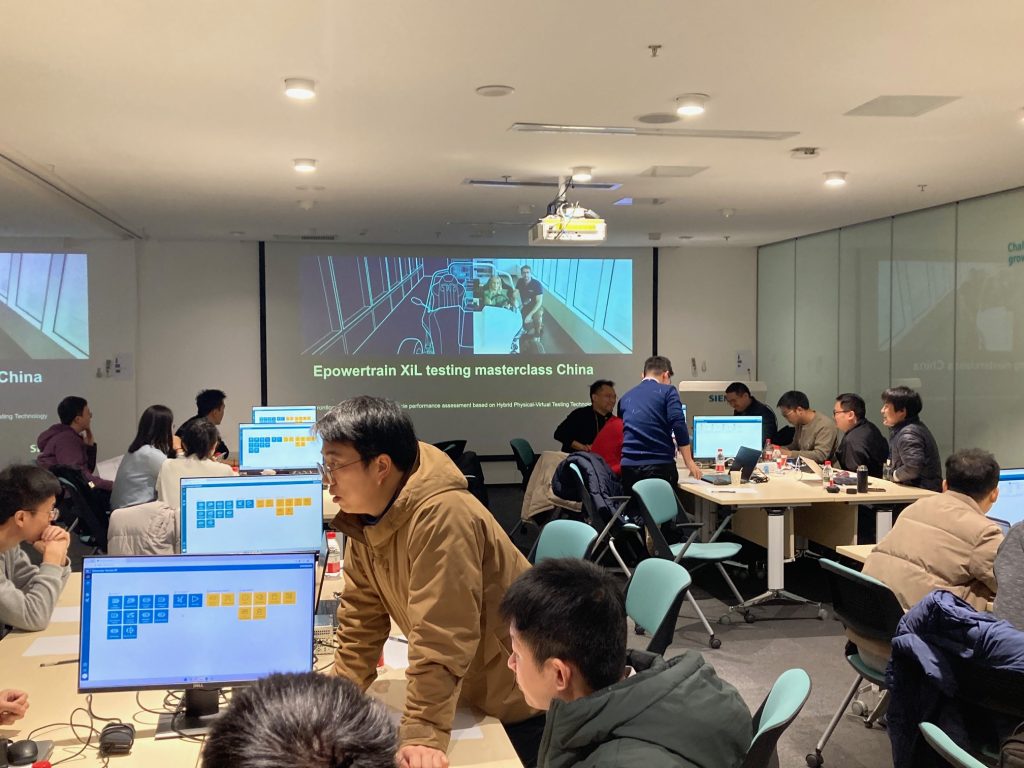
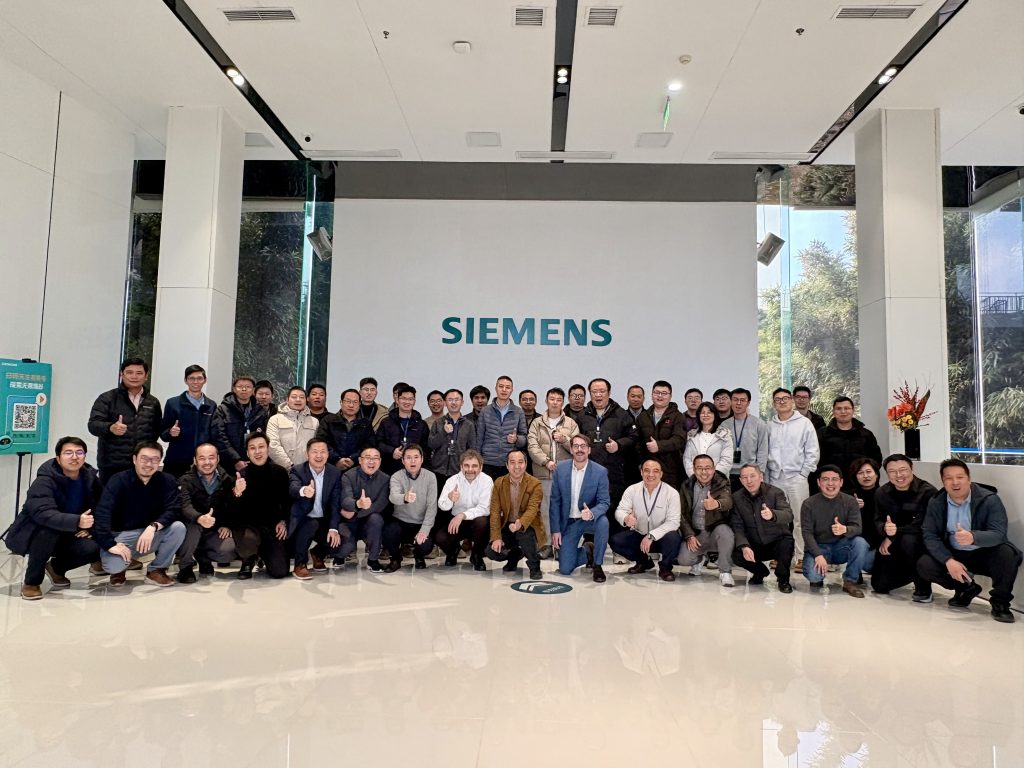
With this evolving landscape in mind, Siemens hosted a two day EV Powertrain XiL Testing Masterclass on January 22–23, 2026, at the Chengdu Smart Manufacturing and Innovation Center in China. Nearly 30 customers took part, including automotive engineers, researchers, simulation experts and electric vehicles developers: all looking to explore how XiL testing technology can make their validation processes faster, smarter, and more efficient.
A highly engaged audience ready for XiL adoption
Attendees were highly excited to learn about the capabilities offered by XiL technology for testing and experiencing physical virtual systems in real time. Presentations, demonstrations, and hands-on sessions helped them to get a deep understanding of the benefits of such approach. Many participants highlighted the value of multi-attribute balancing supported by XiL workflows, while also acknowledging the organizational challenges of implementing XiL, such as the need for closer collaboration between simulation and test teams.
The structured agenda was well received, with participants appreciating the combination of theory, demos, and practical exercises, and especially the full workflow coverage from simulation to real time testing.
From simulation to real time testing: An end‑to‑end XiL workflow
The program explored a wide range of topics relevant to modern EV powertrain development:
- XiL concepts, benefits, and EV demonstration (Hybrid physical-virtual XiL technology, benefits of the XiL approach, EV powertrain XiL demonstration, multi-attribute balancing)
- Modelling and simulation workflows (powertrain & vehicle dynamics modelling, systems modelling exercise with Simcenter Amesim, vehicle NVH prediction)
- Real time and co-simulation practices (Co-simulation exercise with Simcenter Testlab RT, real time workflow integration)
- Advanced development techniques (Innovative accelerated development methods from Simcenter Engineering & Consulting Services, AI & test automation technologies in Simcenter Testlab)
This end to end coverage from modelling to test bench execution resonated strongly with attendees, offering both conceptual clarity and real world applicability
Seeing XiL in action on the ePowertrain test bench
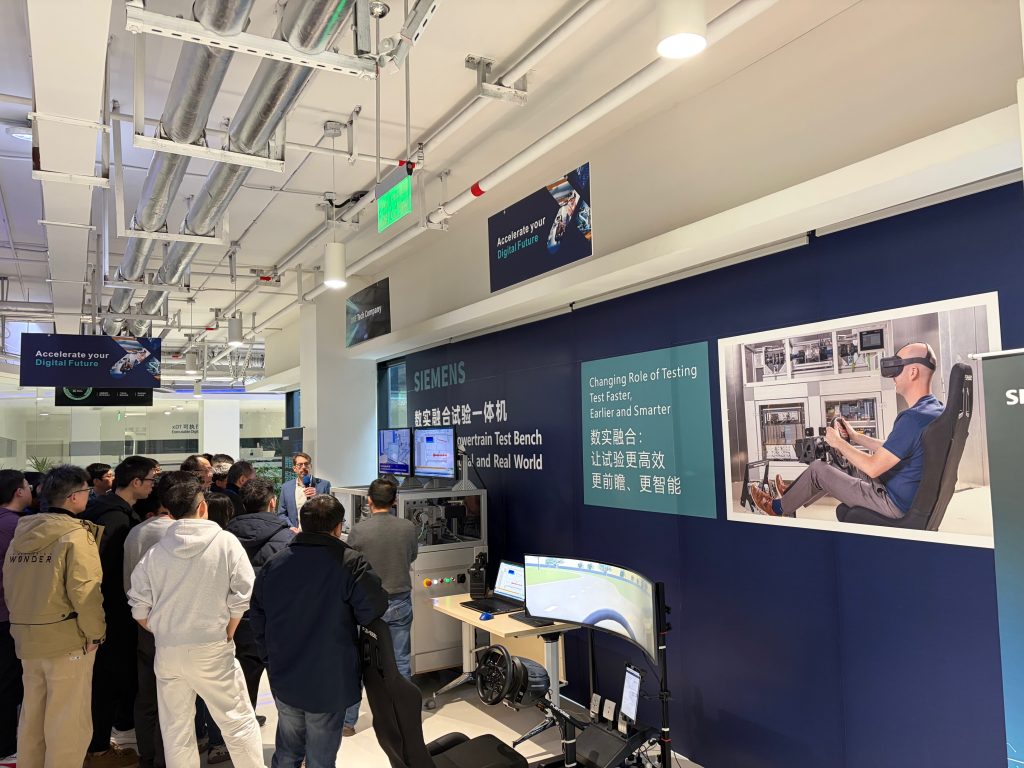
A major highlight was the Simrod ePowertrain testbench demonstrator, showing how virtual and physical components interact seamlessly in real time through Simcenter Testlab RT. The event underscored how real time computation with microsecond precision enables realistic hybrid testing environments and earlier system evaluation.
The live demonstrations highlighted how real time co-simulation, unified data acquisition, and hardware-in-loop capabilities support earlier system evaluation, more efficient multi-attribute balancing and more realistic testing cycles.
Meaningful discussions and peer learning
Throughout the masterclass, participants exchanged perspectives on:
- EV powertrain simulation workflows
- Multi-attribute balancing and tradeoff evaluation
- Practical XiL integration methodology
- Best practices from engineering case studies
- Opportunities for automation and AI supported test optimization
These discussions highlighted a consistent theme: as development speed increases, engineering teams must modernize their validation processes — and XiL testing is a critical enabler.
Getting started with XiL testing
Ready to bring real time physical virtual testing into your development process?
Download the XiL Testing Solution Guide, explore the workflows in more detail, and discover how Simcenter Testlab RT can help your team accelerate development with confidence.
Read more about executable digital twins with Simcenter Testlab RT here: Executable Digital Twin: XiL testing with Simcenter Testlab RT – Simcenter
If you’d like support adopting XiL or want to organize a workshop for your team, feel free to reach out, we’re here to help you get started.