GTA VI meets CFD simulation: What I see, what engineers see
There are many things I expected to do when I started working in simulation marketing. Playing GTA VI on my PS5 in the name of research was not one of them.
But when your manager tells you to play GTA for work, you don’t ask too many questions.
You turn on the PS5.
And I have to admit, this might be one of the more entertaining assignments I’ve had.
I’m only on Chapter 2, so let’s get one thing out of the way: this is definitely not an expert review of GTA VI. I’m still discovering the game, and judging by the condition of most cars after I drive them, I still have a lot to learn.
Avoiding other cars is hard enough. Lamp posts seem to appear out of nowhere. And let’s not talk about pedestrians.
But when I’m not creating additional work for the fictional mechanics of Vice City, I spend a lot of time simply looking around.
The level of detail is incredible.
But what fascinates me most about exploring Vice City is that it feels strangely similar to another world I’ve been discovering: engineering and simulation.
Both are incredibly detailed worlds that I first entered as an outsider. In GTA, I started by watching someone else play, trying to understand what was happening on the screen. Years later, I found myself doing something surprisingly similar at work: watching simulation engineers create these incredible CFD visuals and asking them to explain what exactly I was looking at.
Different worlds, but a strangely familiar way of discovering them.
Technically, GTA and I go way back
My GTA story actually started long before I ever picked up a controller. Funny enough, my story with marketing started in much the same way: long before I knew what CFD actually was.
When I was younger, I would spend a few days at my cousins’ place in the countryside. My cousin would play GTA, and I would sit behind and watch.
My parents definitely did not want me playing GTA at that age. So, I discovered the game the only way I could: as a spectator.
And I loved it.
Watching my cousin play almost felt like watching a movie. Except this was a movie where the main character could suddenly abandon the story, jump into a ridiculously expensive car and drive off in a completely different direction.
I didn’t play. I watched. A lot.
It turns out that, many years later, not that much has changed.
Different screen, same spectator
Today, I work in simulation marketing at Siemens, surrounded by people who know much more about engineering than I do.
I’m not an engineer. So when one of my colleagues shows me a CFD visualization for the first time, my initial reaction is usually not particularly scientific.
It is more along the lines of: Wow. That looks cool.
There are striking colors, particles, lines and structures moving around objects, and at first I’m simply looking at a beautiful visual.
Then the engineers start explaining what I’m actually seeing.
Suddenly those colors have meaning. I’m looking at fluids moving around an object, gases through an engine, or air interacting with helicopter blades.
And slowly, something that initially just looked beautiful starts telling a completely different story.
While thinking about this blog, I realized something.
This situation feels strangely familiar.
As a child, I sat behind my cousins and watched them navigate a virtual world I didn’t fully understand.
Today, I sit alongside simulation engineers and watch them navigate simulations I certainly couldn’t run myself.
Different screen. Different kind of expert.
I may have changed seats, but apparently I’m still the spectator.
There is one important difference this time.
I finally have the controller.
The GTA controller, that is. I’m definitely leaving the CFD controls to the engineers.
Giving me the controller may have been a mistake
So far, my GTA VI experience has been… eventful.
I’ve driven through the city at speeds that are probably incompatible with my actual driving skills. I’ve discovered that keeping a nice car looking nice for more than a few minutes is surprisingly difficult.
And then there are the missions. But some of my favorite moments so far weren’t missions at all.
Sometimes, simply exploring Vice City and being in the right place at the right time is enough to stumble into something completely unexpected.
At one point, I stumbled upon a rather unusual scene involving a woman suspended beneath what appeared to be a flying saucer.
No aliens yet, unfortunately.
But I’m only in Chapter 2. There’s still time.
On another occasion, I helped someone dressed as a cat escape from the police.
We’re friends now.
I feel that sentences probably need more context, but somehow, within GTA, it makes perfect sense.
Those unexpected moments are part of what makes exploring the world so entertaining. I can start with a mission and end up simply driving around, looking at the city, and seeing what happens.
And after spending so much time around simulation engineers, apparently, I can no longer look at all those vehicles quite the same way either.
What I see. What they see
When I’m playing GTA VI, I see a fast car. My CFD colleagues see the air flowing around it.
I see a helicopter flying over the city. They start thinking about rotor blades and the surrounding air.
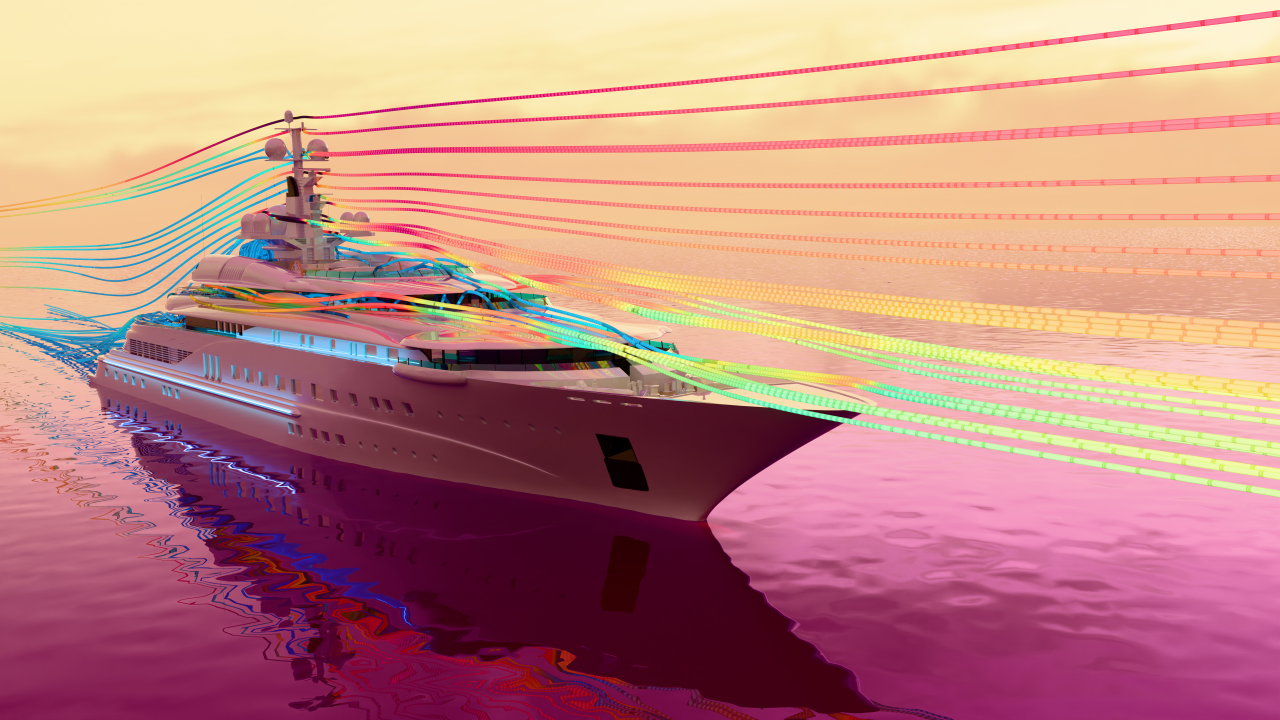
I see a yacht and think about exploring the coast. They see another fluid dynamics problem.
And apparently, it doesn’t stop there. Put an aircraft in front of a simulation engineer and, once again, there’s an entire invisible world of airflow waiting to be revealed.

Apparently, we experience these machines very differently.
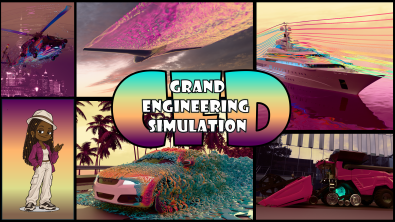
And that got me thinking: what if we took some of the machines that make the world of GTA so much fun and looked at them through the eyes of simulation engineers?
Now, you may call me a nerd by this point. But before you do, take a look at what my colleagues created.
You might understand why I got curious.
Grand CFD Simulations: The car
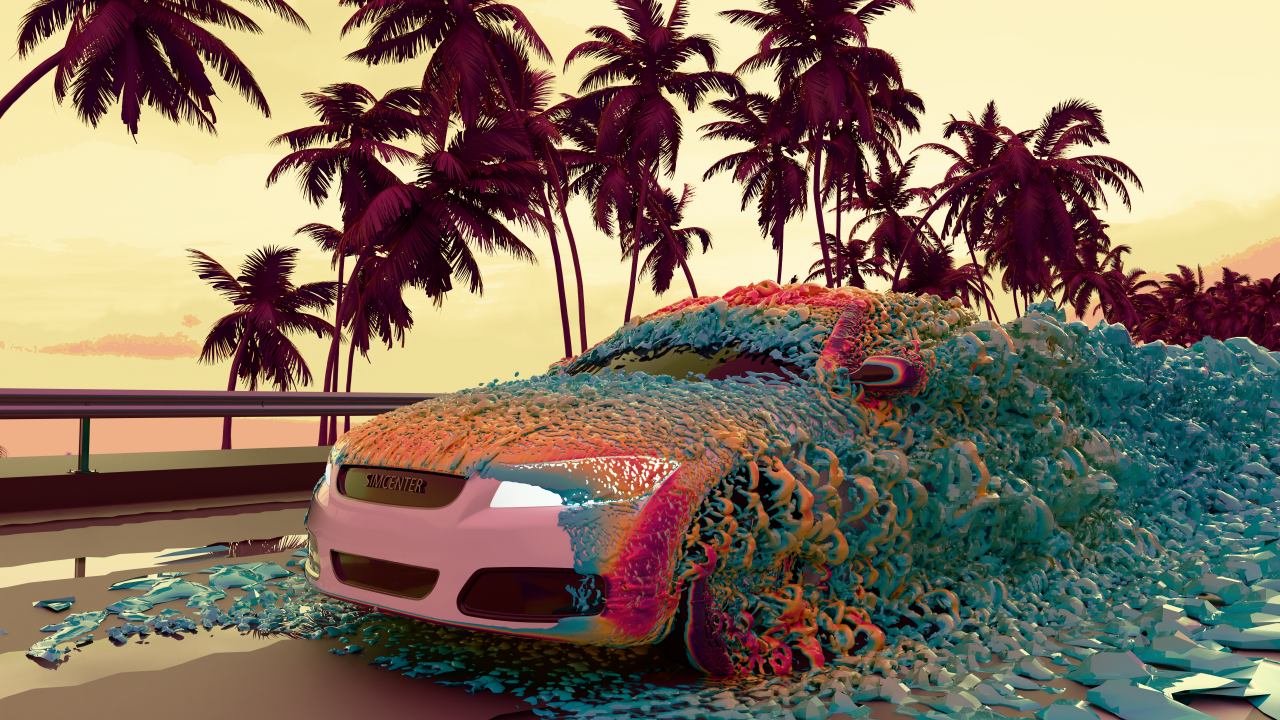
First, the car.
Considering my current driving skills, analyzing the airflow around a car might be significantly easier than asking me to bring one back without a scratch.
The CFD visualization gives us a completely different perspective from what we see behind the controller. Instead of focusing only on speed, design, and the road ahead, simulation lets engineers visualize how the surrounding air interacts with the vehicle.
Fun fact: unlike my GTA vehicles, no cars were harmed in this simulation. And even if they were, apparently, we have simulation tools for that too. I just need to find the right colleague.
Grand CFD Simulations: The helicopter
Then there’s the helicopter.
In the game, my priorities are fairly straightforward: keep it in the air, enjoy the view and try not to discover another creative way to crash.
For a simulation engineer, of course, there is much more happening.
The movement of the rotor blades interacts with the surrounding air and creates a complex flow field around the helicopter. The CFD visualization makes something normally invisible suddenly visible.
This is exactly the kind of image that would have made younger me stare at the screen.
To be fair, current me does exactly the same thing.

Grand CFD Simulations: The yacht
And finally, the yacht.
Cars gave us air. Helicopters made the air considerably more complicated. With the yacht, water enters the picture too.
This is another example of why I enjoy seeing the work my engineering colleagues create. I initially see a colorful image of a yacht. They see the physics happening around it.
It’s a different way of looking at something I would normally just drive, fly or sail past in a game.
And perhaps that is what connects these two worlds for me.
Still watching. Just a little differently
GTA VI creates a virtual world designed to be explored. Simulation engineers also spend their days exploring virtual representations, but for a very different reason: to understand what is happening physically, including things we cannot normally see.
In a way, I’ve come full circle. I discovered GTA years ago from behind my cousins, watching them control the action. Today, I work alongside engineers and get a front-row seat to another virtual world, one made of fluids, flows and simulations.
Apparently, being a spectator suits me.
But this time, thanks to GTA VI and one slightly unusual assignment from my manager, I finally got the controller.
And GTA made sure I put it to good use.
At one point, I found myself behind the controls of an excavator, demolishing someone’s house.
As one does.
So if anyone in Vice City needs some demolition work…
Apparently, I now have experience.
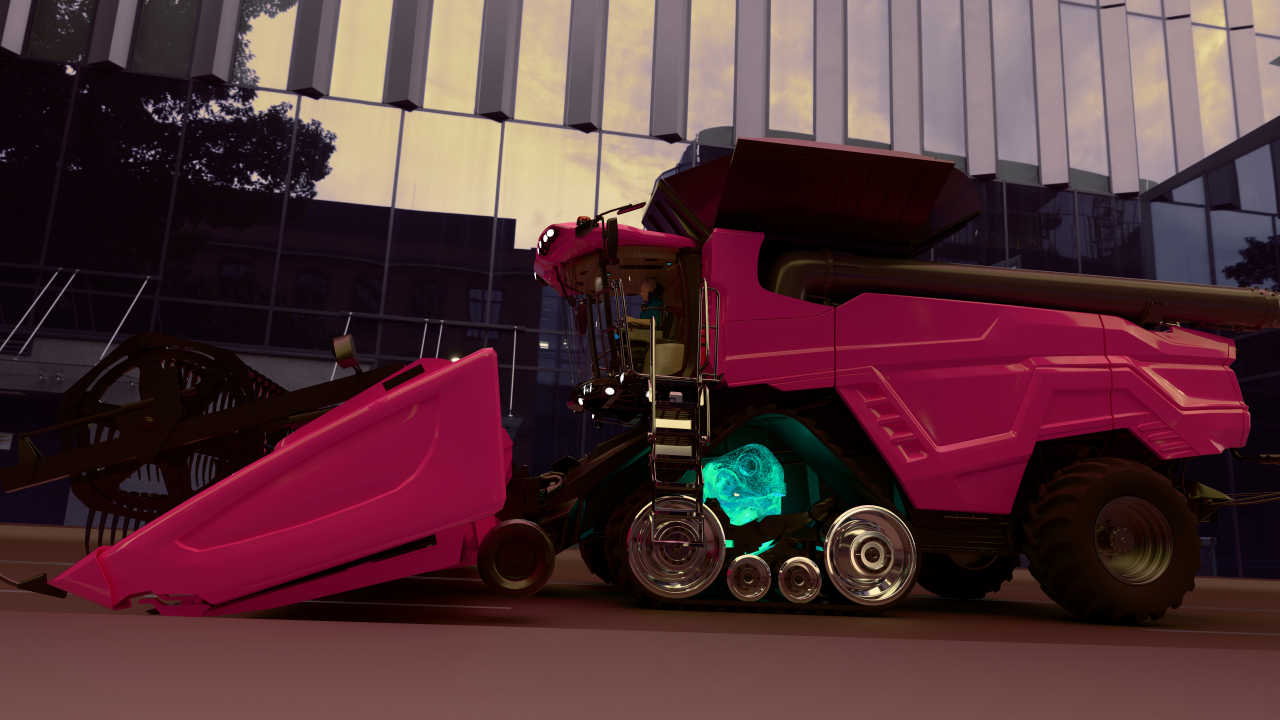
Next time, I’ll take the harvester.