What happens when a Systems Engineer tries to have a normal day?
Blog updated November 2026
This blog explores how systems engineers instinctively apply simulation and optimization thinking to everyday situations and how tools like Simcenter Amesim make that instinct a professional superpower.
Spoiler: everything becomes a simulation.
In this lighthearted look at life through an engineering lens, we follow one engineer who simply can’t turn off his optimization instinct … from breakfast physics to the amusement park. Interestingly, he even enlisted the help of AI to assist in writing this very blog, proving that even our storytelling can benefit from a little simulation and optimization.
Imagine following our systems engineer from breakfast to bedtime. He seems to be incapable of simply enjoying his day. Every small event becomes an engineering problem.
07:00 – Breakfast – even a coffee machine is a multiphysics problem
The alarm rings. First requirement: coffee.
A coffee machine considers heating power, pressure, temperature profiles, control and transient operation. For example, at BSH Hausgeräte GmbH, system simulation is used to investigate exactly such parameters and optimize pump/heater behavior, to make the perfect coffee!

Then comes the buttered toast. Our systems engineer accidentally knocks it off the table. Instead of picking it up, he reflects:
Interesting. Let’s simulate this.
He creates a toast model and varies table height and initial force to investigate whether it lands butter-side up or butter-side down.
He concludes that if the toast happens to fall buttered side down, maybe it’s not superstition at play, but a simple matter of physics!
08:30 – The commute
Our engineer gets into his electric vehicle and plans his trip to arrive on time at work. He cannot resist the idea of simulating his energy consumption.
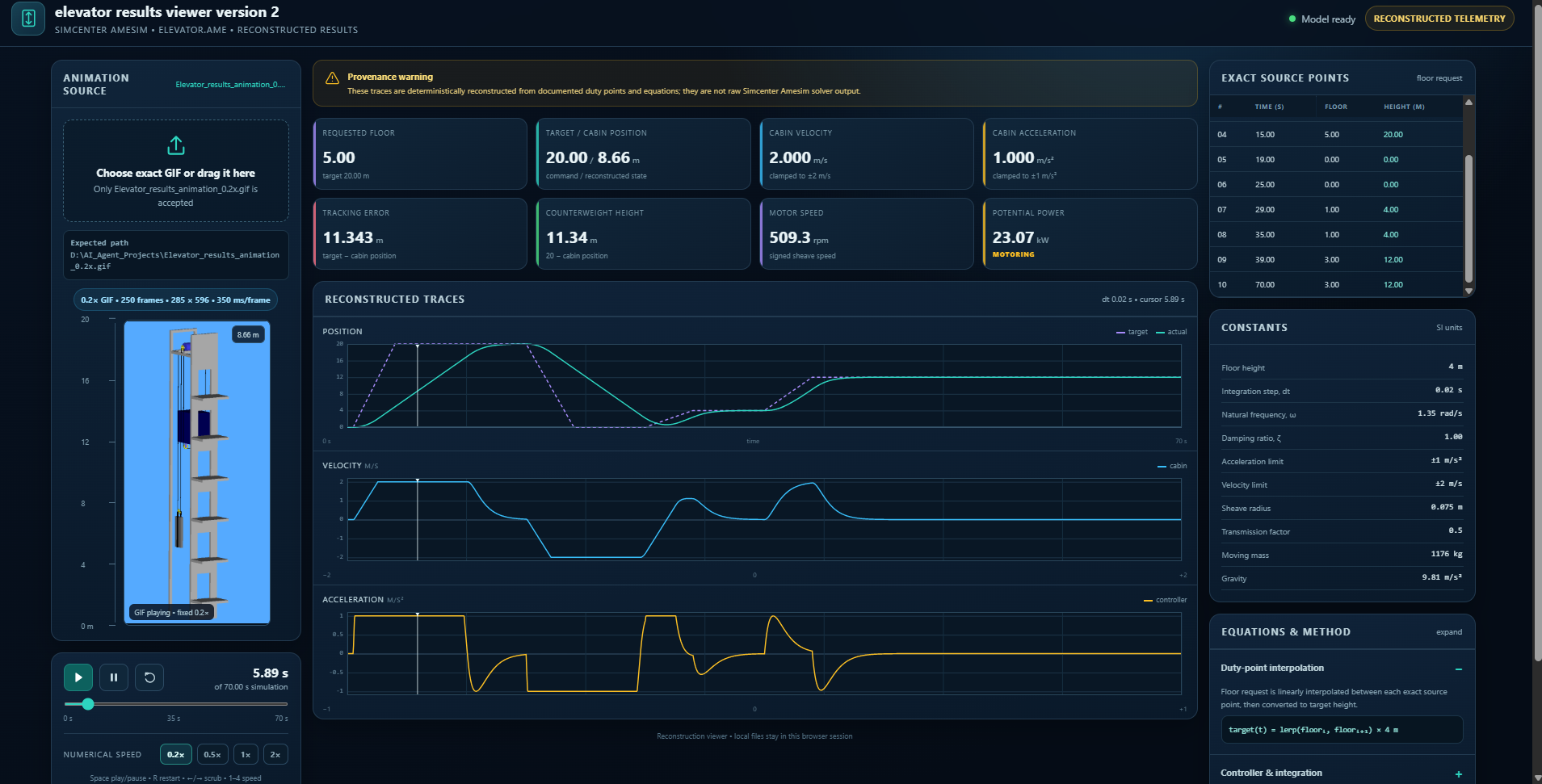
9:15 – Running late? Use the elevator
Our systems engineer enters the elevator carrying his cup of coffee. The doors close. The elevator starts. The coffee sloshes.
“What a jerk!”
This isn’t an insult. It’s a requirement. Jerk (the rate at which acceleration changes), and controlling it is an important part of achieving a smooth ride. The passengers want less jerk. Management wants shorter travel time. The coffee wants both. Welcome to systems engineering.
9:30 – Tribute to Bill Gates
Bill Gates once said “I choose a lazy person to do a hard job. Because a lazy person will find an easy way to do it.”
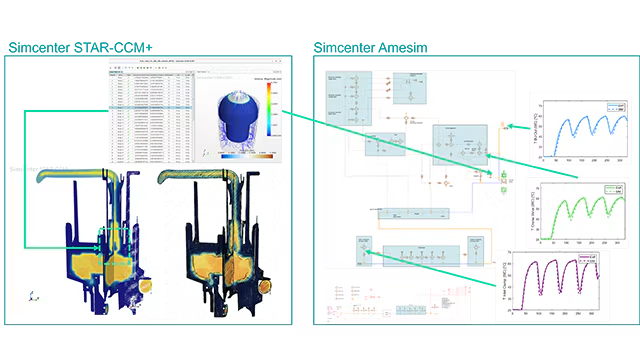
So our system engineer followed Bill’s advice and used our upcoming Simcenter Agent Workspace to do the heavy lifting of its job. In this case, automatically creating an electric vehicle thermal management Simcenter Amesim model, from a simple schematic with a single prompt.
Good job done in 30 minutes, while processing emails and sipping coffee! Time for lunch break now.
12:30 – Lunch break: bowling
Our engineer goes bowling for a team building activity, and finally tries to relax.
Naturally, that fails. A normal person rolls the ball but our systems engineer starts by defining the requirements, then builds and simulates the system model, and eventually asks his CFD engineer friends to perform an aerodynamic analysis on a bowling pin.
- Simcenter Amesim – ball trajectory and pin collisions
- Simcenter HEEDS – searches launch conditions
- Simcenter STAR-CCM+ – pin aerodynamics
- Simcenter 3D/Nastran – structural response
14:00 – The company sports day
Finally, a chance to stop thinking about simulation and enjoy some sport … that lasts about five minutes. Playing tennis, our systems engineer wonders about the ideal combination of throw, speed, angle and spin for the perfect serve.
Then comes the hammer throw: surely the release conditions can be optimized?
And by the time someone picks up a longbow, company sports day has officially become the Systems Engineering Olympics.
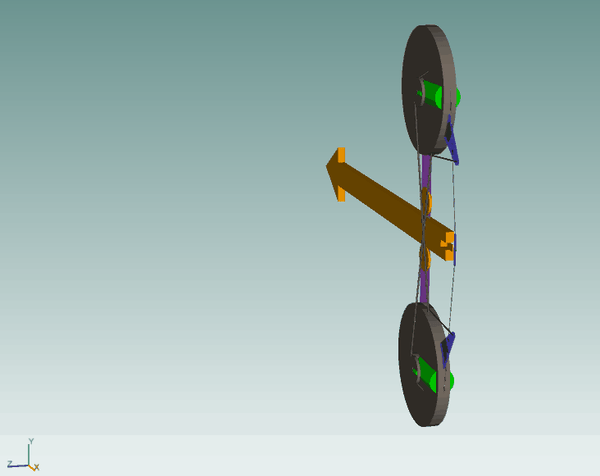
Different sports, same instinct: define the objective, identify the parameters, simulate, optimize, repeat. The goal is no longer to win. It is to prove that everything can be optimized.
17:30 – Back home, Galton board with the kids
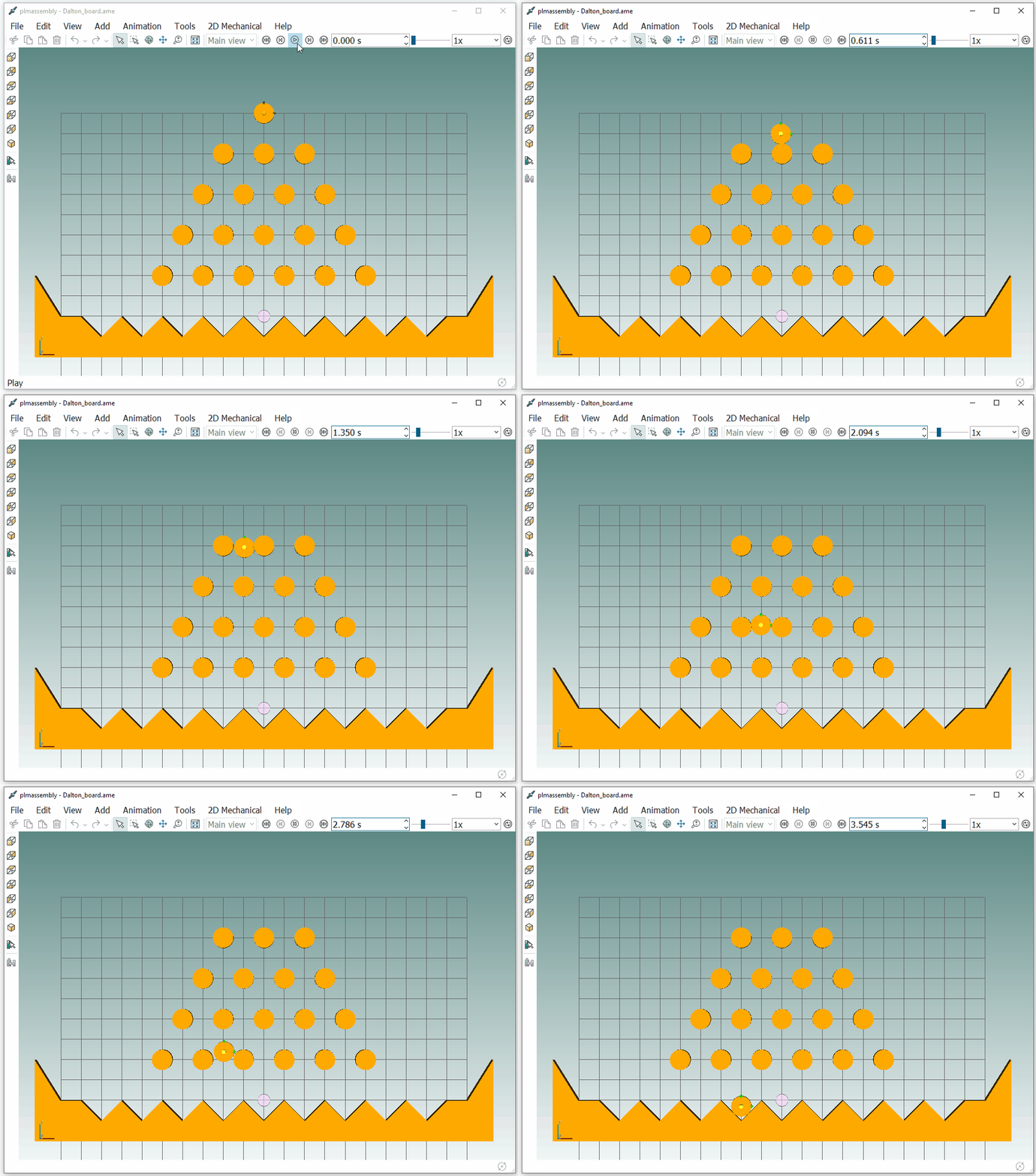
After company sports day, our systems engineer heads home to relax with the kids and play a few games. The Galton board looks innocent enough, until the first balls start bouncing. Their individual paths seem completely unpredictable, yet together they create a predictable pattern.
To capture this pattern, he builds a simulation model of the board and introduces a little randomness, through a Monte Carlo study. A Monte Carlo study introduces controlled randomness into a simulation to reveal statistical patterns across many scenarios. Random signals were used to change the rotation torque and the forces in the longitudinal and vertical directions. Instead of looking at one ideal trajectory, he could then see how all these small variations affect the final result and the overall statistical distribution.
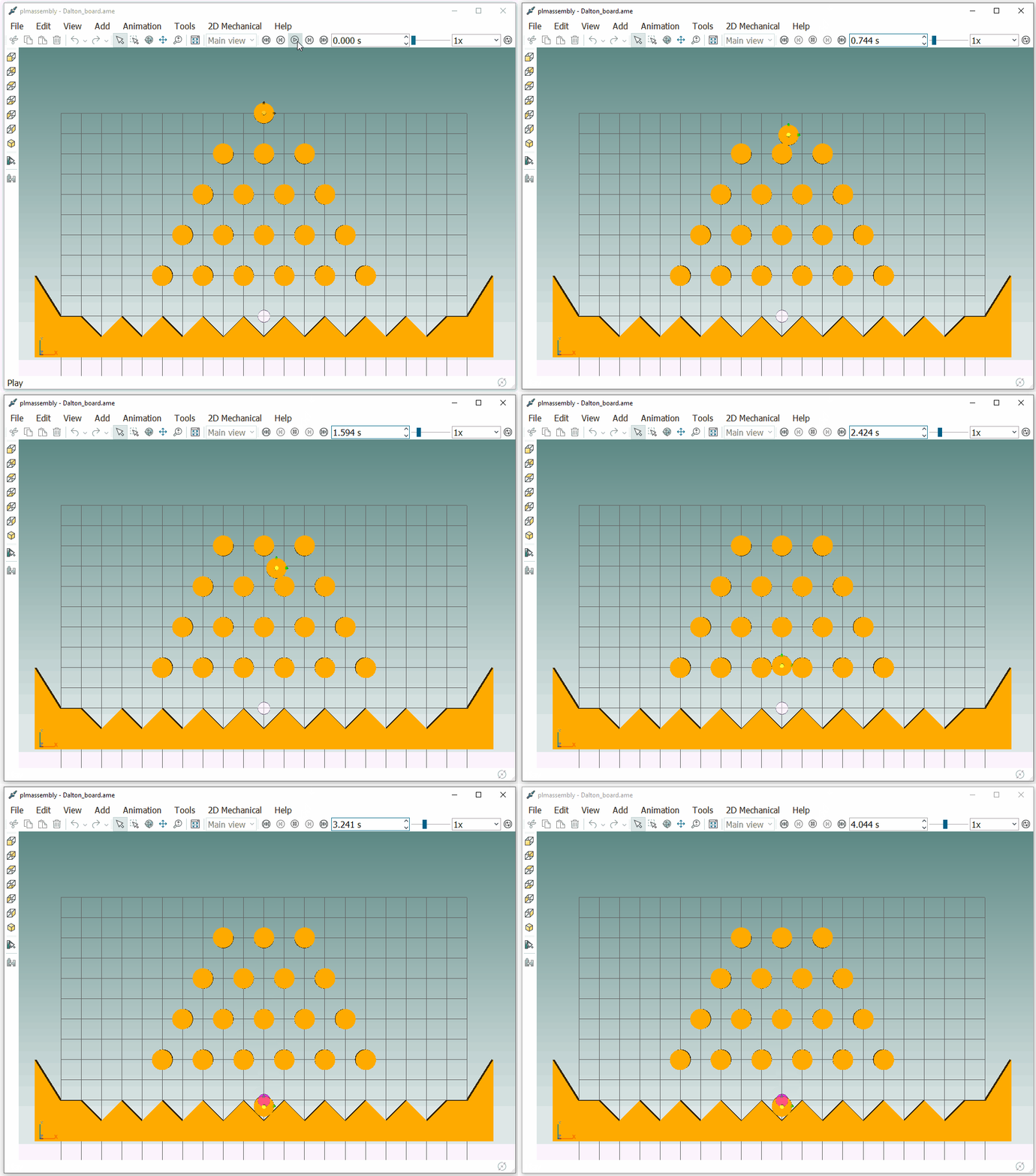
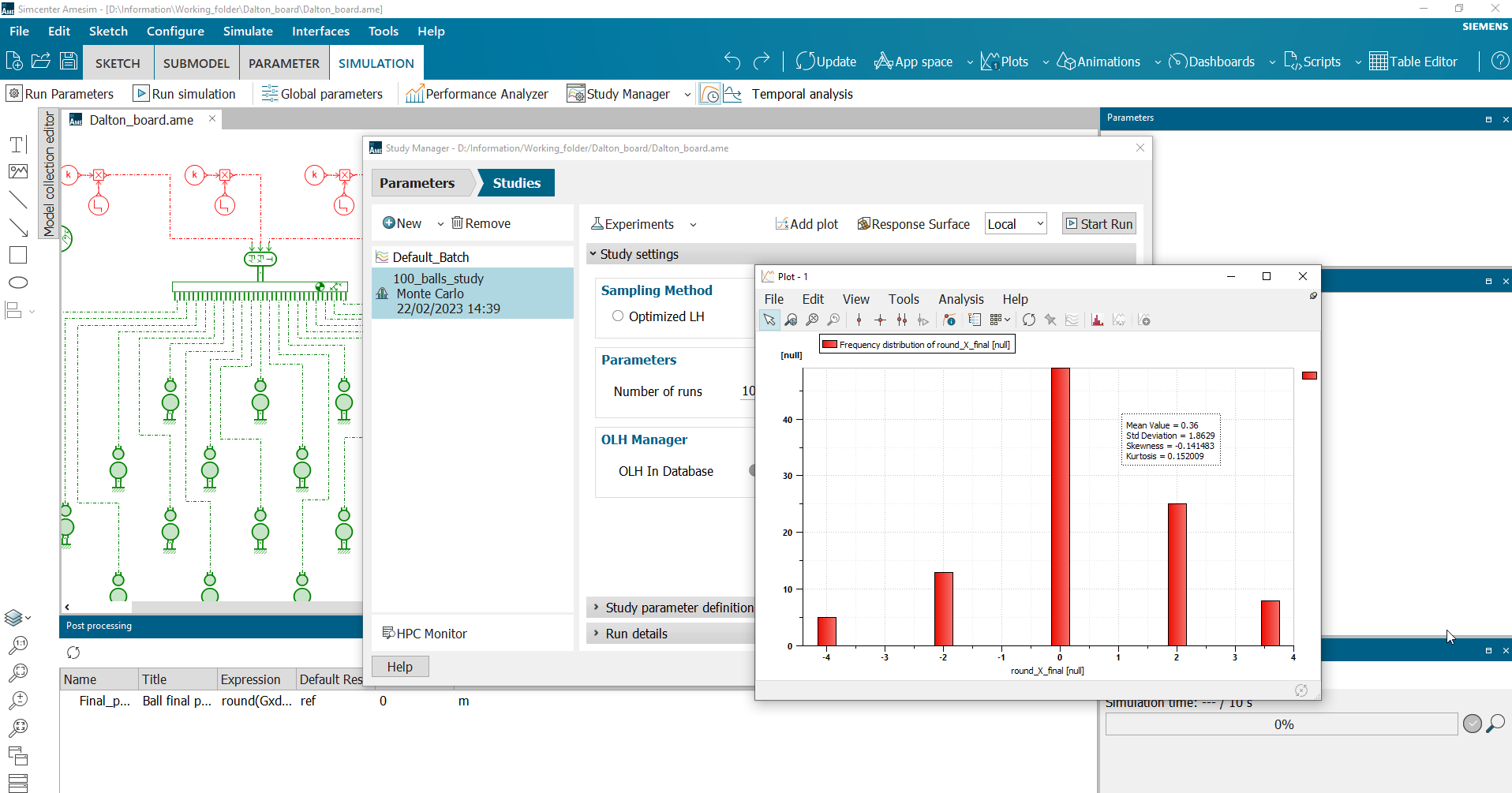
Engineer happy! He could find a mathematical explanation to game’s behavior!
Game time is over, but the day isn’t. The family heads to the amusement park for some well-deserved fun. No experiments, no optimization, no simulation. At least, that was the plan…
19:30 – Relaxing at the amusement park
While the kids enjoy the view from the Ferris wheel, our systems engineer is already thinking about motors, gears, passenger loads, rotational speed and control strategies.
So, naturally, the Ferris wheel ends up in Simcenter Amesim too. How much power does it need? How to control the rotating speed? Can we optimize the passenger loading strategy?
As the Ferris wheel slows to a stop, so does our systems engineer’s busy day. The whole family heads home and get some sleep.
22:00 – Time to dream up the next system simulation
After a day spent simulating coffee, toast, sports and everything in between, our systems engineer finally goes to bed. And he can now dream about what comes next? New physics, smarter models, AI, Metaverse, systems-of-systems… perhaps tomorrow’s most advanced simulations haven’t even been imagined yet? Or perhaps it’s coming soon?

Sweet dreams, systems engineers. And happy Systems Engineer Day.