Revolutionizing Energy and Utilities workflows with Immersive Engineering
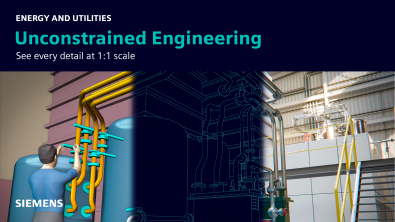
The world is changing, and every industry across the world is feeling the change. Consumers want choice, and the best product on the market. It’s completely understandable; the problem is the level of complexity this adds for companies designing and manufacturing new products. How can design teams ensure they have the internal capabilities required to meet consumer demands, and ultimately stay ahead of the competition?
Introducing Immersive Engineering in Designcenter™ NX™ software. It’s a revolutionary tool that is going beyond the traditional 2D practices by creating a fully-integrated, user-centric virtual space. It’s a way to combine the real and digital worlds and visualize complex digital twins of new products.
In the context of the Energy and Utilities industry, Immersive Engineering is a game changer. Manufacturing new plant designs is a complex process that takes time and is incredibly costly. Imagine the value of being able to visualize and walk around plant designs before committing to production? It’s unconstrained visualization, not limited by screen size and enabling design teams to review plant design layouts with colleagues.
Getting a true sense of scale
New energy plants are incredibly important to our infrastructure, whilst covering a large area of land. They are vast spaces, containing production lines made up of complex, specific machines. Using traditional design methods to review a plant design therefore would take away from the sheer scale of a large scale plant; this is where Immersive Engineering takes existing production methods to the next level.
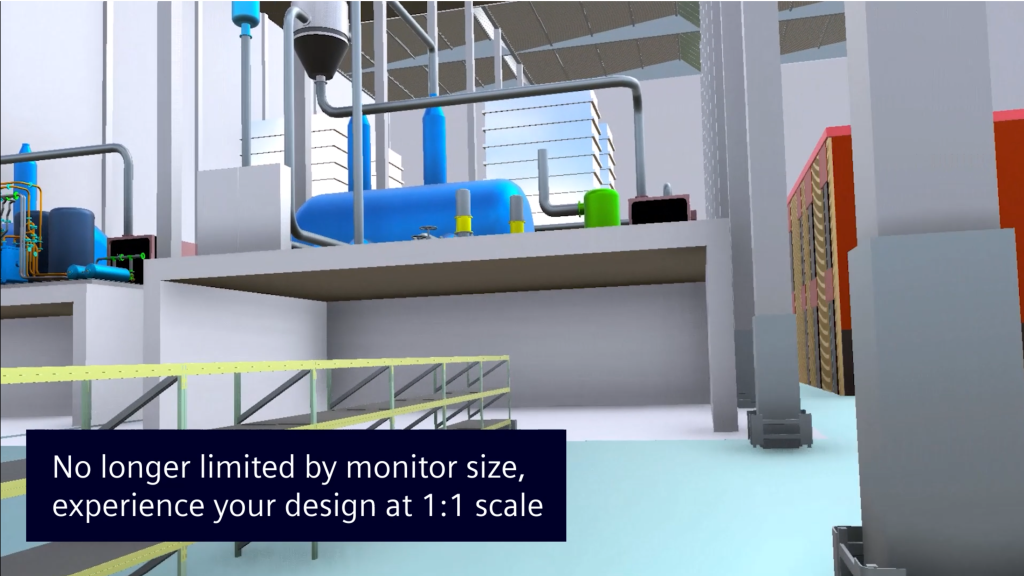
Parts are fully modeled in the immersive environment, giving everyone an unconstrained level of visualization previously missing. It’s a way to see everything at 1:1 scale, left shifting manufacturing workflows and enabling global design teams to stay ahead of the competition.
Navigating new products has never been easier
Being able to see new plant concepts at 1:1 scale is key. The ability to easily navigate them is equally as important. Creating an immersive environment with high-fidelity is a game changer, but clunky navigation options removes immersion for the user. It’s easy for users to lose patience if they can’t navigate the immersive environment effectively.
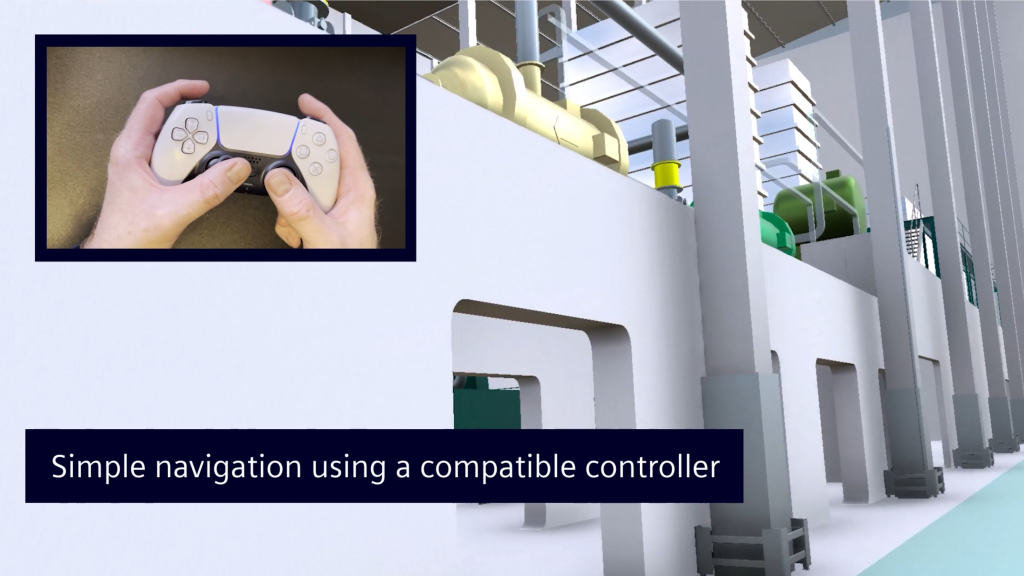
Immersive Engineering comes with intuitive, out-of-the-box controllers that makes navigating a model second nature. What’s more, for anyone viewing an immersive session on a monitor, simple navigation can be achieved by using any compatible controller; (think the DualSense PS5 controller). Teleporting around your model gives you new perspectives that may have been overlooked; a vital element to consider in relation to exploring new plant designs.
The importance of collaboration
There’s another key differentiator when it comes to Immersive Engineering; the ability to conduct a collaborative session anywhere, anyplace at anytime. Traditional collaborative design reviews can be somewhat limited by the need for time-consuming preparation, outdated CAD data and remote collaboration issues.
It’s crucial that energy and utilities companies are able to virtually connect all stakeholders when creating plant design concepts. It’s an intense, time consuming process, so ensuring that everyone from the shopfloor to the boardroom can see new designs from anywhere in the world is a big competitive advantage. Implementing collaborative functionality throughout the production process will enable companies to make smarter, faster decisions and stay ahead of the competition.
Capturing key design decisions
The experience of conducting an immersive collaborative session is a game-changer, but how can participants capture their design decisions? There are a range of built-in analysis tools that can be used to validate requirements, enabling design teams to be able to fully assess a new plant concept.
Let’s say the position of a part is causing clearance issues for a major walkway. Being able to identify the part within the immersive environment is essential; users can intuitively pick up, inspect and position components with their own hands. What’s more, important information can be captured and stored using notes, and can be reviewed with colleagues at a later date.
Working in Mixed Reality mode
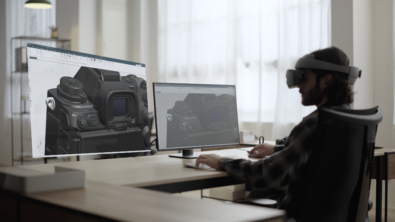
Yes, you can work in Virtual Reality when using immersive engineering, but there’s also mixed reality mode. Whilst wearing the Sony HMD, designers can place a Virtual Monitor in their real-world, see a digital twin of new products and make instant changes to the design.
In the context of plant concept development, mixed reality mode is key. Large, complex datasets can be placed in a familiar environment. Any changes made using the Virtual Monitor will instantly be reflected on the digital twin of the plant.
When returning to the immersive environment, any changes made can be viewed at 1:1 scale. It’s a revolutionary tool to check whether the impact of design changes will conform to companies standards and regulations.
Continue your journey with Designcenter
Take me to the full Designcenter NX blog 📚


What to read next:
Comments
Leave a Reply
You must be logged in to post a comment.
The combination of VR, mixed reality, and digital twins in NXsurvival race Immersive Engineering feels like a major step forward for industrial design. Being able to walk through plant layouts and collaborate remotely in real time is a game changer for engineering teams.