How to use Immersive Engineering to create the best in class consumer products
Staying ahead of the competition has never been more important for all consumer products companies around the globe. Customers are becoming more cynical and more demanding, leading to a greater level of product complexity. The result? Greater pressure on product design teams to perfect product development.
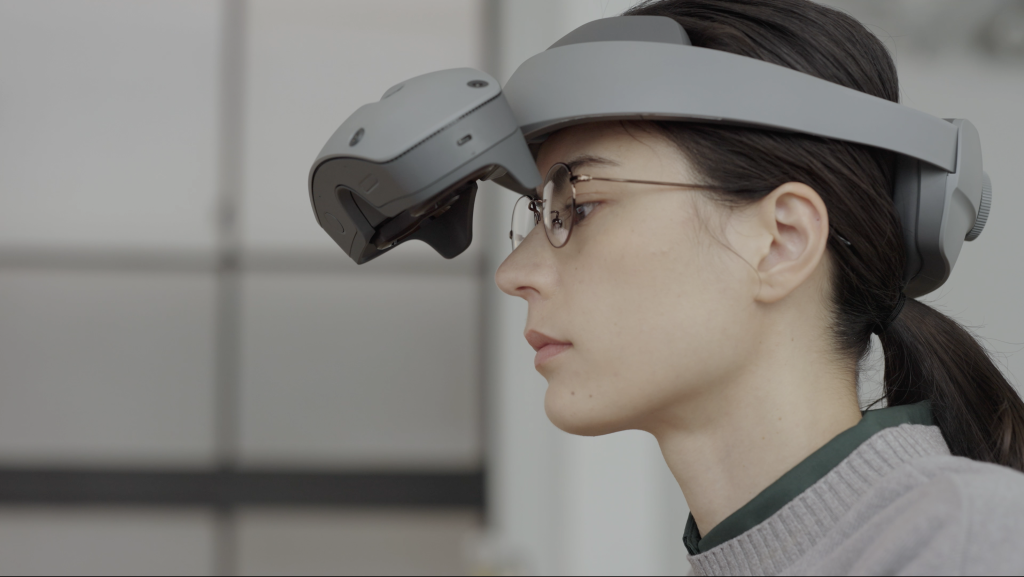
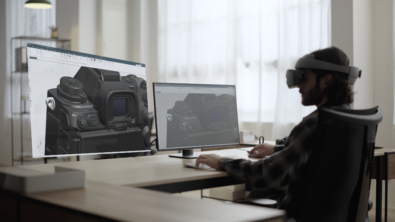
Immersive Engineering in Designcenter™ NX™ software is changing the game. Immersive Engineering goes beyond traditional 2D practices by creating a fully-integrated, user-centric virtual space. This new way of product creation is combining the real and digital worlds. It’s a way to visualize, simulate and interact with designs in a virtual environment by leveraging mixed reality technologies.
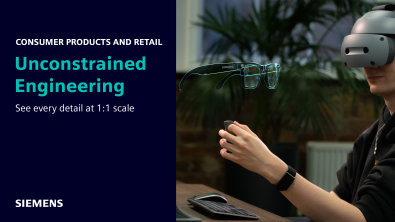
The ability to conduct product aesthetic design validation in an immersive environment is revolutionizing the way the most loved global products are created. In this demo workflow, we’ll be taking a look at how Immersive Engineering is used to design a new pair of smart glasses, focusing on kinematic animations and a complete design validation.
The power of intuitive navigation at your fingertips
Traditional product design methods will continue to play a role in the future, but they do have their drawbacks. Seeing new designs on a 2D monitor limits the possibility of getting a true sense of scale; an important factor for larger products. For companies developing consumer products for the future, Being immersed in a shop-floor and seeing how products are arranged on a display is the key differentiator.
Take a pair of smart glasses as an example; it’s incredibly valuable to visualize the products, see them at 1:1 scale and understand how they interact with the lighting scheme. This level of unconstrained engineering lays the foundations for all immersive sessions; being able to move freely without limitation is key.
Clunky experiences that take a long time to navigate removes immersion for the user. Users can become irritated, and return to their traditional product creation methods; the immersive session is essentially over before key value can be extracted from the experience.
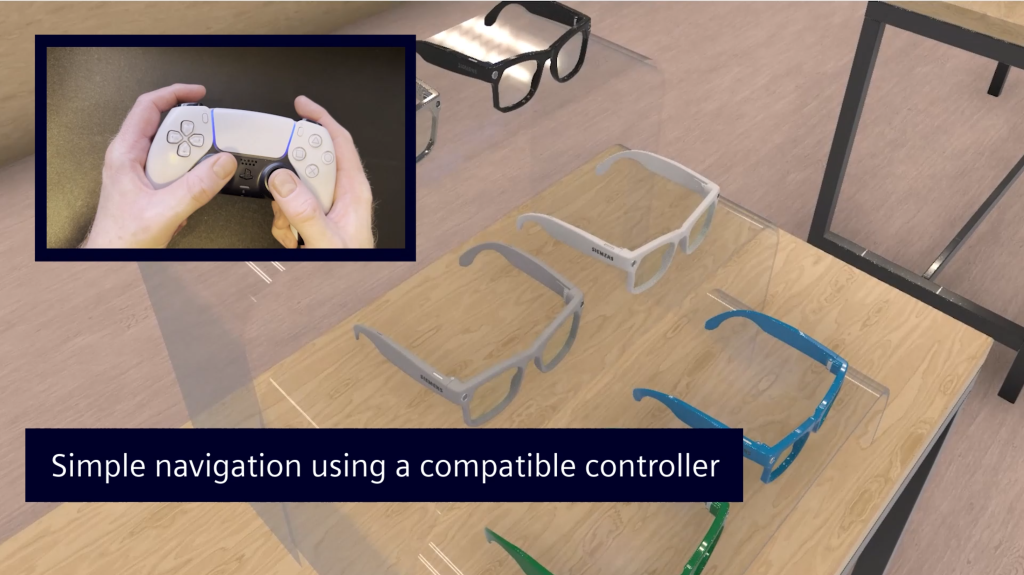
Immersive Engineering comes with intuitive, out-of-the-box controllers that makes navigating a model second nature. What’s more, for anyone viewing an immersive session on a monitor, simple navigation can be achieved by using any compatible; (think the DualSense PS5 controller). Teleporting around your model enables perspectives that previously may have been missed, and capture any ergonomic issues long before products go into production.
Why use Virtual Monitors?
Using Virtual Monitors underpin a lot of the game changing capabilities available in Immersive Engineering. The use of Virtual Monitors make it possible to interact with models and uncover issues that can be overlooked when using traditional CAD methods.
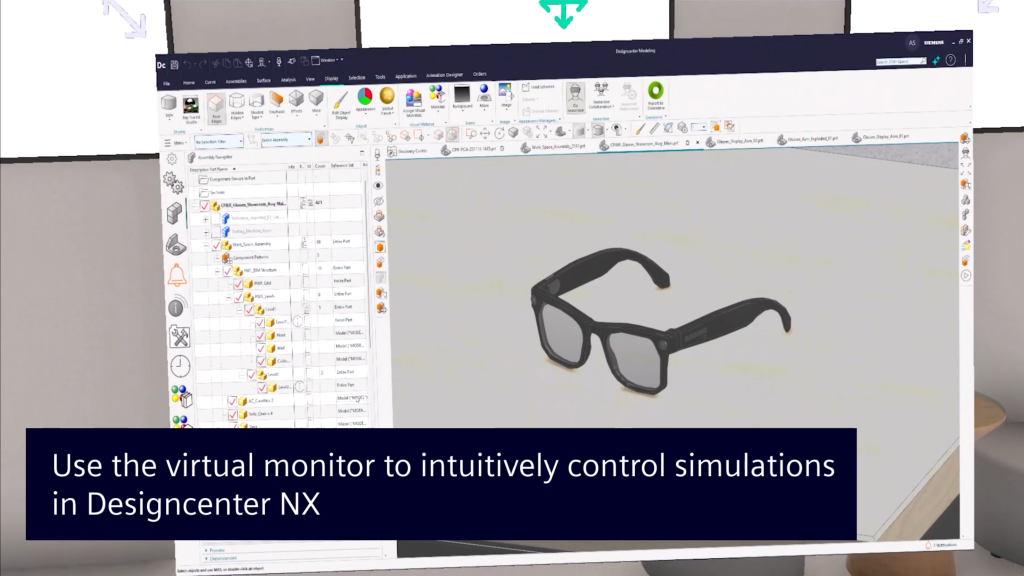
Flexibility is key; Virtual Monitors can be re-positioned and resized to anyone’s liking. For anyone working on consumer products that involve motion, a virtual monitor can be used to fully visualize an integrated kinematic simulation. Evaluating the motion when opening the glasses’ arms in the immersive environment enables designers to make the required changes, shifting left the entire production process.
Do these smart glasses suit me?
Anyone can take advantage of Designcenter NX to test the ergonomic fit for a new pair of smart glasses. Using the virtual monitor during an immersive session, designers can set the desired dimensions, place the prototype of the smart glasses on the human, and test the fit. It’s another tool for designers to ensure they gain unrivaled value when using Immersive Engineering.
What about Mixed Reality mode?
Yes, you can work in virtual reality when using immersive engineering, but there’s also mixed reality mode. Whilst wearing the Sony HMD, designers can place a Virtual Monitor in their real-world, see a digital twin of new products and make instant changes to the design. It’s an important tool to give everyone flexibility whilst working in immersive engineering.
The importance of collaboration
The experience of conducting an immersive collaborative session is a game-changer, but how can participants capture their design decisions? There are a range of built-in analysis tools that can be used to validate requirements, enabling design teams to be able to fully assess new consumer products.
Working together in a collaborative environment, participants can review a range of different colorways for a new product, making decisions on whether to change them or not. What’s more, the smart glasses can be reviewed in different environments, with the goal of validating how chosen materials react in different lighting.
Continue your journey with Designcenter NX
Take me to the full Designcenter NX blog 📚