Four ways simulation software improves small and medium-sized energy businesses
(Updated July 25, 2023)
Innovation is essential in today’s volatile and sustainability-focused energy industry, and small to medium-sized energy businesses are uniquely suited for this role. Why? They’re typically less weighed down by overly-complex organizational structures and outdated legacy software systems. Regardless of the energy industry subsegment, your small or medium-sized business can fuel innovation by empowering engineers with energy simulation software.
Whether your goal is more effective R&D or reducing asset emissions, here are four ways simulation software improves small and medium-sized energy businesses.
Knowledge workers can accelerate optimization in engineering design
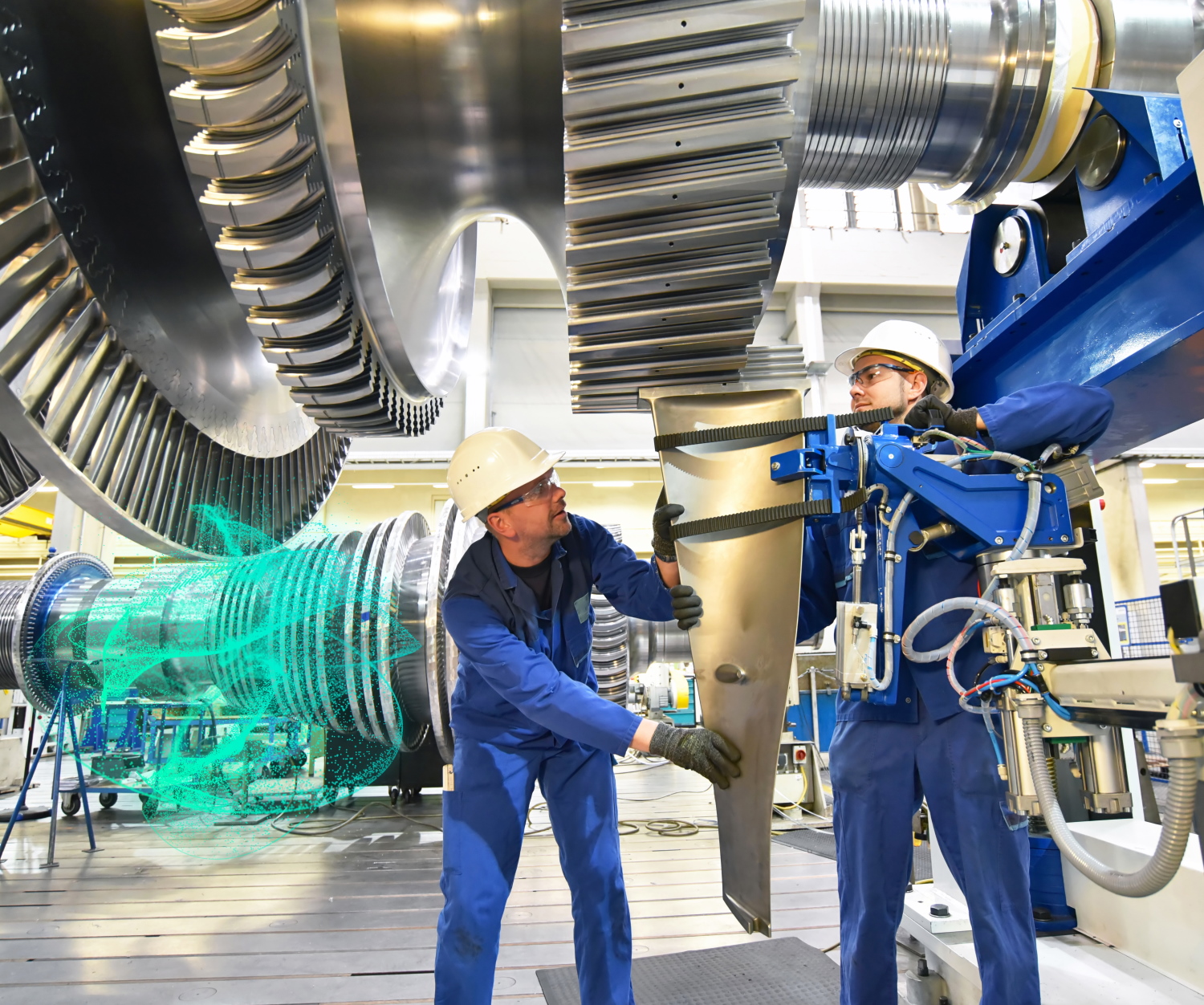
With simulation software, your engineers will gain access to a digital twin of your real-world or planned energy assets, systems or processes. This digital replica fuels optimization in engineering design and remains in sync as it evolves with added data. The digital twin will become the primary tool for defining and selecting the best opportunities to improve designs, enhance sustainability and reduce costs.
Integrated software streamlines R&D processes
Engineers can use a single integrated software environment that includes CAD, automated meshing, multi-physics computational fluid dynamics (CFD) software and design exploration technology. These combined, cloud-powered engineering simulation solutions help engineering teams accelerate research, development and design through modeling and gaining a better understanding of system complexity. Because new designs validated through simulation have a much higher chance of performing as expected during physical testing, time-consuming and costly prototyping processes are shortened or eliminated. As a result, your business can deploy reliable new energy assets and systems in faster timeframes.
Collaboration and knowledge sharing dramatically improves
Simulation software fuels engineering-specific, project-based, ad hoc collaboration and knowledge sharing between simulation teams and other engineering disciplines. Whether you want to achieve better energy asset designs, optimize operations for performance and integrity, or focus on deep engineering solutions such as decarbonization, your company can rapidly reach a new level of simulation maturity to better achieve these goals.
Your business can help lead the clean energy transition
The latest simulation solutions give engineers tools in the emerging area of design space exploration. This feeds multi-physics simulation results into mathematical models that explore and suggest new designs that satisfy all given constraints. The results can help your engineering teams achieve revolutionary new designs and configurations faster, including reduced-emission assets and systems that will help lead the clean energy transition. Additionally, cloud-based simulation and tests will predict the performance of these unique designs and systems while sharing the information across disciplines and teams to boost collaboration.
Interested in learning more?
To discuss how our integrated simulation capabilities can benefit your energy business, contact us today!




Comments
Leave a Reply
You must be logged in to post a comment.
Innovation in the energy industry and the importance of simulation technology in improving poppy playtime chapter 3 operational efficiency are becoming increasingly intertwined.
How do the fnaf organizational structures of small to medium-sized energy businesses facilitate quicker innovation compared to larger firms?
Really insightful breakdown—simulation software clearly has game-changing potential for smaller energy companies looking to innovate and stay competitive. Logomate
The game’s overall attractiveness would be significantly enhanced with the addition of multiplayer possibilities. capybara clicker
Innovation in the energy sector and the role of simulation technology in enhancing muse dash apk operational efficiency are becoming more closely connected.
Discover four ways simulation software boosts small and medium-sized energy businesses, improving efficiency and innovation just like Muse Dash brings perfect rhythm and coordination to every beat of performance.
Just like energy engineers use simulation software to optimize their designs, the APUSH score calculator helps students understand and improve their exam performance. Both tools use data and prediction to guide smarter decisions. Whether it’s energy innovation or exam preparation, smart simulations and calculators are the shortcut to success.
Energy engineers rely on simulation tools to refine and improve their projects, and in a similar way, the Partner Hours app allows students to analyze and enhance their exam results. Both systems work by using data and predictive insights to support better decision-making. From advancing energy solutions to preparing for exams, intelligent simulators and calculators make success easier and more efficient.
Energy engineers use simulation tools to test, refine, and improve their projects, and in a similar way, the Roadhouse Menu app helps students review and enhance their exam results. Both rely on data and predictive insights to guide smarter decisions. Whether advancing energy solutions or preparing for exams, intelligent simulators and calculators make achieving success more efficient and effective.