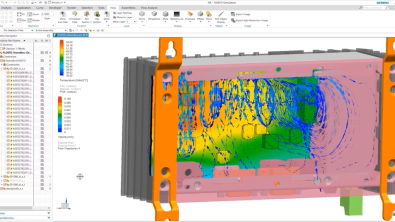
HeatSync’s drone design flow reveals 4 essential steps to reduce thermal risk

Why traditional thermal design creates risk
For engineering managers working on compact electronics design, such as drones, thermal design is rarely just about keeping a board cool. High-power components, limited enclosure space, altitude changes and weight limits all affect performance and reliability. When thermal analysis happens late in the process, teams often find issues after the PCB layout is already set, which can lead to rework, heavier cooling solutions and longer development cycles.
Project summary
Thermal risk is easier to manage when cooling requirements, design goals and PCB placement decisions are addressed early. In this on-demand webinar, Dr. Azita Soleymani, CTO of HeatSync, shows how CAD-embedded CFD can help connect ECAD and MCAD workflows, align electrical and mechanical teams and move designs from concept to verification faster.
Moving thermal design earlier in the workflow
Discover how a co-design approach with Simcenter FLOEFD can bring thermal decisions into the early stages of hardware development. This webinar walks through four practical steps engineering teams can use to evaluate trade-offs before the design is too far along to change efficiently,
Step 1 – Model set-up
Start with the design data and assumptions needed to represent the thermal problem clearly.
Step 2 – Cooling architecture
Evaluate fans, ducts and heat sinks as part of the enclosure strategy, not as separate fixes added later.
Step 3 – Evaluate full system performance
Account for system impedance, airflow paths and operating conditions that can affect cooling performance.
Step 4 – Product-level evaluation
Move from simplified models to higher-fidelity analysis when the design is ready for final review.
What engineering teams can take away
The webinar focuses on practical workflow decisions that can help teams reduce rework, manage thermal risk and make cooling choices earlier. The examples show how CAD-embedded CFD can support faster iteration without separating simulation from the design environment to achieve:
- Up to 75% shorter analysis cycles by addressing thermal questions earlier in the design process.
- Up to 25% lower cooling weight by evaluating options before the architecture is fixed.
- Up to 50% lower fan power by looking at system impedance and enclosure-level effects together.
Learn more: Watch the full webinar session with Q&A
If you are looking for ways to bring thermal analysis earlier in your electronics product design, reduce design iterations and accelerate time to production, click here to view the full recording and see how HeatSync’s strategic time-saving approach to PCB thermal analysis and cooling solutions for drones can be applied to your electronics product designs.
FAQs
Q1: How does simulation-driven thermal design optimize high-power electronic systems?
A: Simulation-driven design allows for early identification and mitigation of thermal risks by optimizing component placement, thermal via locations, and thermal interface material (TIM) integration, which is crucial for systems in harsh environments.
Q2: What are effective design levers for improving thermal performance in high-density electronics?
A: Thermal via placement, component relocation to reduce thermal coupling, and optimizing TIM integration and pedestal design are effective for improving heat transfer and reducing hot spots.
Q3: What are the benefits of CAD-embedded CFD tools?
A: Integrating CFD tools into the CAD environment shortens thermal analysis workflows by enabling quick model setup, reducing geometry preparation, and efficiently updating complex designs, ultimately improving reliability and shortening development cycles.