Unleash the power of DDR5 & LPDDR5 parallel simulations

Even with today’s advances in simulation and automation, optimizing a DDR5/ LPDDR5 interface requires a lot of iterative analysis, validation, and tuning. These designs have significantly higher data rates and tighter timing margins, which make layout optimization genuinely more demanding than previous generations, often stretching into weeks for a complete analysis cycle. But what if you could slash those simulation times by 2x, 5x, or even 10x?
With the release of HyperLynx 2604, Siemens EDA is empowering engineers to do just that, thanks to the new DDRx Batch Wizard Parallelization Support.
This feature is set to revolutionize how you approach DDR5 & LPDDR5 interface design and verification, dramatically reducing simulation times and accelerating your development cycles.
Instead of running simulations sequentially, the new parallelization feature in HyperLynx 2604 leverages the power of multi-core processors to run multiple, simultaneous simulations on a single machine. This significantly improves overall performance and efficiency, with performance gains reaching up to 10x. Our internal testing showed that the most significant improvements observed in designs involving intricate crosstalk analysis with numerous aggressors, utilizing the advanced IBIS-AMI flow.
A single DDRx license now includes support for two parallel simulations at no additional cost. This means you can immediately benefit from increased throughput without needing to purchase extra licenses.
For even greater speed, additional acceleration licenses can be purchased, allowing you to scale up the number of parallel workers as needed.
Real-world impact: From weeks to days
Let’s look at a compelling case study (Figure 1) from one of our customers, who experienced a remarkable transformation in their simulation workflow using the new feature:
- Baseline (Single Simulation): A complex DDR5 design previously took over 20 hours to complete a single simulation run.
- With 8 Simultaneous Simulations : The same run was completed in less than 3.5 hours! This represents a remarkable 6x speedup for a single run.
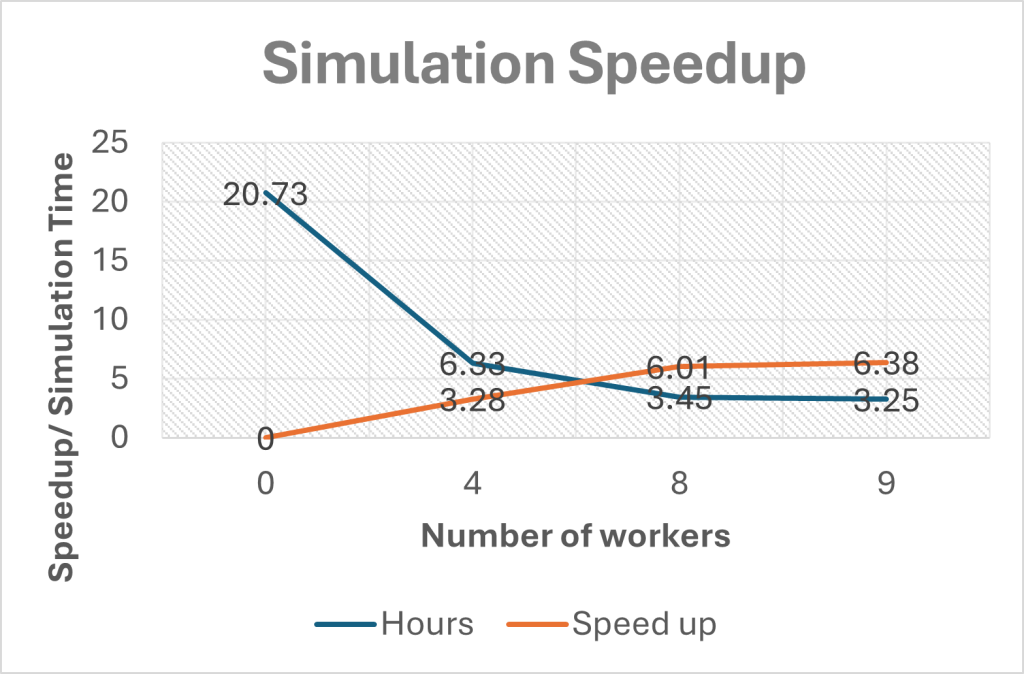
Now consider a complete analysis cycle, which might involve around 10 iterations of simulation. Without parallelization, simulation alone would consume 207 hours (2 working weeks). With the new parallelization feature, that same analysis could be completed in less than 2 days! This level of acceleration empowers engineers to explore more design variations, identify potential issues earlier, easily making design decisions and verifying them within the same workday.
The new parallelization feature in HyperLynx 2604 introduces a flexible token-based licensing model to authorize additional simulation engines beyond the two included with a standard DDRx license. These tokens are not permanently assigned but are instead borrowed from a shared pool when a simulation begins and returned to that pool once the simulation is complete, making them reusable across different users and projects. This ensures efficient resource allocation, allowing teams to dynamically scale their simulation capacity as needed without requiring dedicated licenses for each potential worker.
We can’t wait for you to experience this powerful new feature and hear about the remarkable analysis speedups your team achieves!