Unlocking the Future of EWIS Design: migrating from Schematics
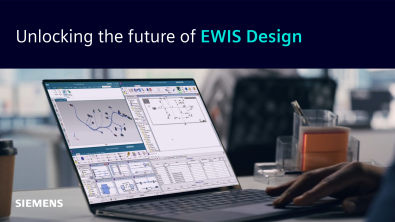
The Designcenter™ software portfolio provides many ancillary applications to support full digital thread workflows. One such application is Designcenter Schematics, formerly NX Schematics, a tool for organizations designing electrical wiring interconnection systems (EWIS), especially in industries like aerospace and automotive.

By enabling 2D schematic capture and logical design, Designcenter Schematics helps engineers document, manage and optimize wiring systems. Its integration with Teamcenter® software ensures that designs are not only accurate but also fully traceable and compliant with industry regulations. Whilst Designcenter Schematics was particularly valued for its ability to reduce errors, improve design quality and streamline compliance, the market is ready for a state-of-the-art successor.
A fresh approach: Siemens Capital
As the complexity of EWIS design grows and the need for advanced data management intensifies, Siemens Capital™ software has emerged as a compelling alternative. Unlike Schematics, which is primarily a diagramming solution, Capital employs a data-centric architecture with a unified repository that enables Digital Thread implementation, ensuring traceability across systems engineering, electrical and harness design, and certification artifacts.

This architecture enables advanced integration with other Siemens software applications such as Teamcenter and Polarion™ portfolio. supporting requirements management, systems engineering, and 3D harness design.
What truly sets Capital apart is its powerful automation engine, with built-in design rule checks, automated reporting, and robust manufacturing outputs that minimize manual effort and reduce the risk of errors. Its scalability makes it suitable for projects of all sizes, and its compliance features support industry-specific standards and certification processes.
Smoothing the path from Schematics to Capital
As more organizations look to transition from Schematics to Capital, technology partners like Freiberger Aero are able to guide them through this transformation. EWIS design presents several challenges: disconnected processes, fragmented data, compliance hurdles, and integration gaps that can lead to costly rework and certification delays.
Migrating to Capital isn’t just about replacing a tool; it’s about unlocking new efficiencies and capabilities. Organizations want to be able to:
- Reuse existing Schematics libraries and diagrams
- Reduce manual effort and certification overhead
- Improve design quality and reduce time-to-market
- Future-proof their EWIS toolchain with scalable, integrated workflows
Transitioning from Schematics to Capital can be challenging. It involves infrastructure setup, data conversion, integration, and training. That’s where Siemens Software and Technology Partners come in, offering tailored migration solutions:
- Requirements analysis to define scope and goals
- Capital deployment and configuration with best practices
- Automated library and diagram conversion from Schematics to Capital
- Integration with enterprise systems like Teamcenter
- Specialized training and support to ensure adoption and long-term success
Summary
Schematics has served EWIS teams well, but Siemens Capital is the future. With its advanced capabilities and integrated architecture, Capital empowers organizations to design smarter, faster, and more reliably. By working with technology partners like Freiberger Aero, organizations can navigate the migration confidently – preserving their investments while embracing the next generation of electrical systems design.
Continue your journey with Designcenter
Take me to the full Designcenter blog 📚