The advantage of industry partnerships for battery passports
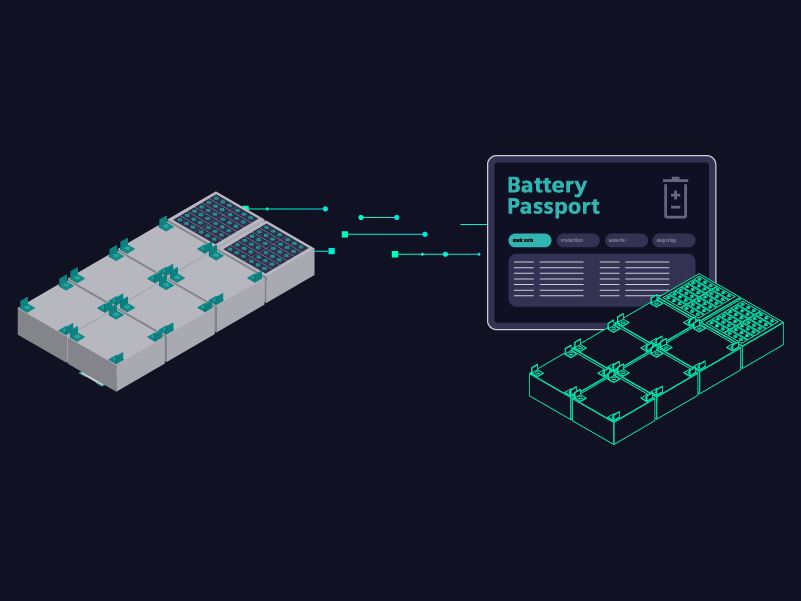
The requirement for battery passports is fast approaching for products sold in the European Union, starting in February 2027. Making that happen across a very diverse industry is no small feat. This is especially challenging when manufacturers and suppliers of battery products must maintain profitability while facing dropping cell prices. To make battery passports as streamlined as possible, and even beneficial to the market, industry groups like Catena-X are working away to bring the capabilities, requirements, and desires together. Building upon Catena-X’s data sharing standards, major players across the EV battery value chain—BMW, BASF, Henkel, CATL, VW, and Siemens – have established Path.Era, a new ecosystem designed to enable the successful implementation of industry-grade Battery Passports.
To talk about that journey and the current progress, Max Radford hosted an insightful discussion at Hannover Messe 2025 with three distinguished experts: Bernd Mangler (Senior Vice President for Automotive, Battery and Projects at Siemens), Dr. Matthias Dohrn (Chief Procurement Officer for BASF), and Oliver Ganzer (Vice President at BMW and Chairman of the Board of the Catena-X association). Their complete conversation is available on The Battery Podcast from Siemens. Hit play below to listen in, or continue reading for key highlights from their show floor discussion.
Path.Era aims to address supply chain cooperation and data sharing. Building a successful battery business in the era of battery passports requires trust and data sharing from the start and spanning every stage of the value chain, from mining to recycling. While much of the effort to build out this kind of solution for battery passports focusses on automotive supply chains, it can be used for any battery application. Battery Passports will serve as the first blueprint for future digital product passports spanning across many product categories.
Although some data attributes are already available today for many companies, it requires major effort for companies to identify, calculate and share data to meet regulatory requirements. Path.Era supports its partners with enablement services and software solutions that meet simplify these activities. By building on Catena-X, Path.Era unlocks new levels of efficiency with interoperable data exchange with other third party applications. This will significantly streamline today’s data sharing efforts, which are dominated by proprietary supplier portals and public external databases. By decentralizing data sharing, companies prevent a lock-in and can keep control over their data. With this approach, Path.Era differentiates from centralized solutions, that increase complexity for all value chain players as they have to serve numerous interconnections in different regions. Complexity here also increases prices for the customer, because procurement has to sift through this data in addition to their regular duties.
For industry partners like BASF, implementing battery passports in a digital manner will also impact the many other industries they serve – textiles, steel, chemicals, etc. Being able to send additional information or receive that information alongside the traditional data sharing can be highly valuable as more product sectors adopt regulation like battery passports. Making it more cost efficient also opens the possibility of using this data as a differentiator with customers, even without regulatory pressure – wanting to know the provenance of the materials or the water usage is becoming far more common for consumers.
While a universal, streamlined solution for all types of product passports is still evolving, Siemens already offers a productized Battery Passport solution. Working with pioneers like CATL, BMW, Henkel, BASF, Volkswagen, broader product passport adoption is getting closer to reality for the entire industrial sector. And when it is available, companies and suppliers will need a way to import and export the kind of data in these product passports. So even if you can’t deploy the solution today, it is important to work on building the data and process structures that will connect with one when it comes along. Siemens is proud to be the Digital Product Passport solution provider in this ecosystem, serving all interested players along the value chain.
There is so much more that these experts talked about in the discussion at Hannover Messe and I would highly recommend listening to this episode in its entirety. But if you are just looking for even more battery information, be sure to subscribe to The Battery Podcast to get new episodes when they are. Or, dive further into the world of battery passports on our website siemens.com.
Siemens Digital Industries (DI) is a leading innovator in automation and digitalization. In close cooperation with its partners and customers, DI is the driving force for the digital transformation in the process and manufacturing industries. With its Digital Enterprise portfolio, Siemens provides companies of all sizes with all the necessary products, along with consistent solutions and services for the integration and digitalization of the entire value chain. Optimized for the specific requirements of individual industries, this unique portfolio enables customers to enhance their productivity and flexibility. DI continuously extends its portfolio to include innovations and the integration of future-oriented technologies. Siemens Digital Industries, with its headquarters in Nuremberg, has a workforce of around 72,000 people worldwide.
For more information on Siemens Digital Industries products and services, follow us on LinkedIn, Facebook, Twitter, and YouTube.