The Tecnomatix Story: From a Bold Idea to a Global Manufacturing Legacy

Before digital twins, AI factories, and digital manufacturing, a small group of engineers, entrepreneurs, and dreamers had a bold idea. Inspired by flight simulation, they asked: If pilots could train in simulators before taking off, why couldn’t engineers simulate a robot before putting it on the factory floor?
In this blog, discover the Tecnomatix journey through the stories and insights of the people who shaped it, from its pioneering beginnings in 1983 to its lasting influence on digital manufacturing today.”
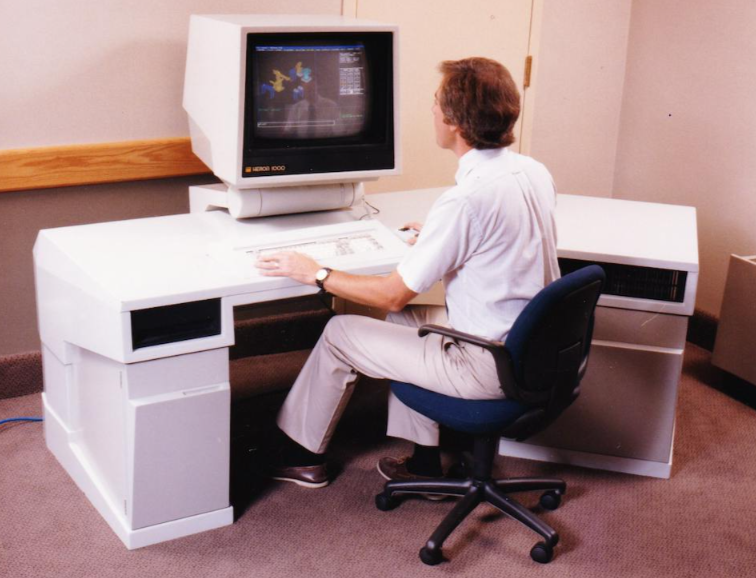
One of the earliest examples of engineers visualizing and testing robotic operations in a digital environment before deployment on the shop floor.
A Simple Question That Sparked an Industrial Revolution
Long before terms like ‘Digital Twin’, ‘AI Factory’, or ‘Industrial Metaverse’ existed, two very different worlds came together in Israel in the early 1980s: Oshap (industrial automation company) and Rosh (software startup founded by Shlomo Dovrat and a group of mathematicians). The breakthrough idea came from Oded Polig, a fighter pilot in the Israeli Air Force and a mechanical engineer who founded Oshap together with Shaul Shani. Drawing direct inspiration from his flight training, Oded asked a simple but revolutionary question:
| Oded’s Question to Shlomo Dovrat: “As a fighter pilot, I train on simulators before I take off. Why should a factory be different? When I try to install a robot on a production line, I need a simulator so I don’t cause damage. Can you build such a simulator?” |
Hear from Founder Shlomo Dovrat, Founder | Tecnomatix Technologies, Inc. | 1982–2005
Today: Co-Founder of Viola | Co-Founder & GP of Viola Ventures | Co-Founder of Pnima on the bold vision that sparked a global manufacturing revolution and the extraordinary team that refused to say “no.”
Shlomo Dovrat, Founder of Tecnomatix Technologies, Inc. from 1982–2005, later gave Oded full credit for the idea that launched the Tecnomatix portfolio in 1983, which includes Process Simulate and Plant Simulation software. Shlomo was only twenty-three years old at the time, fresh out of Israel’s elite technology unit. Although the young team had little background in industrial robotics, they possessed strong mathematical skills and an unshakeable belief that software could solve complex engineering challenges.
| The Founding Mindset: “Nothing. I didn’t know what a robot looked like or whether a market existed… But we are talented people. We will figure it out.” , Shlomo Dovrat |
The Vibrant Spirit: Passion, Trust, and ‘Let There Be Light’
In its early days in Herzliya, Israel, Tecnomatix operated with the raw energy and passion of a true startup, long before ‘startup culture’ became a popular term. Young engineers straight out of university were given huge responsibilities, taking charge of central components like the kinematics library and 3D graphics engine. Openness and human connection were built into daily life. Every Thursday around noon, the entire company gathered in the lobby for updates from leadership. These meetings created a strong sense of shared pride, family, and trust.
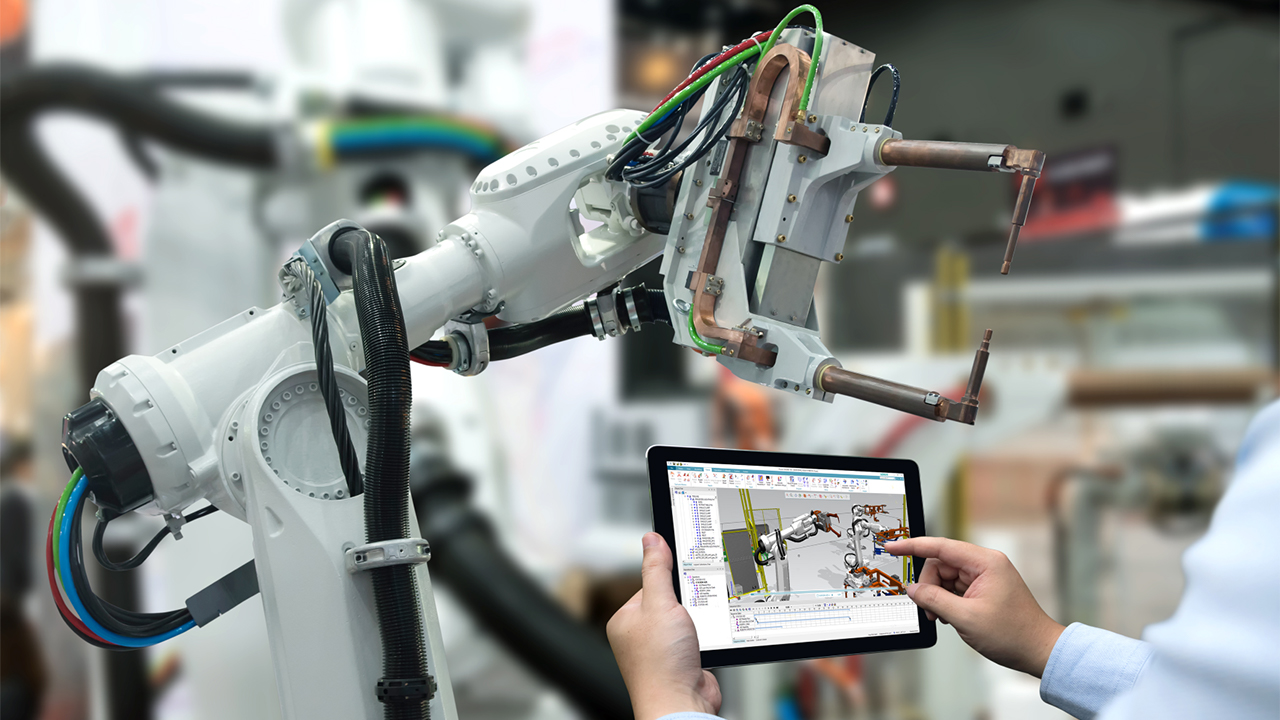
| Behind the Scenes: ‘w_yehi_or’ Deep inside the RobCAD software code, developers embedded a graphic refresh command named ‘w_yehi_or’, derived from the Hebrew biblical phrase ‘Let There Be Light’ (ויהי אור). It captured the unique spirit of the team: highly technical, deeply creative, and genuinely passionate about their work. |
Overcoming the Odds: Determination and the $3.7M Springboard
Transforming 3D simulation into a commercial business required strategic vision and discipline. Harel Beit-On joined the founding leadership team to build the commercial organization, recognizing that technological excellence needed to be matched by world-class business execution. When early international expansion faced hurdles, Harel relocated to establish direct relationships with global industrial leaders. The decisive turning point arrived when a major global automotive manufacturer launched a rigorous, ten-month evaluation to select a single digital manufacturing simulation solution for over twenty production facilities worldwide, a contract worth roughly three times Tecnomatix’s annual revenue.
| Behind the Scenes: The Detroit War Room & The Backup Computer Preparing for the crucial presentation in Detroit, the team rented a hotel room and built an exact replica of the customer’s conference room. They rehearsed every word and role. Terrified that the main demo computer might crash, they placed a backup computer under the table with an engineer, Uri, sitting on the floor ready to switch cables. When the evaluation committee walked in and noticed Uri under the unskirted table, the team told the honest truth: they were simply not willing to take any risk that the presentation would fail. The team prevailed and was proud to be awarded the job and the benchmark contract was awarded. Tecnomatix proved it possessed both a market-leading 3D simulation platform and the reliability needed to power global manufacturing. |
Winning that benchmark contract served as a massive gamechanger, proving that an agile software company could set the standard for global industrial manufacturing.
Learning from the Shop Floor: From Robots to Complete Processes
As Tecnomatix engineers spent countless hours working side-by-side with customers directly on factory shop floors, observing production lines, supporting deployments, and solving real operational crises, they made a crucial discovery: simulating the robot was only the beginning. Manufacturing was not simply a collection of machines; it was a collection of interconnected processes. Whether observing engineers plan complex spot-welding sequences, design automotive paint lines, or struggle with thousands of aircraft rivets, the team realized that customers needed software built around actual manufacturing workflows. This hands-on, customer-driven learning inspired Tecnomatix’s fundamental shift from standalone robotic simulation to process-oriented, vertical applications tailored directly to specific industry domains.
Under the leadership of Siemens Zvi Feuer, Senior Vice President of Digital Manufacturing Software and CEO of Siemens Digital Industries Software in Israe, who joined in the late 1990s and guided the business through decades of growth, this philosophy expanded into the Digital Factory vision. By connecting the Engineering Bill of Materials (eBOM) into a Manufacturing Bill of Materials (mBOM) and Bill of Process (BOP), Tecnomatix enabled manufacturing planning to begin concurrently with product design, pioneering the practice known today across the industry as ‘Shift Left’.
Global Integration: From UGS to Siemens Digital Industries Software
By 2005, Tecnomatix was acquired by UGS (Unigraphics Solutions), uniting product lifecycle management (PLM) with digital manufacturing planning. Two years later, in 2007, Siemens acquired UGS, bringing Tecnomatix into a global industrial environment that connected enterprise software directly with real-world shop floor automation.
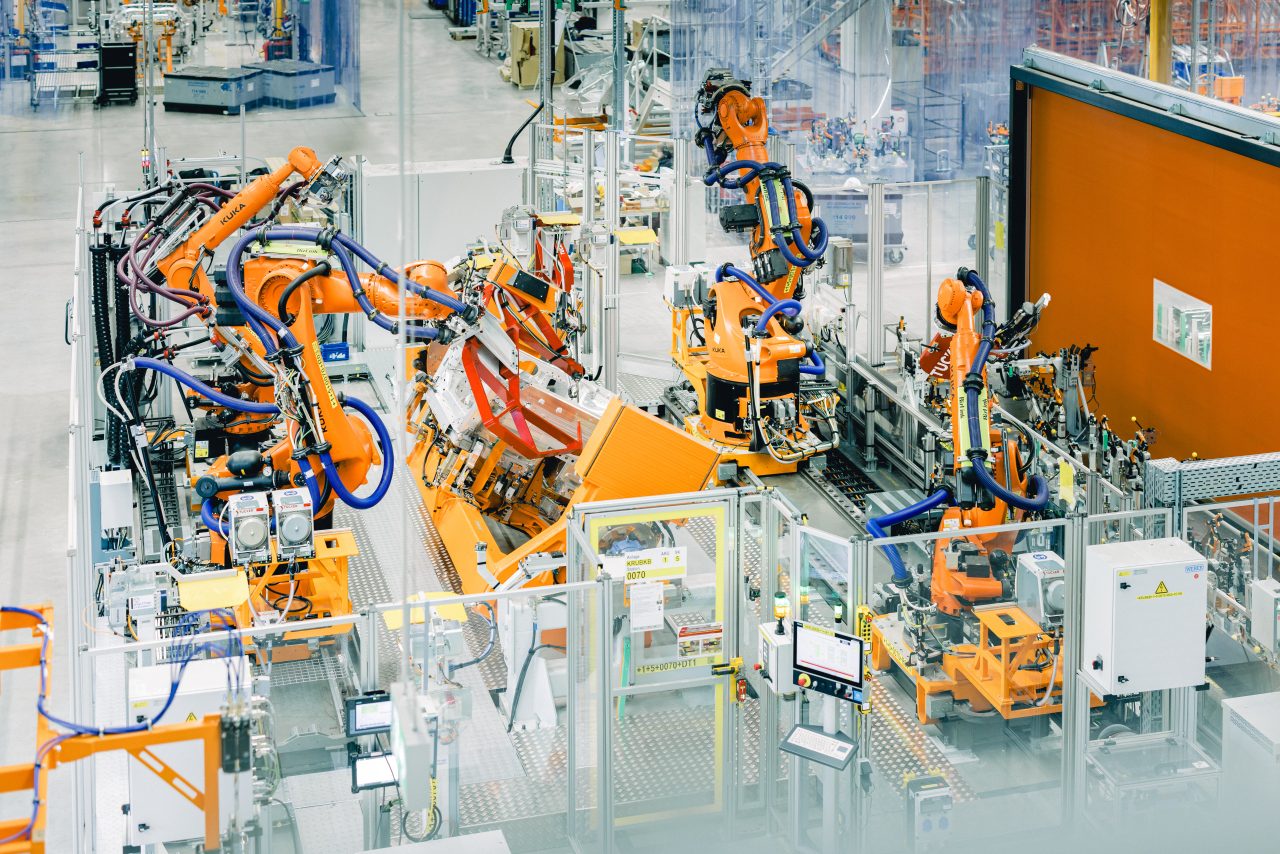
Operating as an agile innovation engine inside Siemens, the team continued to shape global strategy:
- Industry Business Group (IBG) & ‘Day in the Life’: Following the UGS acquisition, the team established IBG to help executive decision-makers of specific industries see full end-to-end value. They developed role-based demonstration stories showing how an aerospace or automotive engineer uses digital tools throughout their workday.
- Internal Startups & ‘Pizza Teams’: To maintain startup agility within Siemens, Zvi Feuer drew inspiration from ‘The Lean Startup’ and lean manufacturing cells, creating small, cross-functional ‘Pizza Teams’. These autonomous units owned specific business opportunities end-to-end, enabling rapid cloud development and continuous delivery.
| The Leadership Mindset: “We believe saying ‘no’ is simply not an option. There has to be a way. You may not know it yet, but you keep looking until you find it.” , Zvi Feuer |
Hear from Zvi Feuer, Senior Vice President of Digital Manufacturing Software and CEO of Siemens Digital Industries Software in Israel, on the extraordinary evolution of Tecnomatix technology, from robotic simulation to digital manufacturing, digital twins, and physical AI.
The Next Frontier for Manufacturing
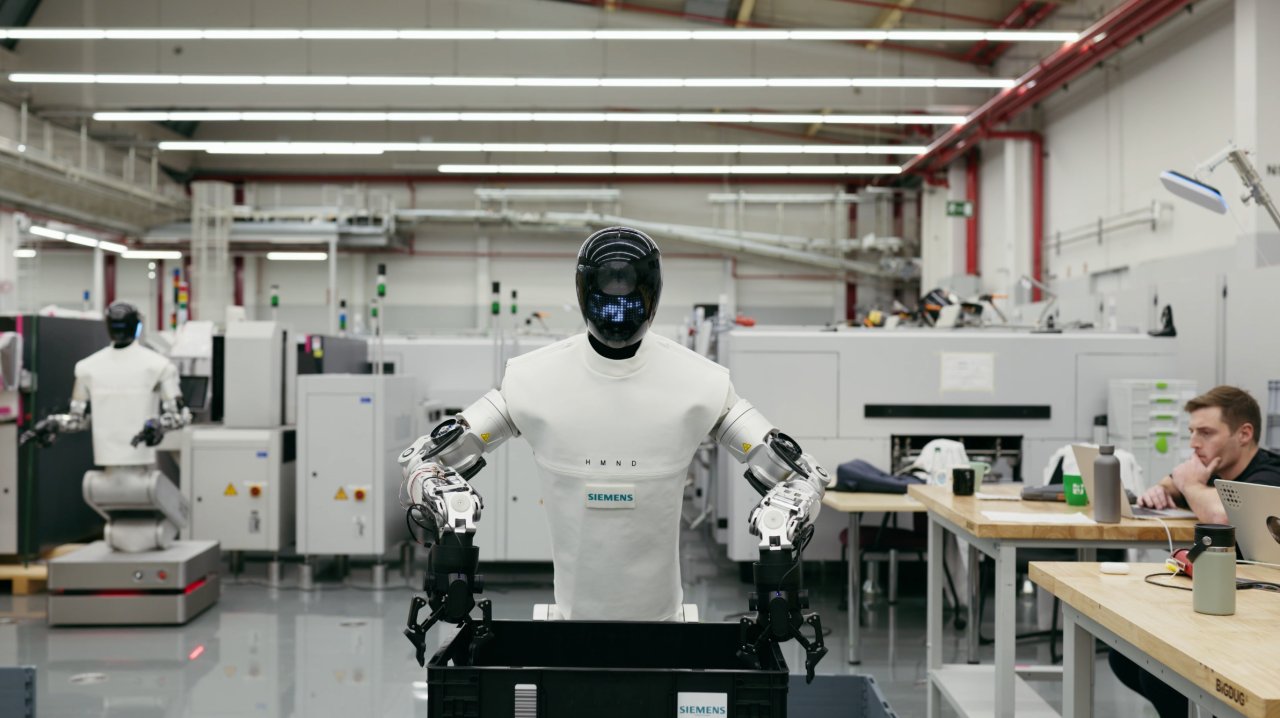
The vision that began with simulating 3D robotic movements has continuously expanded into Digital Twins, AI Factories, and Physical AI:
- From Digital Twins to AI Factories: Modern computing infrastructure, cloud scalability, and platforms like NVIDIA Omniverse now make it possible to simulate complex, multi-component AI factories where the output itself is computing capacity.
- From Human Safety to Humanoids: Human simulation algorithms originally developed three decades ago to protect factory workers from physical injuries now provide the exact foundation to simulate, plan, and generate synthetic data for humanoid robots working side-by-side with humans.
Built on Vision, Powered by People
Reflecting on more than forty years of innovation, the story of Tecnomatix is ultimately a testament to vision, resilience, and above all, people. What started as an ambitious idea among a small group of young dreamers transformed the way the world builds products. As we enter a new era, that same spirit of curiosity and determination continues to drive Siemens forward. Because no matter how advanced the software, the digital twins, or the AI algorithms become, the true engine of innovation remains the same as it was in 1983: the passion, dedication, and shared mission of the people building the future.