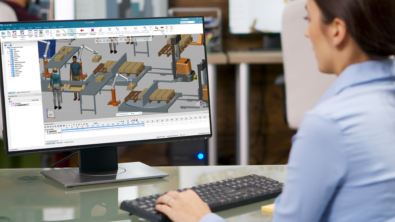
Bridging the gap between simulation and shop floor with the Digital Twin Composer and Industrial Metaverse
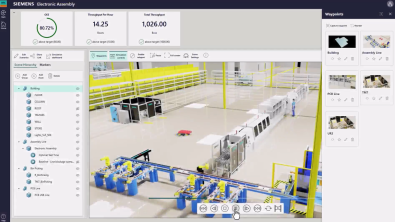
A modern factory is one of the most complex systems in the world. Thousands of machines, millions of data points, interconnected production processes, and constantly changing operating conditions must work together with extraordinary precision. Yet the digital information needed to understand and optimize these environments often lives in disconnected engineering tools, simulation systems, and operational platforms. This is the challenge at the heart of the Industrial Metaverse: not simply creating a digital representation of a factory, but bringing its full complexity into one living, intelligent environment.
Siemens Digital Twin Composer makes that vision possible at enterprise scale, empowering organizations to combine industrial AI, simulation, and real-time physical data to explore, validate, and optimize industrial operations virtually, before making decisions in the physical world. As part of the Siemens Xcelerator portfolio and powered by NVIDIA Omniverse™ technology, Digital Twin Composer acts as the orchestration layer that brings multidisciplinary engineering and operational data into a single, managed 3D scene. It takes the deep physics and insights of tools like Tecnomatix Plant Simulation and Process Simulate and composes them into a unified, high-fidelity experience.
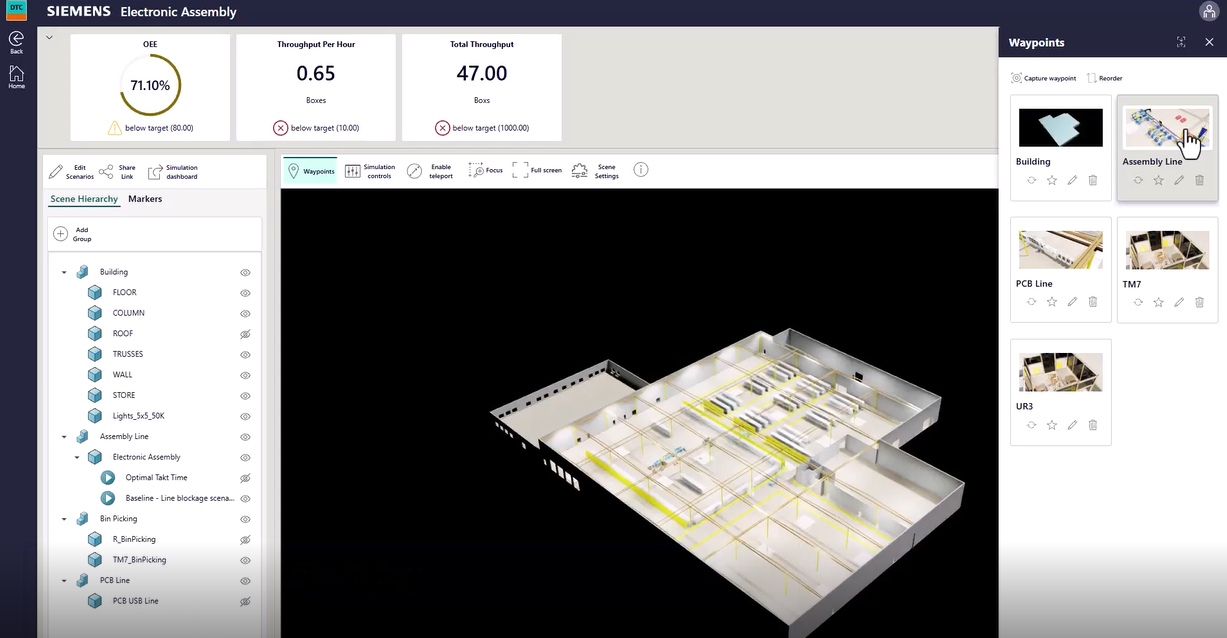
Instead of a collection of disconnected reports, teams get a single source of truth, allowing architecture, production engineering, and automation specialists to work off the exact same configured scene in real time. Digital Twin Composer is the piece that makes that possible. It’s why the solution named is deemed a composer; helping aggregate engineering and operational data from across disciplines into a single, managed 3D scene, so teams can review, collaborate on, and maintain a factory or production digital twin at scale. It leverages the NVIDIA Omniverse technology, using the USD file format, to connect into the Siemens Xcelerator portfolio.
With the power of Siemens Xcelerator portfolio and the NVIDIA Omniverse technology, manufacturers can:
- Follow the factory through its lifecycle, not just one review: design and change in concept and engineering, validation at scale in production development, shared context for continuous improvement once it’s operating.
- Break down silos, so architecture, production engineering, automation, and other disciplines work off the same configured scene instead of separate versions of the plant.
- Achieve more longevity with the simulation so it stays useful past the demo. Most digital twin efforts stop after a proof of concept or need heavy services to keep running. This one is productized, with built-in data ingestion, an Omniverse-based 3D experience, and Teamcenter-backed governance.
- Works alongside what you already have. Simcenter, Plant Simulation, Process Simulate, Line Designer, Teamcenter Manufacturing, even non-Siemens data, all come together in one place of living in separate silos..
Put together, the benefit is a single pane of glass, one source of truth for the whole factory, where decisions that used to take weeks of back-and-forth across tools and teams can now happen in a single review, with everyone looking at the same factory!
From Simulation to Reality: Optimizing an Electronics Assembly Line in Digital Twin Composer
Take an electronics manufacturer working toward lights-out production. Their question: can they automate a manual part-kitting station on the assembly line, and if so, with what equipment?
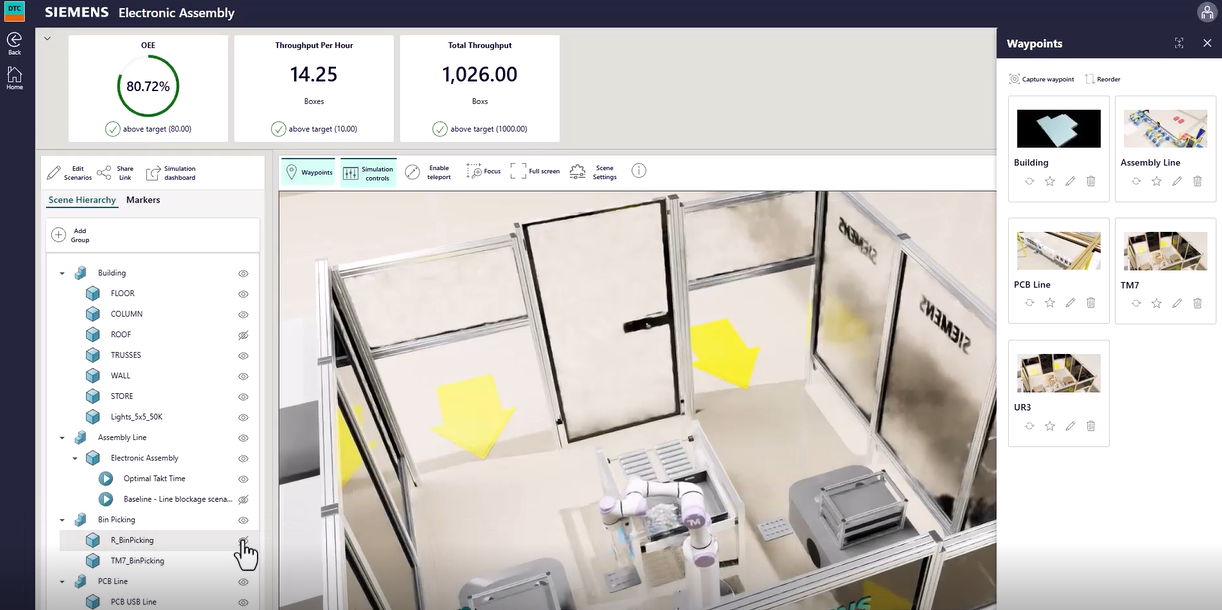
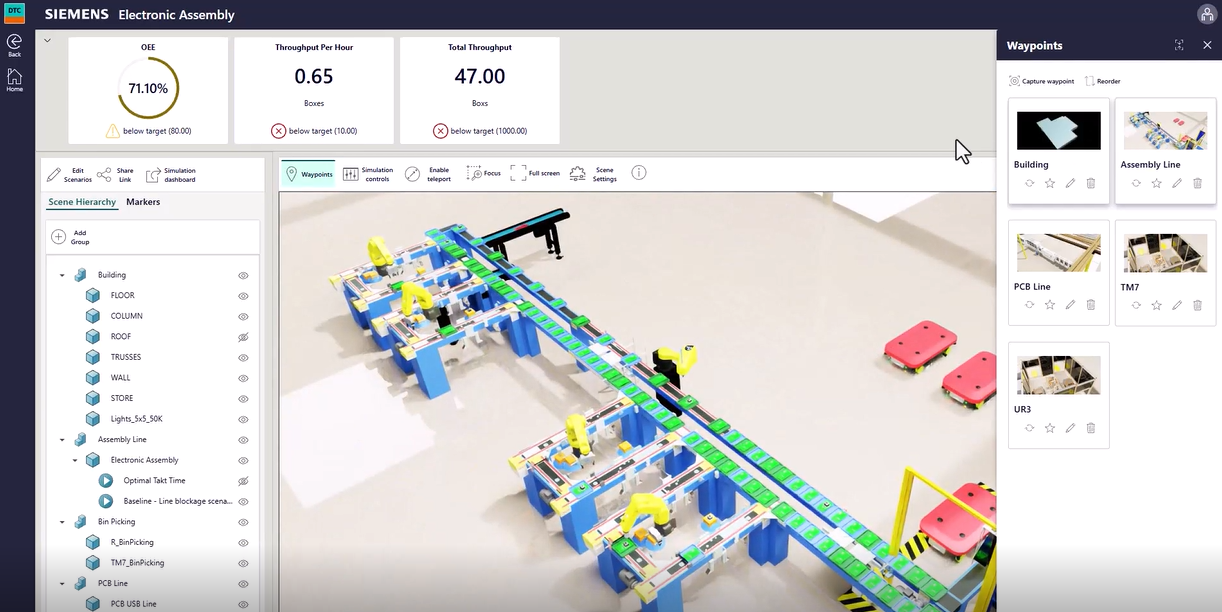
It starts in Plant Simulation, building a virtual model of the factory. From there, Optimize my plant is used to create and test manufacturing scenarios and find the takt time the line actually needs to hit its throughput goals. Instead of trusting the numbers on faith, the team visualizes it, bringing both the baseline and the optimal takt time scenario into Digital Twin Composer to see it play out. The baseline shows exactly what you’d expect: a bottleneck, conveyors jamming, the line stalling. The optimized scenario runs clean. No guesswork, just a clear, visual confirmation of what the simulation predicted.
With that target takt time validated, it gets handed to automation suppliers, who design and virtually commission candidate kitting stations in Process Simulate, each one tested against the required cycle time. Two supplier variants come back. Both get dropped into the same factory scene in Digital Twin Composer, alongside the rest of the plant’s virtual assets, so the manufacturer can compare them side by side, in context, and pick the one that best fits their line in real time and with confidence.
Before Digital Twin Composer, engineers using Plant Simulation and Process Simulate may have worked in separate silos, with limited visibility into each other’s data and simulation findings. Digital Twin Composer brings these teams together by providing shared context and insights, enabling better collaboration and accelerating progress on factory optimization projects.
We’re early in this journey, but the direction is clear: the more connected the twin, the faster and more confident the decisions built on top of it.