Planning and simulation at Realize LIVE Americas: a full recap of manufacturing innovation
The future of manufacturing was on full display at Realize LIVE Americas 2026, where Siemens brought together industry leaders, innovators, and technology experts to showcase the next wave of digital transformation. Across keynotes, technical sessions, and hands-on demonstrations, four themes emerged as central to the industry’s evolution: AI-powered manufacturing planning and simulation, cloud-enabled collaboration, connected digital threads and the growing role of digital twins.
These technologies are no longer future concepts, they are being applied today to improve efficiency, accelerate innovation, and scale manufacturing operations. For Tecnomatix users in particular, the event delivered a wealth of insights and opportunities to connect with peers.
Tecnomatix: merging industrial AI, manufacturing planning and simulation, model-based enterprise, and the digital twin together
The Tecnomatix track highlighted how manufacturers are using solutions around manufacturing planning, simulation, service, digital twins, and Industrial AI to improve decision-making before implementation, reducing risk while increasing productivity, quality, and operational performance. Throughout the week, customers, partners, and Siemens experts shared how these technologies are transforming manufacturing engineering and factory operations.
The Solutions Center is the hub of the event, showcasing Siemens’ latest innovations through interactive demonstrations, expert consultations, and partner exhibits. Within it, the Make zone features eight hands-on stations focused on key digitalization themes, including AI-powered production, data-driven optimization, seamless automation, quality culture, and digital production optimization, demonstrating how Siemens Digital Manufacturing solutions connect and improve the entire manufacturing lifecycle.
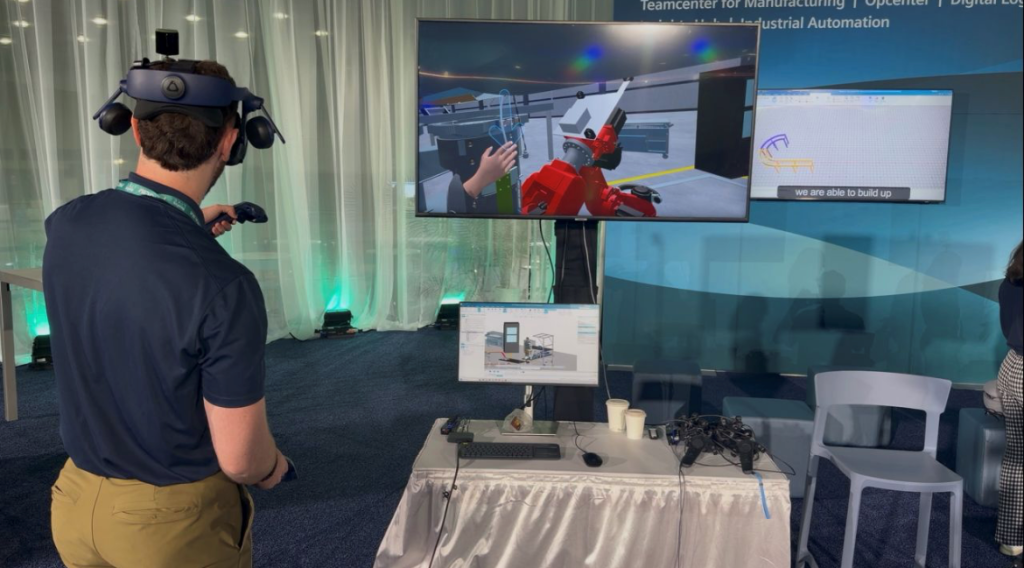
At the center of the Make zone is the Gimbal, an immersive demonstration of the virtual reality capabilities in Process Simulate. It highlights how VR can enhance manufacturing planning, validation, and collaboration. Together, the stations and Gimbal provide attendees with a practical way to explore Siemens Digital Manufacturing solutions and engage directly with Siemens presales experts.
Process Simulate: robotics and human simulation in action
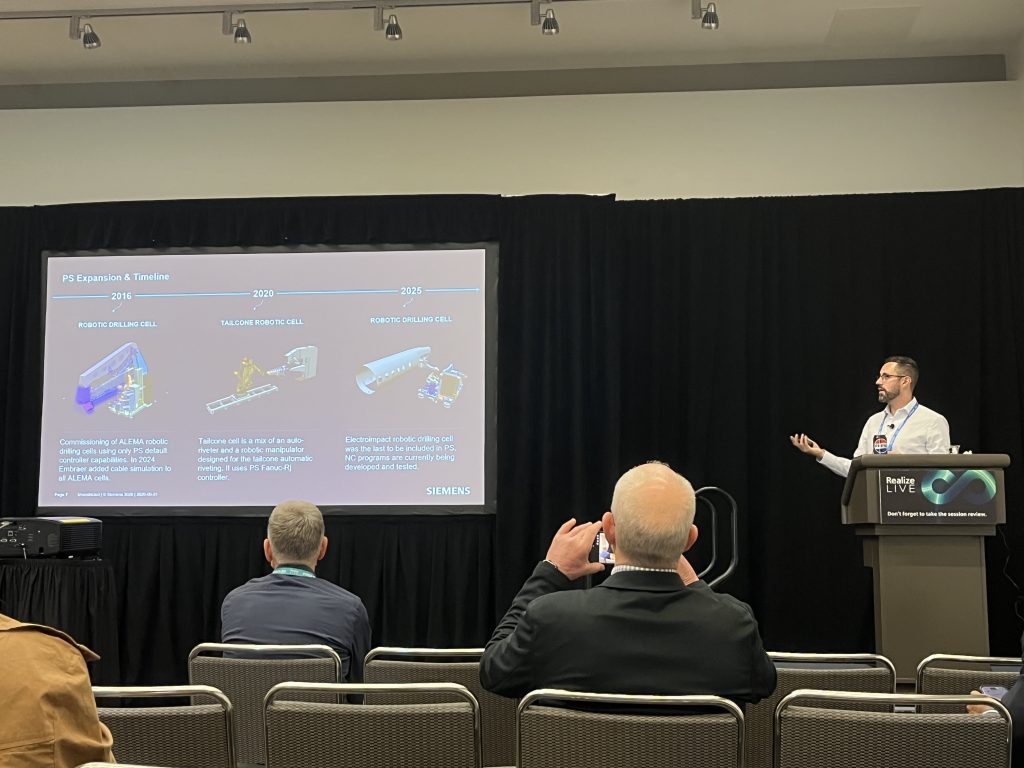
To begin, several sessions featured how users are leveraging Process Simulate to facilitate simulation, validation, optimization and commissioning of complex manufacturing processes involving equipment and people for faster launches and higher production quality. Presentations from organizations including Embraer, Patti Engineering featuring Catepillar, and Oakland University. As a key session to highlight, Embraer, for example, has used Siemens Process Simulate for over a decade for to improve automatic drilling & riveting applications, leveraging the solution to improve manufacturing quality, reduce lead times, and optimize offline programming. By enhancing its OLP environment, Embraer shortened programming workflows by 40% and eliminated non-quality issues caused by undetected collisions, resulting in a more efficient and reliable engineering process.
Several other breakout sessions generated significant buzz among attendees. One of the most talked-about presentations was Can Humanoids Clock In?, where Siemens researchers explored the rapidly evolving role of humanoid robots in manufacturing. The session highlighted how Siemens is using simulation, automation, and AI to evaluate humanoids as a new type of workforce, testing their ability to perform manufacturing and logistics tasks safely and effectively. Attendees also saw how tools like Process Simulate are being adapted to model humanoid workers alongside traditional automation and human operators, helping manufacturers prepare for future workforce scenarios.

Another standout session focused on Digital Twins for Full-Stack Virtual Commissioning in Automotive Manufacturing. Presented by Oakland University, the session showcased a standardized virtual commissioning framework aligned with ISO 23247. The approach demonstrated how manufacturers can validate and optimize systems virtually before deployment, reducing commissioning time, improving flexibility, and supporting faster production changeovers.
The session Modernizing Legacy Assembly Lines with Tecnomatix: Caterpillar’s Blueprint for Weekend Upgrades drew strong interest by demonstrating how digital twins and virtual commissioning can extend the life of aging production lines. Through a phased modernization strategy, Caterpillar and Patti Engineering, Siemens partner, upgraded critical assembly operations over approximately 15 weekend shutdowns while maintaining weekday production. The project delivered major cost savings, reduced commissioning risk, and established a repeatable model for modernizing legacy manufacturing assets without disruptive line replacements.
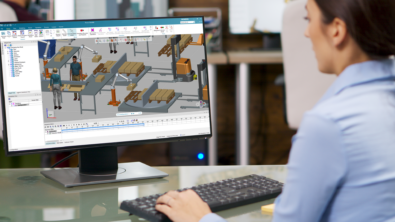
Plant Simulation: model, visualize, and optimize production logistics, and material flow systems
To transition to the following sessions, many users were excited to share their use cases and insights about the efficiencies achieved in production and logistics with Plant Simulation. Organizations like Northrop Grumman, Amazon Robotics and Downsview Aerospace Innovation & Research (DAIR) demonstrated how Plant Simulation is helping teams validate new factory designs, modernize legacy production systems, and optimize material flow. Together, these examples showcased the measurable business value of simulation across aerospace, industrial equipment, and advanced manufacturing.
One standout presentation featured Northrop Grumman’s use of Plant Simulation to validate the capabilities of its new manufacturing facility in Waynesboro, Virginia. By creating a digital twin of the plant before production began, the team was able to evaluate capacity, identify bottlenecks, and test multiple demand scenarios. The result was greater confidence that the facility could meet production targets from day one while maintaining flexibility for future growth.
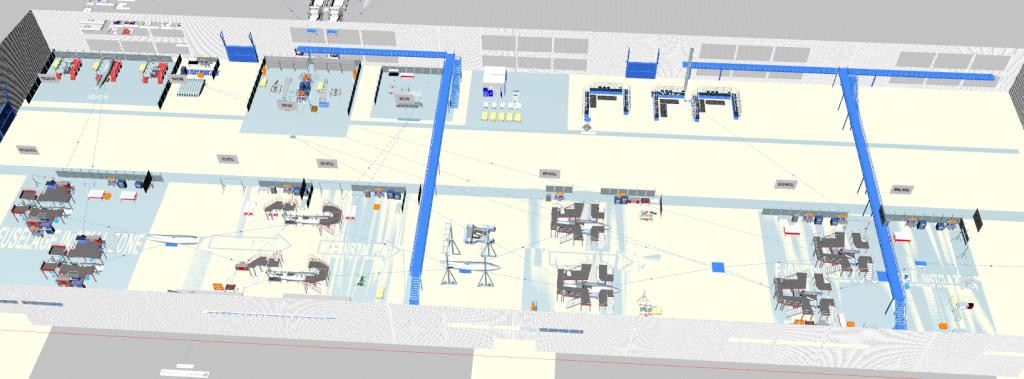
Another session that followed in the aerospace sector, presenters from DAIR and Siemens showcased how Plant Simulation helped manufacturer Shimco evaluate facility layouts using real production data. By running thousands of simulation scenarios, the team optimized throughput, improved workforce flow, reduced operational risk, and validated plans for a new facility before construction decisions were finalized.
Attendees also heard from Amazon Robotics who showcased how full-factory simulation is being used to optimize material logistics, validate production capacity, and improve operational planning during peak demand scenarios. The session also explored how simulation-based inference can uncover hidden process insights by replaying operational data, helping manufacturers identify visibility gaps, prioritize sensor investments, and build more effective digital twins using existing data.
Interest in AI-powered manufacturing was evident during Enabling Intelligent Manufacturing with Digital Twins and Physical AI. Accenture and Siemens demonstrated how digital twins, AI, cloud technologies, and the Siemens Xcelerator portfolio are converging to create more adaptive and resilient production environments. The session reinforced how simulation is becoming a foundational technology for intelligent manufacturing.
Another well-attended session focused on integrating Advanced Planning and Scheduling (APS) with Plant Simulation to create closed-loop production planning. The demonstration showed how manufacturers can connect planning decisions with realistic simulation models, enabling faster scenario analysis, improved throughput, and more data-driven operational decisions.
Another session that drew attention showcased Optimize My Plant, Siemens’ SaaS solution for extending the value of Plant Simulation beyond simulation experts. Presenters demonstrated how manufacturers can transform Plant Simulation models into role-based web applications, allowing engineers, planners, and operations teams to run scenarios and explore production decisions without needing direct expertise in the software. The session highlighted how organizations can democratize access to digital twins, making simulation-driven decision-making more accessible across the enterprise.
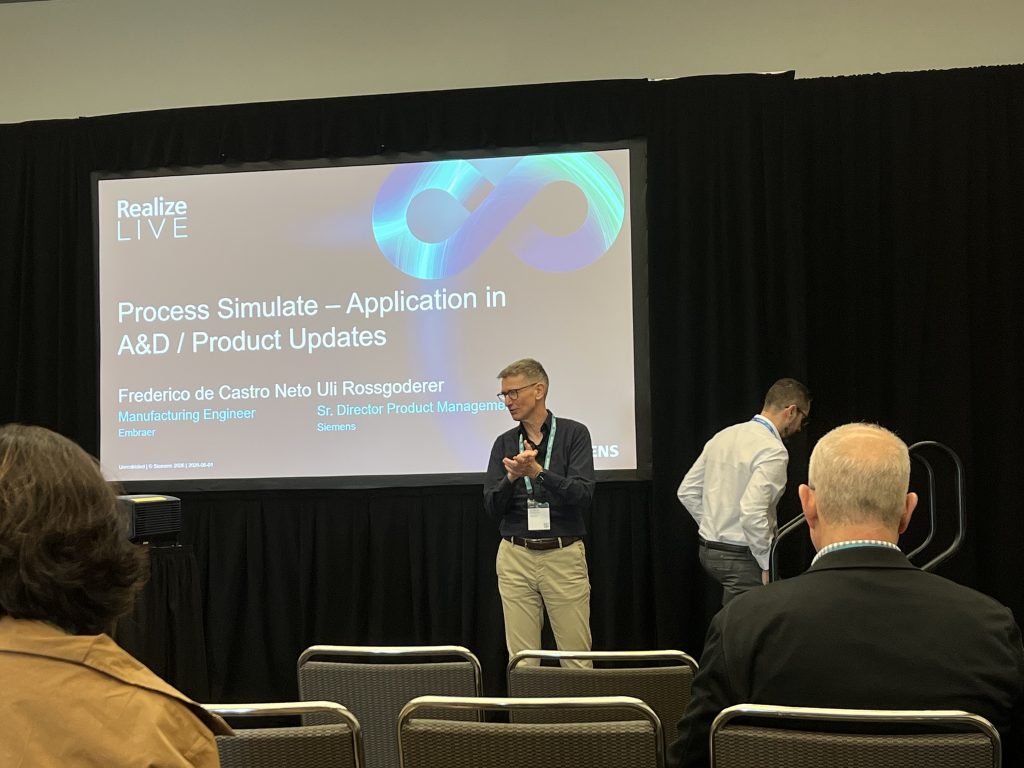
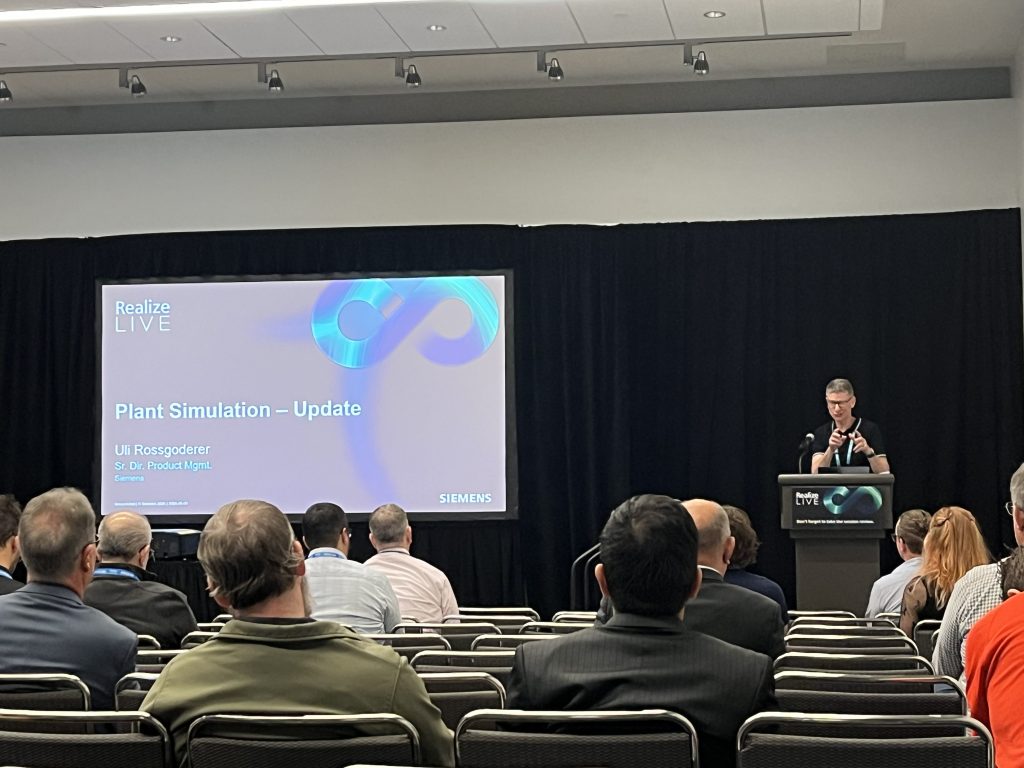
Attendees also received a product roadmap update during the What’s New in Process Simulate and Plant Simulation sessions led by Uli Rossgoderer, Senior Director of Portfolio Development at Siemens, which showcased the latest portfolio innovations, including expanded AI-enabled manufacturing capabilities, enhanced simulation workflows, and continued integration across the digital thread.

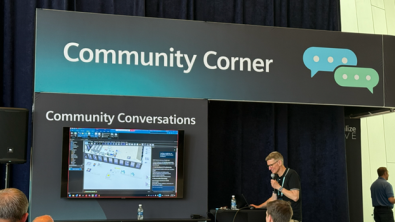
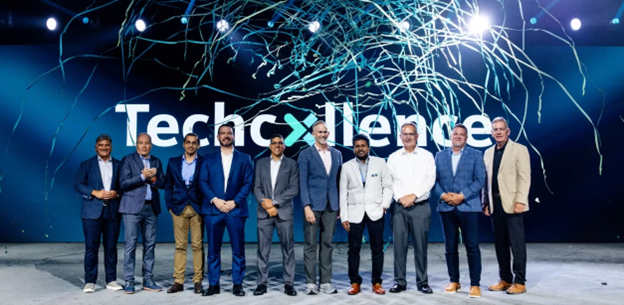
Beyond the technical sessions, the Plant Simulation community also celebrated one of its own. This year’s Siemens Community Champion Award was presented to David Stuckman, a digital integration engineer at Procter & Gamble. Recognized for his deep expertise in Tecnomatix Plant Simulation, David has become a trusted resource for both colleagues and the broader Siemens community, regularly sharing knowledge, supporting fellow users, and contributing valuable feedback that helps shape future product development.
AI Production Engineering and Service Digital Twins
Then there was a standout session led by NVIDIA and Siemens, AI Production Engineering and Service Digital Twins: From Planning to Production, featuring Larry Bemis, Vice President of Digital Manufacturing Planning and Simulation at Siemens, alongside Heiko Wenczel, Head of Omniverse Segment Sales at NVIDIA. Together, they explored how manufacturers can leverage AI and digital twins across the entire production lifecycle, from planning and validation through commissioning, operations, and service.
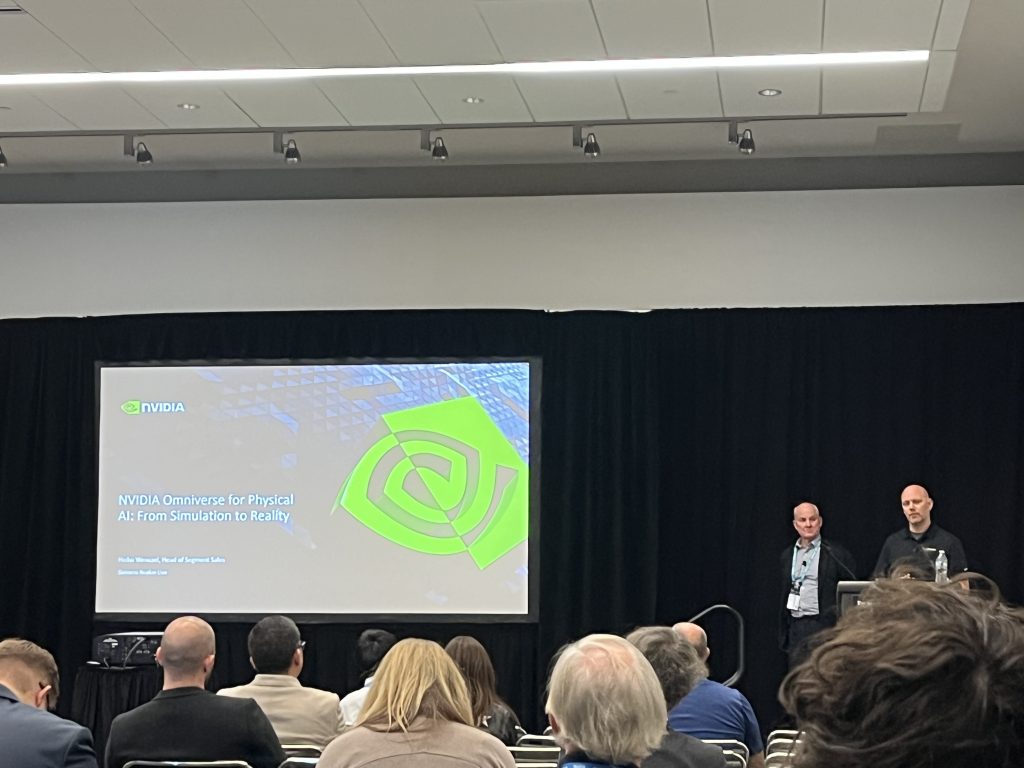
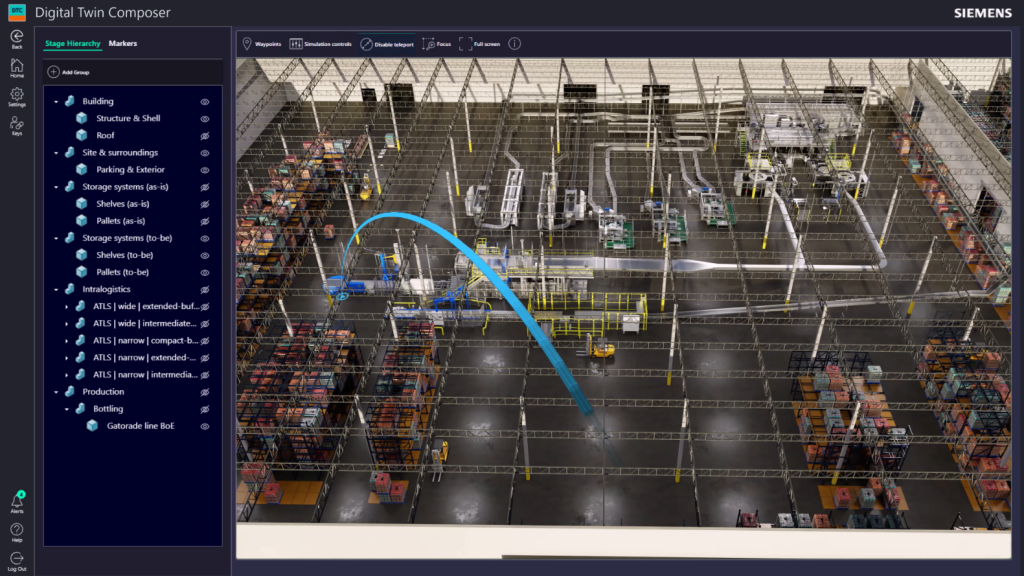
Attendees learned how technologies including Teamcenter Easy Plan, Process Simulate, Plant Simulation , NX Line Designer, Process Preparation, Teamcenter Service Lifecycle Management, and Digital Twin Composer are helping organizations create intelligent digital twins that connect engineering data, operational data, simulation, and AI. The session also highlighted how Siemens and NVIDIA are collaborating to bring Industrial Metaverse capabilities to manufacturers, enabling teams to test ideas earlier, identify issues sooner, and make better decisions before changes reach the shop floor.
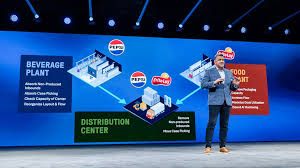
To extend to this topic, PepsiCo highlighted how they are leveraging the power of Siemens and NVIDIA’s partnership by showcasing its end-to-end digital transformation at the Siemens Realize LIVE Americas event. On the main stage, PepsiCo demonstrated how it uses Siemens’ Digital Twin Composer and NVIDIA Omniverse to virtually simulate, design, and optimize factory and warehouse operations before physical implementation.
The future of digital manufacturing was on display at Realize LIVE 2026
Realize LIVE 2026 made one thing clear: the future of manufacturing is being built today. From AI-powered planning and digital twins to advanced simulation and cloud-enabled collaboration, the technologies on display are transforming how manufacturers design, optimize, and operate their facilities. As these capabilities continue to mature and scale, the organizations embracing them will be best positioned to drive the next generation of industrial innovation. We look forward to continuing the journey together at future Realize LIVE events worldwide.
We look forward to continuing the conversation and seeing you at the next Realize LIVE or register for the upcoming shows in Europe, Asia-Pacific or Greater China.