Powering resilient, future-ready Electronics operations with Quanta × Techman Robot × Siemens [VIDEO]
Learn how Quanta, Techman Robot, and Siemens demonstrate how manufacturers can break siloed engineering and production systems through one digital backbone. By connecting digital twin, process simulation, low code workflow orchestration and MES, validated designs are seamlessly executed on the shop floor – reducing risk, accelerating ramp up, and enabling resilient, future ready electronics manufacturing.
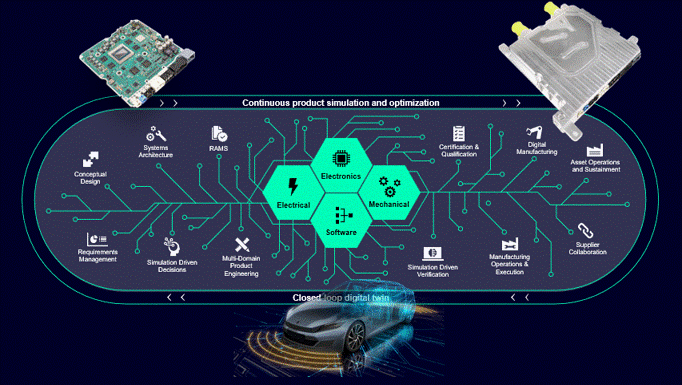
Quanta started as a global leader in computing, but over the years they have expanded into high-growth areas like AI servers and automotive electronics. Today, in automotive, Quanta designs and manufactures advanced electronic platforms from ADAS and autonomous driving systems to ECUs and power electronics. These are highly complex, software-defined systems that integrate hardware, electronics, and software into one product.
In a recent panel discussion between Quanta, a leader in transformation, Techman Robot, the automation partner, and Siemens, a digitalization partner, came together to discuss how reducing risk, accelerating ramp up, and enabling resilient, create a future ready operations for electronics manufacturing.
Howard Tsai, leading automotive business development at Quanta, highlighted how Quanta’s approach to addressing automotive electronics complexity is through a connected digital thread and a shared source of trusted information. He highlighted the complexity with version control and the sheer volume of departments, documents, components, and suppliers involved in a single automotive program. Imagine 30+ departments, 400 documents, 4,500+ components, and 30+ suppliers across multiple sites, all needing to work from the same page for a product with a 15-year lifecycle. This is where information can easily get lost in different systems or even on individual laptops, leading to inconsistencies and problems.
In today’s fast-paced manufacturing landscape, complexity is the name of the game. From intricate designs to global supply chains and ever-evolving regulations, companies are constantly battling silos and striving for efficiency. This is where a panel of experts from Quanta, Siemens, and Techman Robot shed light on how they’re tackling these challenges head-on, leveraging digital twins and connected automation to create a seamless flow from design to execution.
Meet the subject matter experts from Quanta and Siemens


The turning point: a unified approach
The turning point, Howard explained, wasn’t about fixing one tool. It was about realizing the need for a shared data foundation that genuinely connects design and manufacturing, enabling early validation of production processes before equipment is even installed. This required partners who could bridge the digital and physical worlds, not just offer isolated solutions.
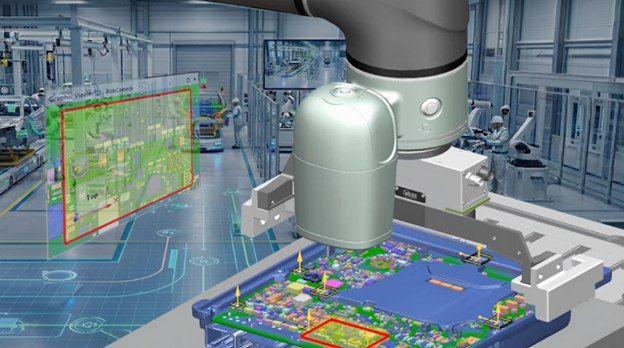
This is where the collaboration between Quanta, Siemens, and Techman Robot truly blossomed. Dr. Kolja Zakrzewski, Head of Strategy Electronics & Semiconductors, Siemens, explained that Quanta brought the real-world manufacturing challenges, while Siemens provided the digital backbone and digital twin approach. This involves connecting the engineering Bill of Materials (BOM), manufacturing BOM, and the Bill of Process, ensuring everyone works from a single source of truth and can validate production digitally. Techman Robot, as part of this ecosystem, contributes flexible cobots and AI vision capabilities for the shop floor, bringing these validated processes to life.
The digital backbone: Teamcenter and traceability
Robert Huber, VP Global Portfolio Development, Siemens Digital Industries Software, delved deeper into the digital backbone, a critical element for continuous design, ongoing integration, and managing numerous variants over time. This is crucial because managing revisions, variants, and frequent changes and diverse disciplines (electrical, electronics, mechanical, software) simply isn’t feasible with emails and spreadsheets.
With Teamcenter, every revision is traceable. This traceability is paramount, especially when applying AI to manufacturing data. Robert stressed that data traceability is not optional; it’s fundamental for effective learning from production or field data.
Virtual validation: simulating reality
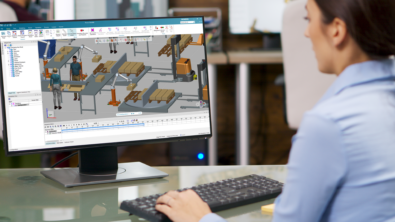
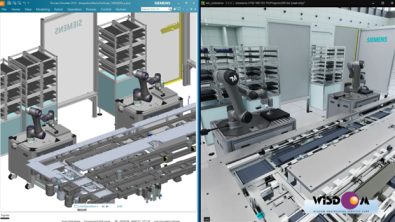
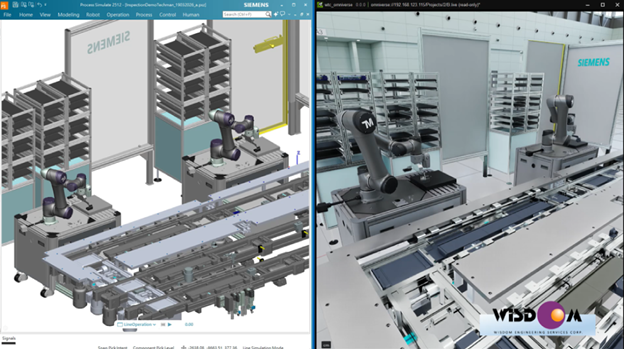
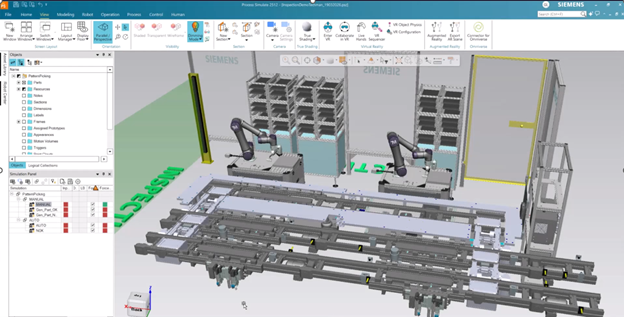
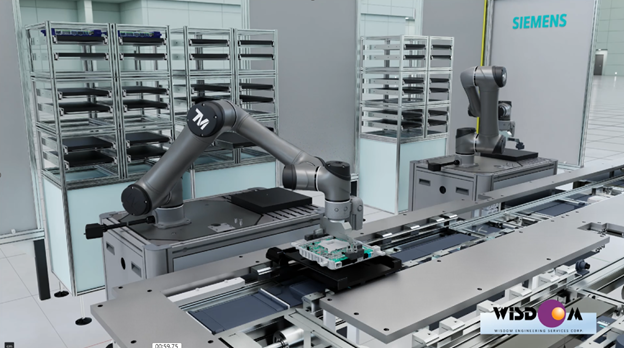
Once the backbone is in place, the power of the digital twin comes into play. Siemens’ simulation tools allow for the creation of virtual twins of both the product (e.g., a PCB) and the process (e.g., a cobot inspecting it). This enables engineers to simulate cobot movements, check reachability, safety, cycle times, and even what a camera “sees.”
Imagine a design change – a larger capacitor on a board. In the virtual world, you can quickly validate if this change obstructs a camera’s view of another component. This can be done in minutes, preventing costly real-world issues like stopping machines, scrapping parts, or damaging equipment. Siemens software like Process Simulate makes this virtual validation incredibly effective. And, of course, flexible execution tools like Techman cobots are essential to manufature different revisions and variants without major re-engineering. Ultimately, this integrated approach brings multiple teams together, fosters collaboration, and empowers them to master complexity rather than being overwhelmed by it.
Connected automation: intelligence and flexibility on the shop floor
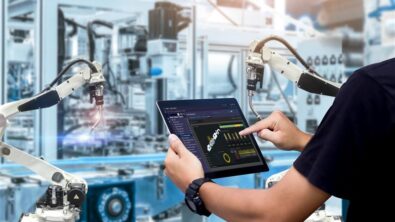
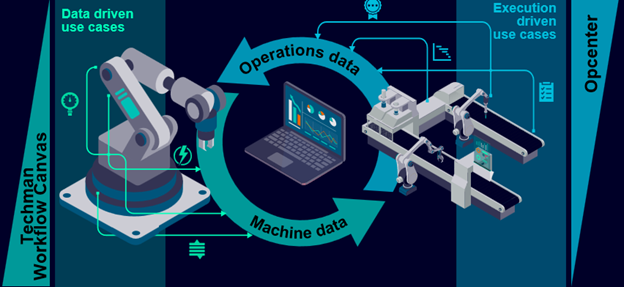
Kuan Lin, Senior Director of Techman Robots, highlighted the role of flexible cobots in this digital ecosystem. He emphasized how Techman cobots, combined with Workflow Canvas, create a powerful synergy that requires no deep coding knowledge. This enables real-time data flow and traceability, feeding directly back into the digital twin. It’s about combining flexible automation with a connected digital backbone to translate validation into real-world execution.
Orchestrating execution with workflow canvas
Kuan Lin, Senior Director of Techman Robots, highlighted the role of flexible cobots in this digital ecosystem. He emphasized how Techman cobots, combined with Workflow Canvas, create a powerful synergy that requires no deep coding knowledge. This enables real-time data flow and traceability, feeding directly back into the digital twin. It’s about combining flexible automation with a connected digital backbone to translate validation into real-world execution.
- Validate Virtually: Before anything is installed, Process Simulate is used to check workcell layouts, robot motions, reachability, feasibility, safety zones, inspection point access, and cycle-time assumptions. This helps detect collisions and confirm ergonomics, ensuring commissioning starts with confidence.
- Orchestrate Execution with Workflow Canvas acts as a low-code orchestration layer, connecting robots, cameras, PLCs, machines, and IT systems into a single executable workflow. Engineers can design flows using drag-and-drop, reuse standard building blocks, and integrate devices without extensive infrastructure changes. This defines not only the best path, but also consistent exception handling. The modularity of workflows allows for portability, versioning, and repeatable deployment across different lines and plants.
- Closing the Loop and Improve: During execution, data flows in real-time. Inspection results are synchronized to MES and dashboards for traceability. Crucially, robot posture, timestamps, and execution status can stream back into Process Simulate, keeping the digital twin synchronized with reality. This closes the loop: what’s validated digitally is executed physically, and what’s executed improves the next validation cycle.
Tangible outcomes and a transformed operating model
The outcomes are tangible, with Quanta already achieving:
- 15% higher end-to-end efficiency through stronger digital process integration.
- 30% faster on-site commissioning due to more issues being resolved virtually.
- 25% less documentation effort by partially auto-generating documents.
- Up to 95% data consistency and traceability from engineering changes to work instructions.
Beyond the numbers, the day-to-day operations have transformed. Teams now share a single digital twin view, making decisions earlier and with greater confidence. Changes are assessed, validated, and rolled out in a controlled manner, improving audit readiness and making multi-site replication more predictable. For Quanta, documentation traceability for products with a 15-year lifecycle is a significant win, making it much easier for teams to work confidently.
Quanta is opening a new factory site in Germany where it will have its first productive operation in Summer 2026. The future looks bright, with plans to expand deployment across global manufacturing operations through digitally validated processes and standardized workflows.
The collaboration between Quanta, Siemens, and Techman Robot demonstrates a powerful path forward for manufacturers looking to conquer complexity, enhance efficiency, and build a more resilient and adaptable production ecosystem.