Engineering the Future of Manufacturing Through Global Collaboration & Innovation


Siemens Zvi Feuer, Senior Vice President of Digital Manufacturing Software and CEO of Siemens Digital Industries Software in Israel, was recently featured in Isra-Tech, a leading digital publication connecting global businesses with Israeli innovation. In the interview, marking Siemens’ 25 years of innovation in Israel, Feuer reflects on the long-standing collaboration between Siemens teams in Israel and Germany, describing it as a cornerstone in how manufacturing technologies are developed, validated, and deployed.
Drawing on years of hands-on experience with real production systems, Feuer offers a practical view of what manufacturers need as they evolve from long-established operations toward more connected, digitally enabled factories. Explore key takeaways from the conversation, including how strong partnerships, advanced automation, and physical AI are shaping a more resilient manufacturing future.
A partnership that shapes technology

For 25 years, Siemens Israel has maintained a powerful and productive synergy with its headquarters in Germany, its U.S. operations, and additional global branches. This long‑standing collaboration continues to propel the organization forward and reinforces its position as a worldwide leader in industry, infrastructure, transportation, and software innovation.
For Feuer, the collaboration between teams in Israel and Germany is enlightening, ideas are not simply handed off, they are shaped through continuous dialogue. Feuer explains how solutions developed in Israel are applied in German factories, where real production conditions provide immediate feedback. That feedback flows back into development, refining both the technology and the way teams work together. Over time, this exchange has built shared learning and trust, allowing each side to amplify the other’s strengths.
Over the years, we have built an Israeli-German ecosystem with mutual benefit for both countries that provides support to industry worldwide. For example, we developed a series of solutions in the field of digitalization of manufacturing systems and implemented them in German industry, as part of a program to improve the company’s competitiveness”
Siemens Zvi Feuer, Senior Vice President of Digital Manufacturing Software
From automation to adaptive systems

Feuer shares how modern factories must handle frequent product changes and operational variability to maintain a competitive edge. To address this, Feuer explains how Siemens develops software that supports the digitalization of manufacturing systems, including robotics, machining, and the planning of complex assembly processes. These technologies help manufacturers across industries, from automotive and aerospace to medical and defense, improve efficiency, reduce inventory, and strengthen their competitive position.
Humanoids on the production floor
As we look toward future next-gen manufacturing technologies, emerging market trends indicate that humanoid robots are poised to become a meaningful part of the manufacturing workforce within the next few years, helping address the growing labor shortages many companies already face. The prospect of a robot that combines human‑like intelligence with a human‑oriented form factor is generating significant excitement.

In the article, Feuer explains how humanoid robots can help with logistics, material handling, repetitive assembly, and support tasks, areas that are physically demanding and increasingly difficult to staff. Designed to work alongside people, these humanoid systems help reduce physical strain while improving consistency on the production floor.
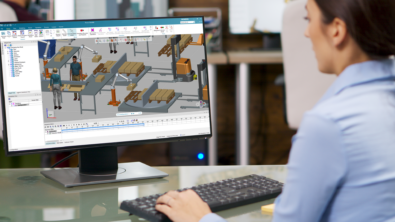
Feuer emphasizes how Siemens is at the forefront of manufacturing simulation and is now extending that leadership to support the emerging era of humanoid robotics. As manufacturers explore when and how to deploy humanoids, Process Simulate provides the virtual environment needed to test integration, validate processes, and understand system behavior before implementation. With Siemens’ advanced robotics and human‑simulation expertise, companies can accurately model flexible factories that blend automation, human workers, and future humanoid systems.
Advances in robotics and humanoids rely on intelligence that must operate within real-world constraints such as motion, force, balance, and safety. Siemens manufacturing simulation software plays a critical role in this approach. Manufacturing systems are tested digitally under a wide range of conditions before deployment, reducing risk and improving reliability. Here again, the Israeli–German collaboration is essential, combining strong software and AI capabilities with deep knowledge of machines and production processes.
Siemens shaping the next frontier of digital manufacturing
Looking ahead, Feuer sees the future of manufacturing shaped by collaboration that continues to strengthen over time among its counterparts in Germany, Americas and beyond. After 25 years of Siemens activity in Israel, the partnership between Israeli and German teams demonstrates how shared expertise and long-term trust can help manufacturers move faster, from design to production, and from idea to execution.