Siemens recognized by Gartner as a Leader in PLM supply chain collaboration

Siemens scored the highest in the Supply Chain Collaboration Use Case in the 2026 Critical Capabilities report for PLM Software in Discrete Manufacturing Industries.
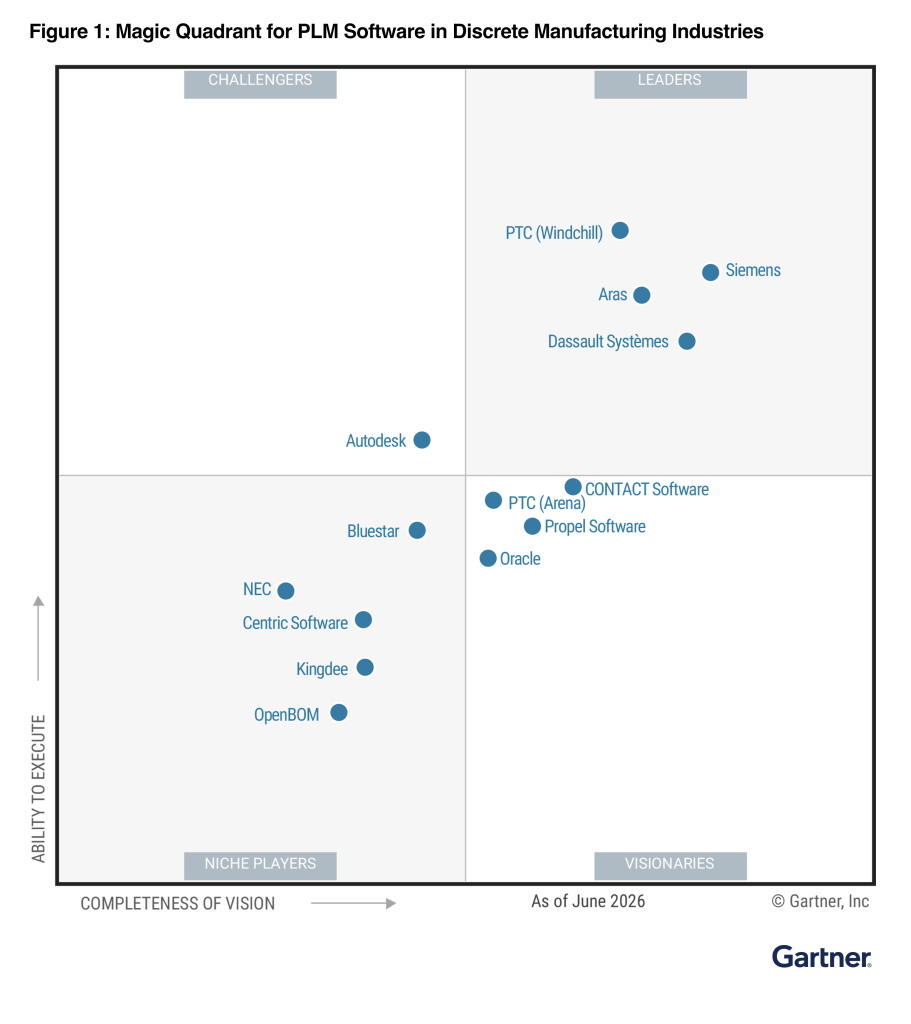
This Use-Case recognition complements Siemens’ broader evaluation in the 2026 Gartner® Magic Quadrant™ for PLM Software in Discrete Manufacturing Industries. We believe this reinforces Siemens’ position as a Leader for its Teamcenter software in PLM supply chain collaboration.
To learn more about Siemens’ positioning in both reports:
📖 Read the blog: Siemens recognized as a Leader in the Gartner Magic Quadrant for PLM software
📊 Click here for the complimentary report, no registration required!
What we believe this means for our customers
- Collaborate effectively across internal teams and external partners
- Improve visibility and alignment across the extended supply chain
- Manage product data consistently across suppliers and stakeholders
Why supply chain collaboration needs a new approach
Supply chain collaboration in product development is no longer just about connecting suppliers through portals or exchanging documents. As products grow more complex, spanning mechanical, electrical, electronics, and software domains, manufacturers must coordinate product data, processes, and decisions across an increasingly distributed ecosystem.
Many organizations still operate with fragmented product definitions. Engineering, manufacturing, and suppliers often rely on disconnected systems, resulting in misaligned data, delayed change propagation, and increased risk during product development and delivery.
To address these challenges, leading manufacturers are shifting toward a more connected model of collaboration, one that aligns internal teams and external partners around a consistent, governed product definition across the entire lifecycle. This PLM supply chain collaboration approach connects product data, processes, and partners across the lifecycle.
A connected approach to collaboration
As products and supply chains become increasingly complex, manufacturers need a way to keep teams and partners aligned around a consistent product definition.
Teamcenter connects product data, people, and processes across the extended enterprise, helping organizations improve visibility, coordinate changes, and collaborate more effectively across the lifecycle. We believe Siemens’ recognition in the Supply Chain Collaboration Use Case reflects the strength of this connected, lifecycle-driven approach.
To learn more, read the blog and get complimentary access to the 2026 Gartner report: Siemens recognized as a Leader in the Gartner Magic Quadrant for PLM software
Frequently asked questions
What is PLM supply chain collaboration?
PLM supply chain collaboration connects manufacturers and suppliers through a shared product definition, enabling synchronized product data, processes, and decisions across the product lifecycle.
Why is supply chain collaboration important in product development?
Effective supply chain collaboration ensures that suppliers work from consistent product data, reducing errors, improving change responsiveness, and helping organizations deliver products faster and with greater quality.
How does PLM improve supply chain collaboration?
PLM improves supply chain collaboration by connecting suppliers directly to lifecycle processes, enabling real-time access to product data, synchronized engineering changes, and better visibility across all stakeholders.
What challenges does PLM supply chain collaboration solve?
PLM supply chain collaboration addresses common challenges such as disconnected systems, inconsistent product data, delayed change communication, and limited visibility across suppliers and partners.
How is PLM supply chain collaboration in Teamcenter different from traditional supplier portals?
Traditional supplier portals focus on document exchange, while PLM supply chain collaboration connects suppliers to a shared product definition and lifecycle processes, enabling synchronized execution and real-time alignment.
Gartner attribution and disclaimer
Gartner, Critical Capabilities for PLM Software in Discrete Manufacturing Industries, Marc Halpern, Sudip Pattanayak, Rajan Saini, Brady Barnes, 10 June 2026.
Gartner, Magic Quadrant for PLM Software in Discrete Manufacturing Industries, Sudip Pattanayak, Marc Halpern, Brady Barnes, Rajan Saini, 9 June 2026.
Gartner and Magic Quadrant are trademarks of Gartner, Inc. and/or its affiliates.
Gartner does not endorse any company, vendor, product or service depicted in its publications, and does not advise technology users to select only those vendors with the highest ratings or other designation. Gartner publications consist of the opinions of Gartner’s business and technology insights organization and should not be construed as statements of fact. Gartner disclaims all warranties, expressed or implied, with respect to this publication, including any warranties of merchantability or fitness for a particular purpose.
This graphic was published by Gartner, Inc. as part of a larger research document and should be evaluated in the context of the entire document. The Gartner document is available upon request from Siemens.
🧠 Make smarter decisions with AI-powered PLM
🚀 Start fast and grow with Teamcenter X
🚗 Take the Teamcenter X 30-day test drive
🌟 Learn more about Teamcenter solutions